What makes a Damascus steel ninjato different from a standard ninjato?
Updated Mar 2026
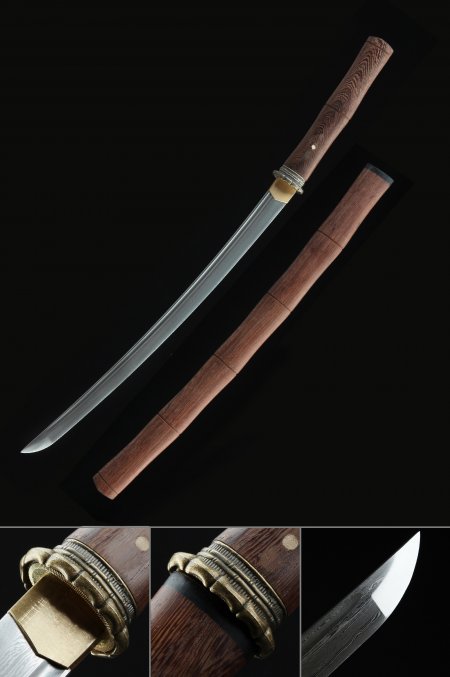
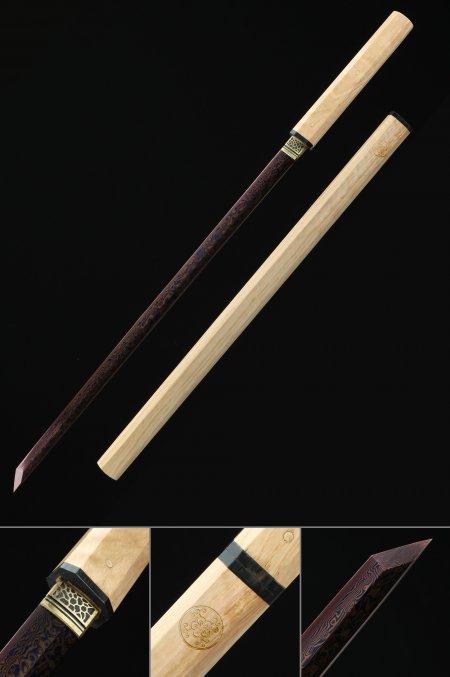
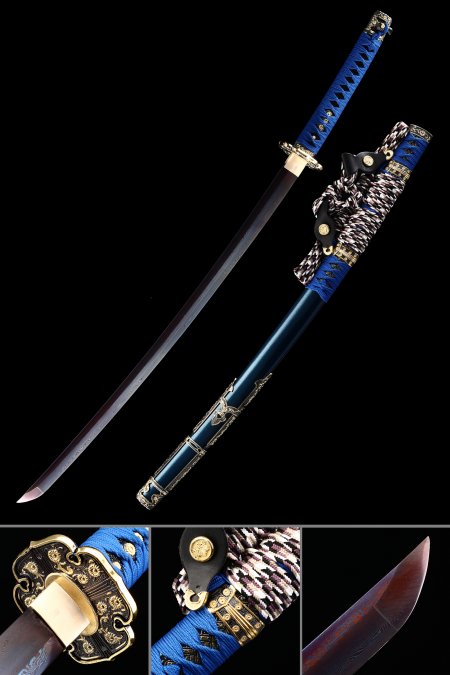
A standard ninjato is typically constructed from a single billet of high-carbon or stainless steel, ground and heat-treated into its final form. A Damascus steel ninjato, by contrast, is built from multiple steel billets — often combining 1095 and 15N20 high-carbon steels — that are forge-welded and repeatedly folded to create a layered internal structure. The result is a surface pattern called hada, which becomes visible after acid etching during finishing. This process means no two blades are visually identical, giving each Damascus ninjato genuine individuality. For collectors, this distinction is significant: a Damascus piece carries both a more complex manufacturing history and a surface aesthetic that develops its own character over time.