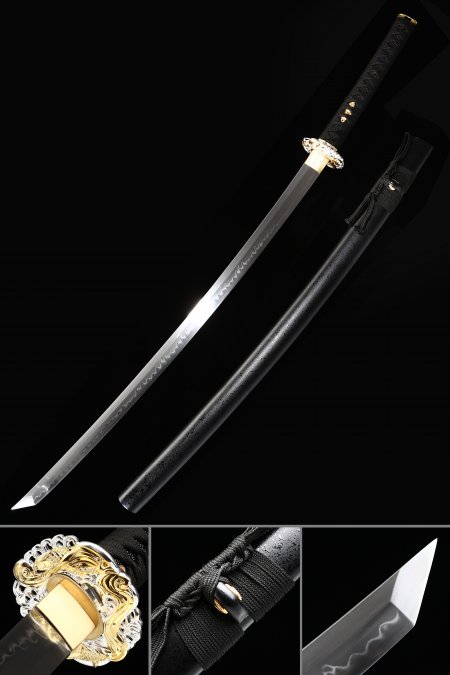
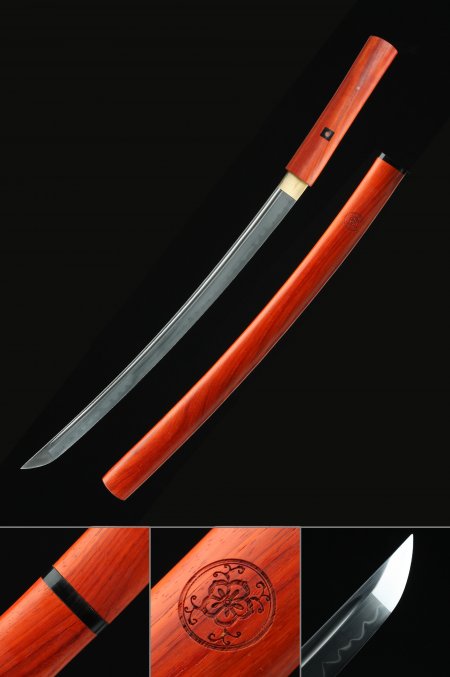
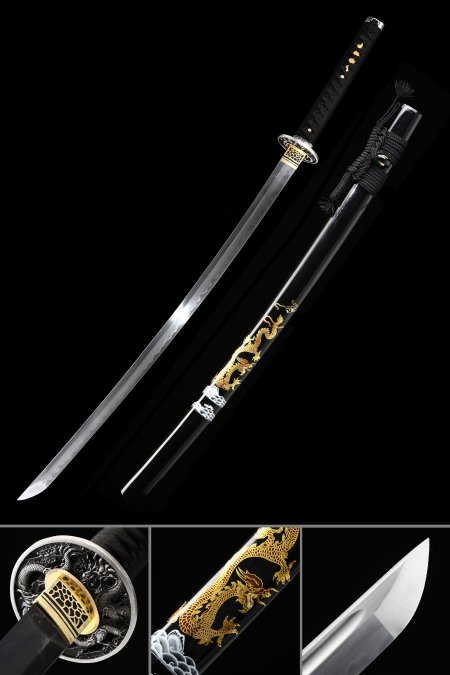
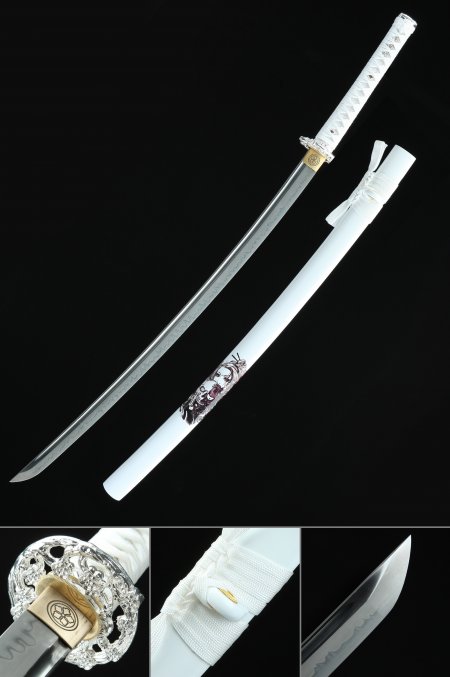
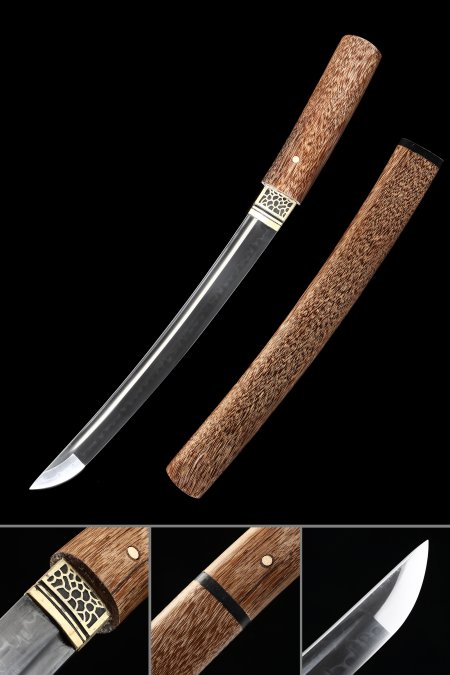
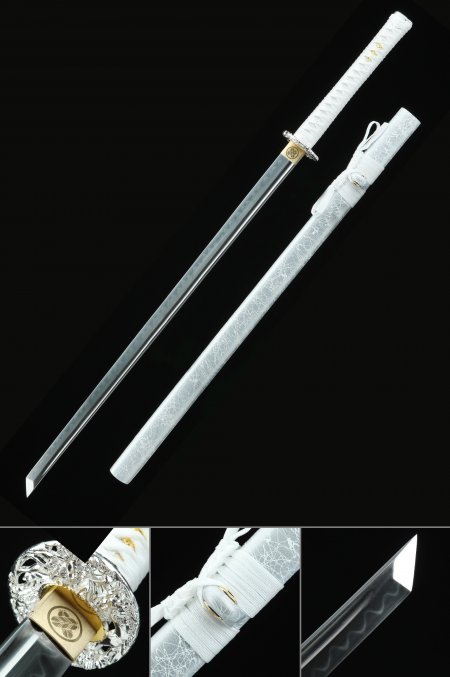
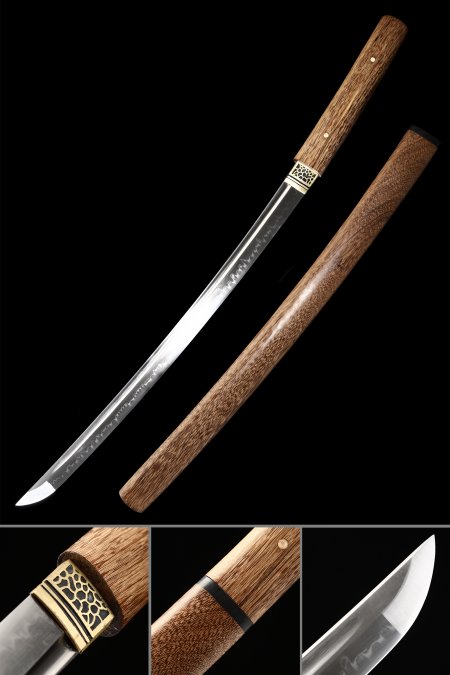
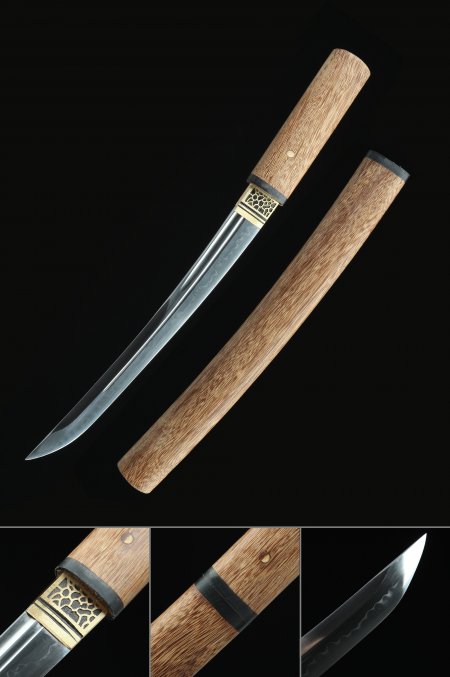
Is the hamon on these tanto blades real or decorative?
Updated Mar 2026
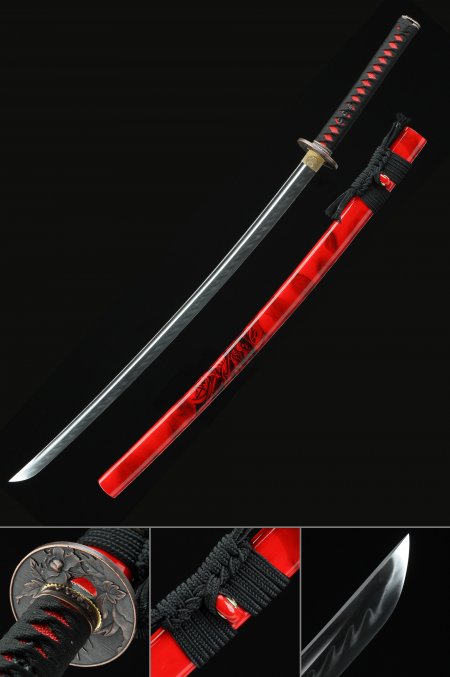
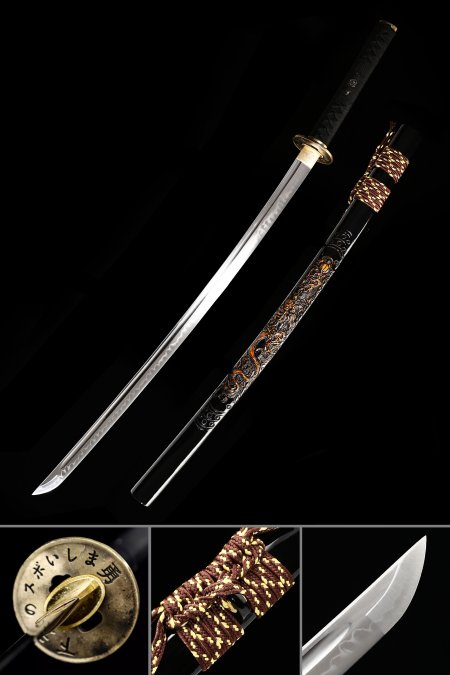
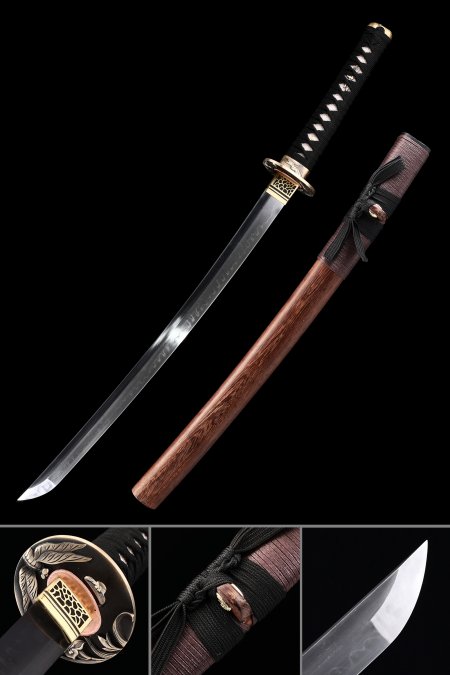
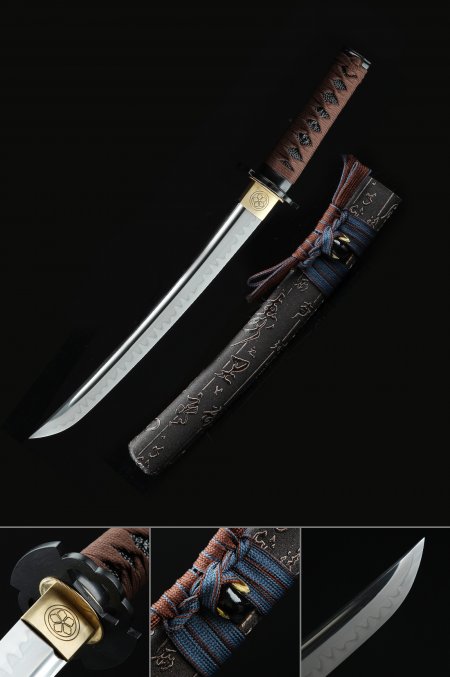
On clay-tempered pieces in this collection, the hamon is a genuine structural feature produced during the quenching process. A clay mixture is applied to the spine of the blade before it is heated and quenched in water or oil. The clay insulates the spine, slowing its cooling, while the exposed edge hardens rapidly. This differential hardening creates the undulating line — the hamon — at the boundary between the two zones. The pattern, its activity, and its brightness under light are all consequences of the actual steel structure, not surface treatment. On non-clay-tempered T10 tanto, a hamon effect may be produced through other finishing processes; product descriptions specify which method applies to each piece, so it is worth reading those details if the presence of a genuine hamon is a collecting priority for you.