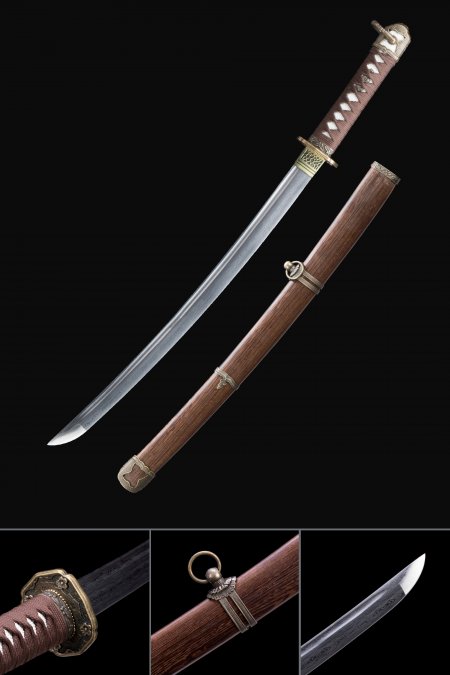
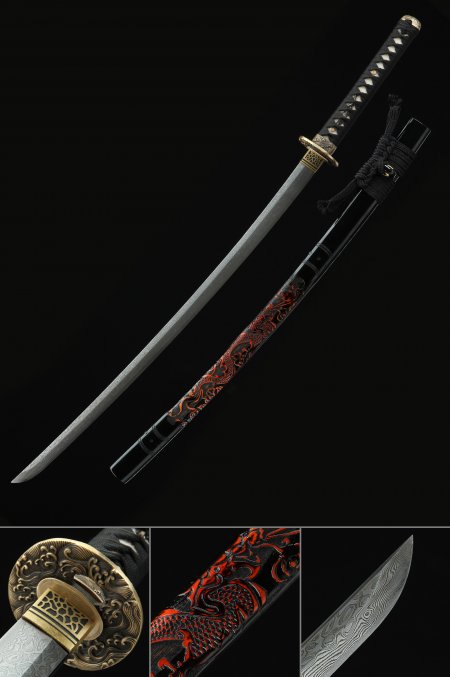
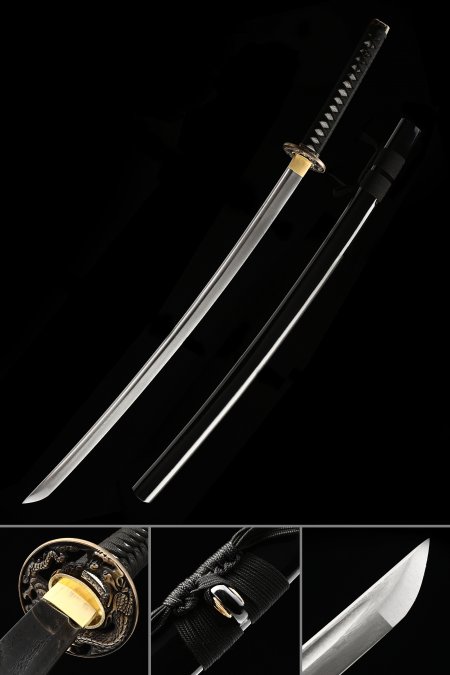
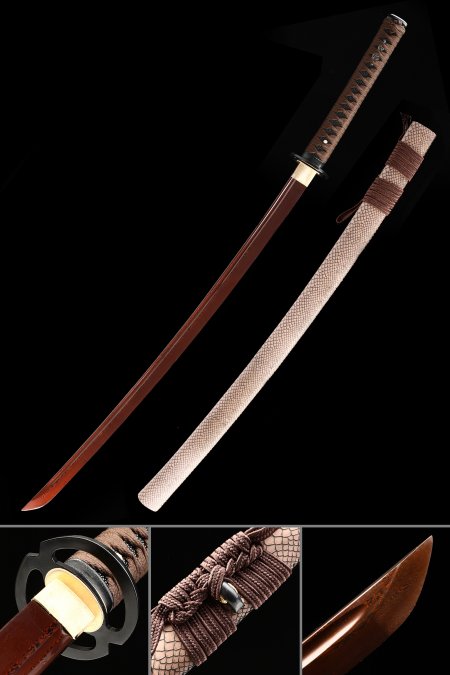
How does T10 steel differ from Damascus steel in a wakizashi?
Updated Mar 2026
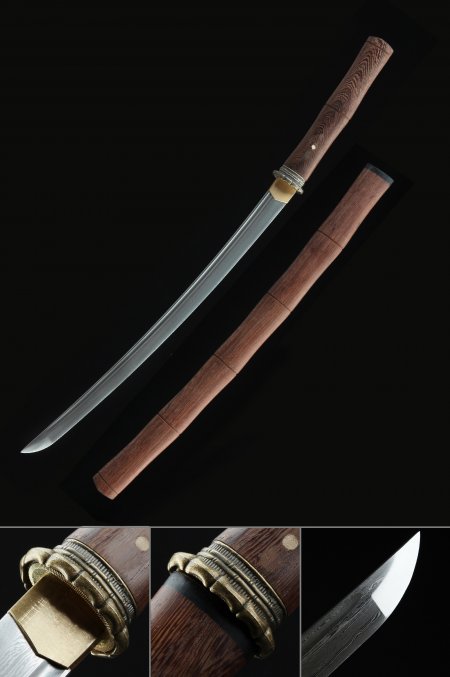
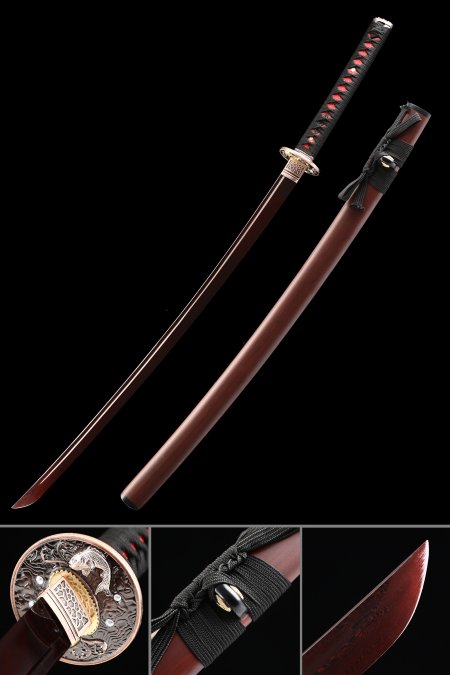
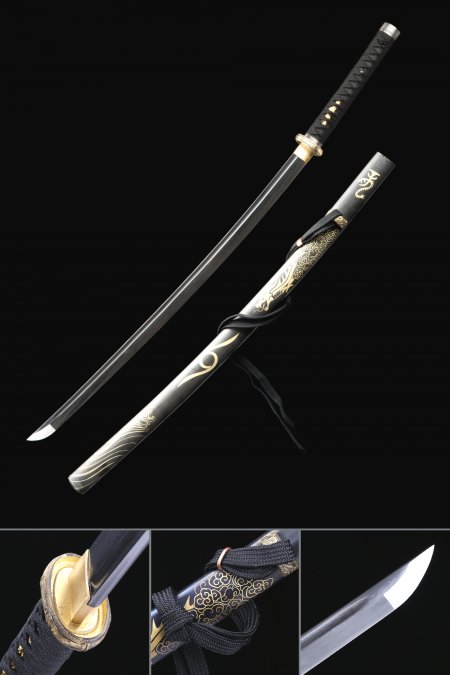
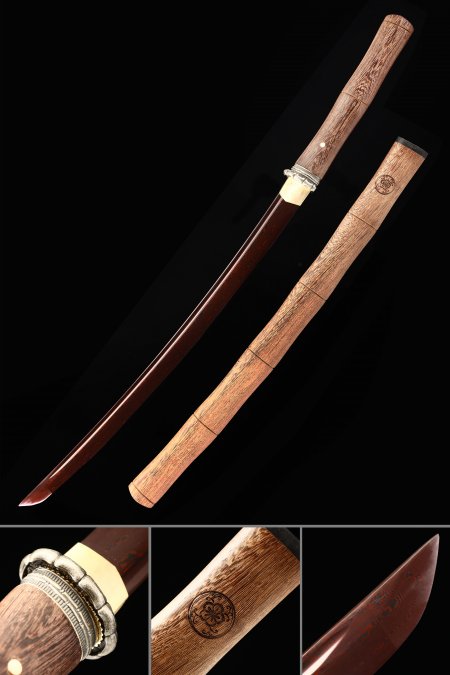
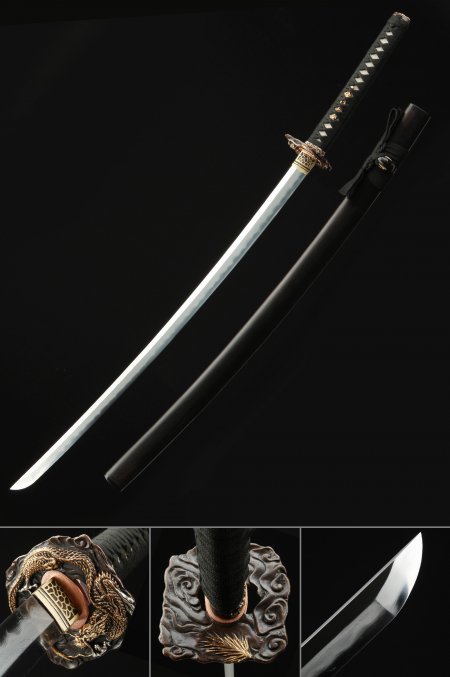
T10 is a high-carbon tool steel containing roughly 1.0% carbon with a small silicon addition, valued for its ability to produce a vivid, naturalistic hamon - the temper line that forms when the blade is clay-coated and quenched. The hamon on a T10 wakizashi is a genuine metallurgical feature, not an acid-etched pattern, and it varies along the blade's length in organic, flowing shapes. Damascus steel, by contrast, is made by forge-welding two or more alloys together and drawing the billet out repeatedly, creating layered patterns visible across the entire blade surface. A Damascus wakizashi displays its character through surface patterning rather than a temper line. Both are legitimate collector choices: T10 appeals to those focused on traditional Japanese blade aesthetics, while Damascus suits collectors drawn to the decorative dimension of the smith's craft. Neither type is mass-produced from a single steel pour - both require considerable forge work.