How does T10 steel compare to Damascus for a hamon wakizashi?
Updated Feb 2026
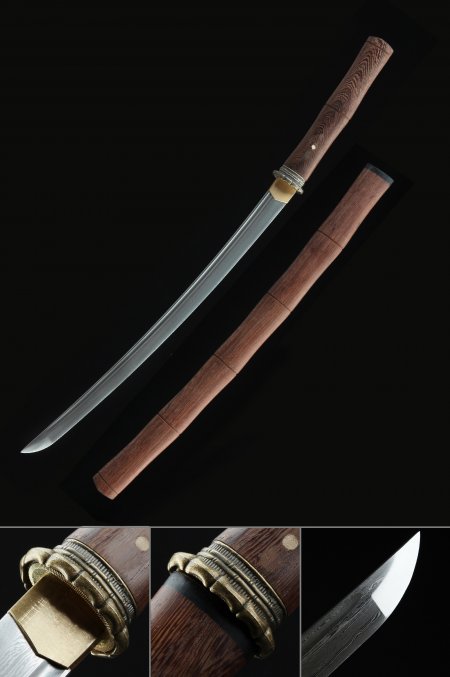
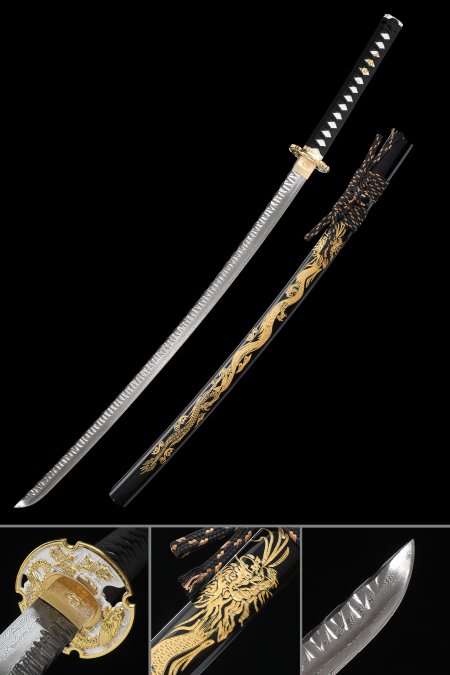
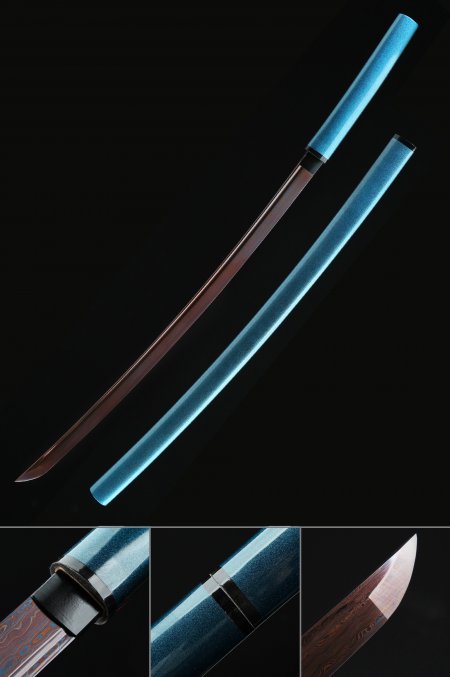
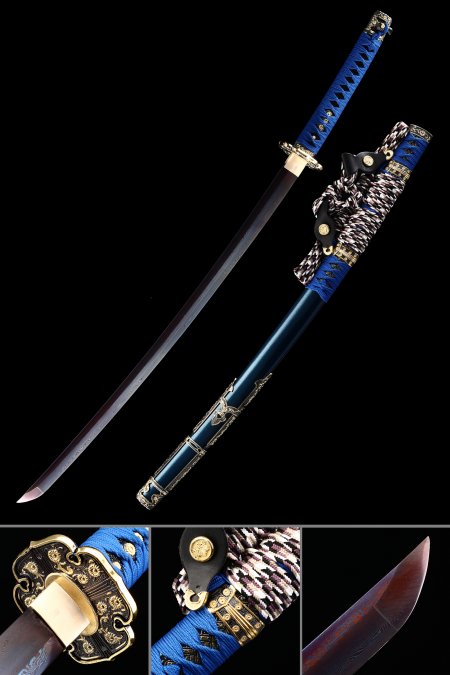
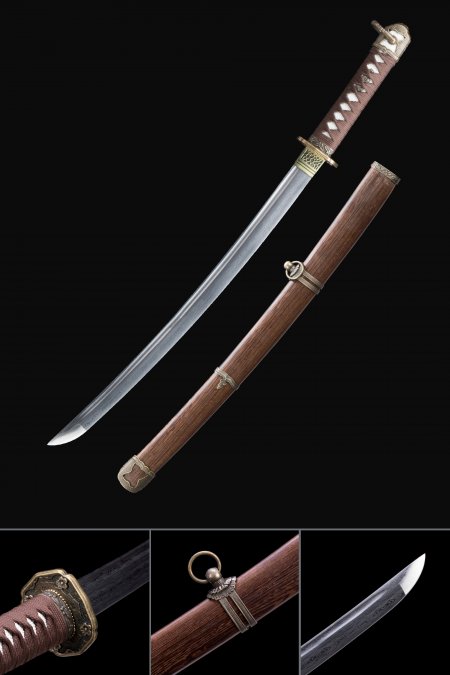
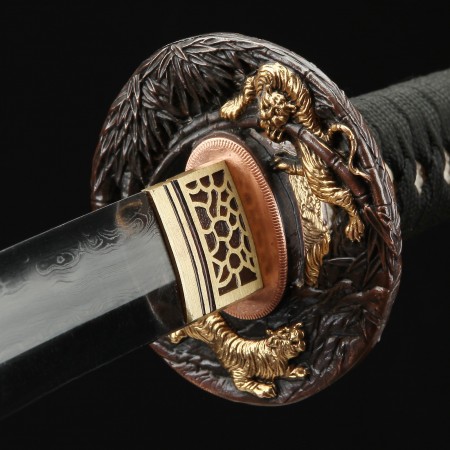
T10 tool steel contains roughly 0.95–1.04% carbon along with a small percentage of tungsten, which increases wear resistance and allows the steel to achieve very high hardness at the edge after clay tempering. This composition produces bold, high-contrast hamon lines with clearly defined nioi and nie particles that are prized by collectors who want maximum visual impact. Damascus steel wakizashi, by contrast, are made from multiple layers of steel that are folded and forge-welded together. The folding creates a distinctive surface pattern of swirling grain, and when clay tempering is applied on top of that, you get two overlapping visual textures — the fold pattern and the hamon — which gives the blade exceptional depth and complexity. T10 is generally the better choice if you want a clean, dramatic temper line as the focal point, while Damascus appeals to collectors who appreciate layered visual storytelling on a single blade surface.