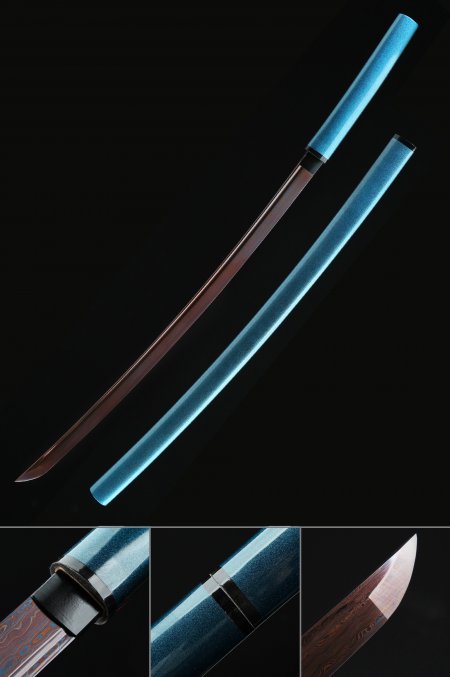
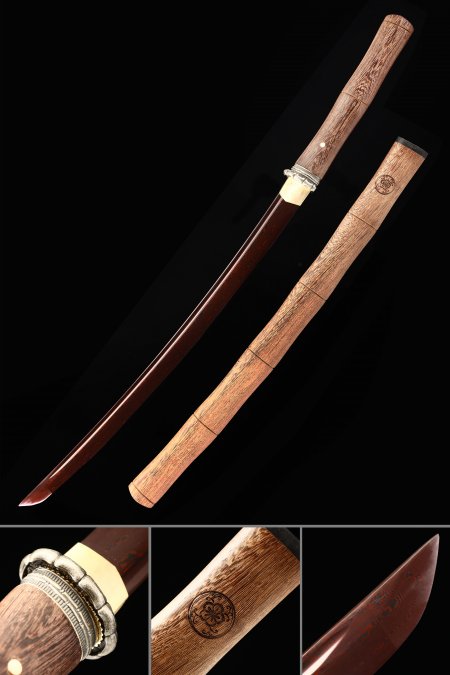
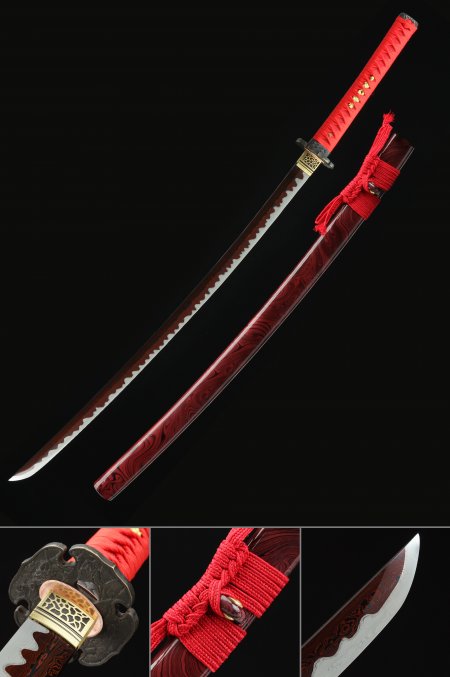
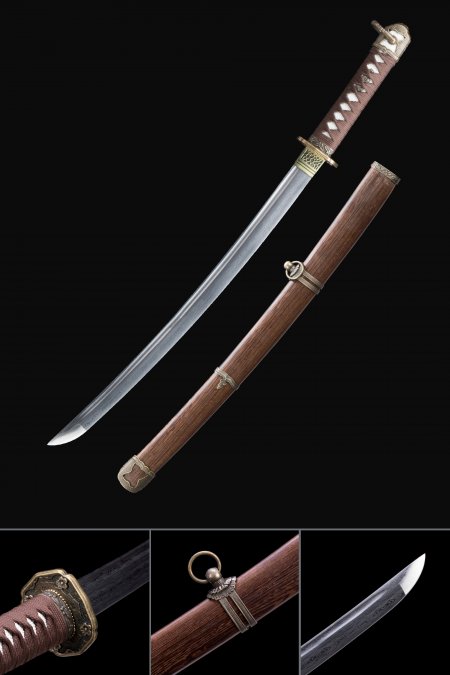
What is a hamon, and how does it appear on a Damascus blade?
Updated Mar 2026
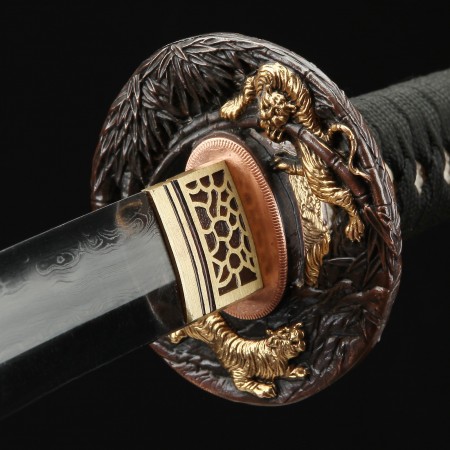
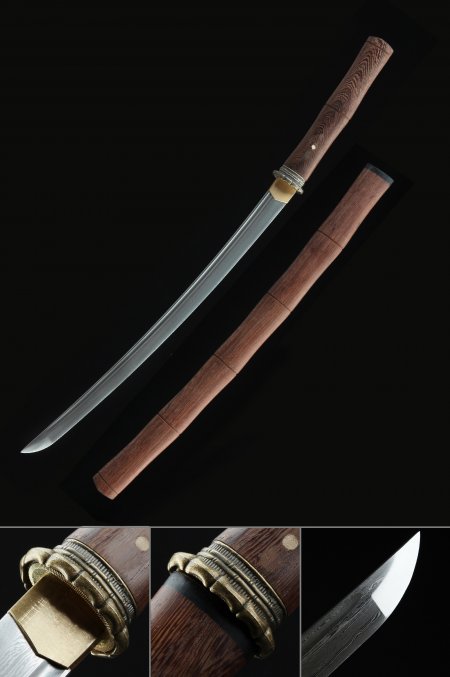
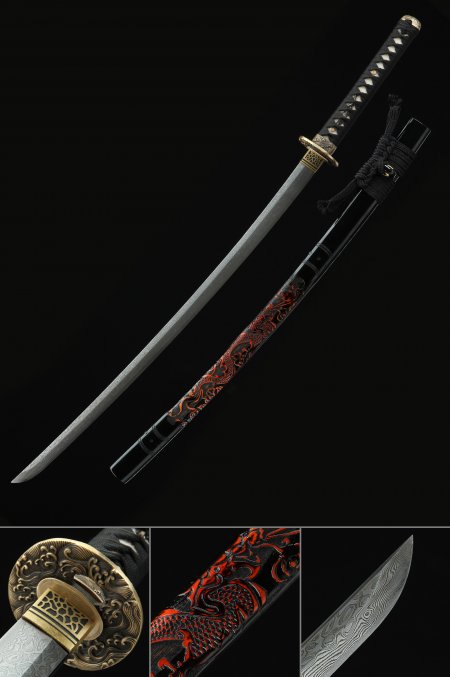
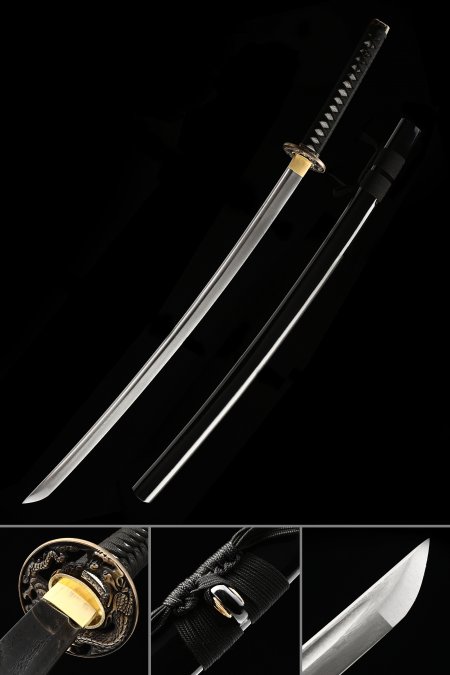
A hamon is the visible temper line that forms when a blade undergoes differential hardening — clay is applied to the spine before quenching, causing the edge zone and spine to cool at different rates. The boundary between these zones appears as a misty, irregular line running along the blade. On a standard monosteel blade the hamon is the primary surface feature of interest. On a Damascus substrate, the hamon overlays the existing grain pattern, creating a secondary layer of visual information. Collectors examining a Damascus wakizashi with a real hamon are essentially reading two distinct metallurgical stories on the same blade surface — the folding history of the billet and the heat-treatment signature of the smith.