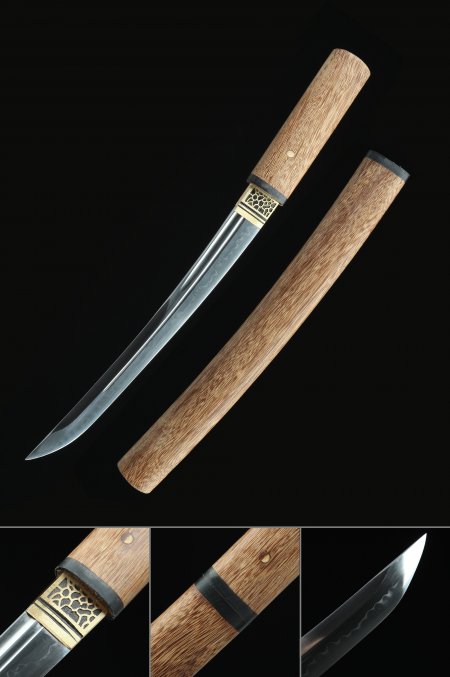
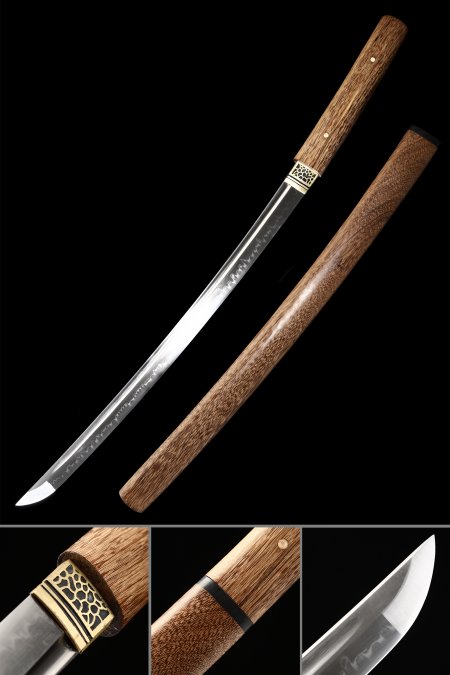
How can I tell if the hamon on a tanto is genuine clay tempering?

 Updated Mar 2026

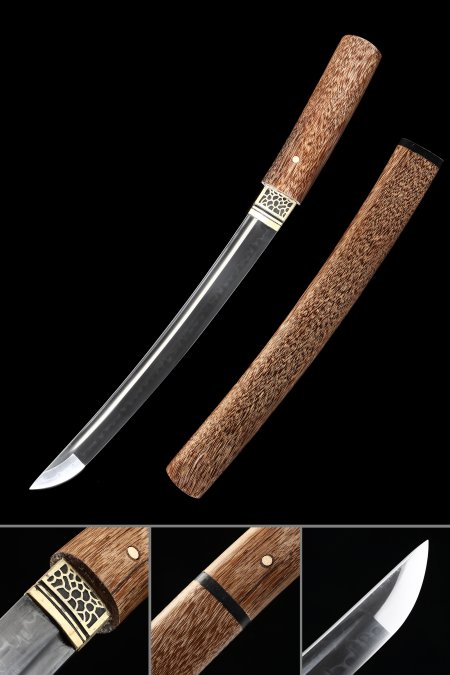
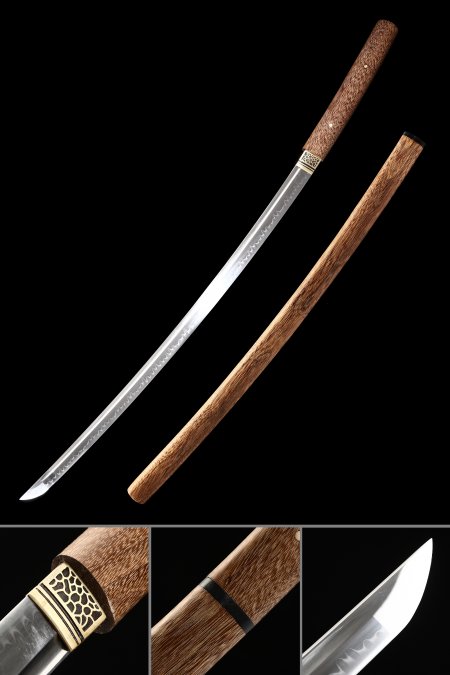
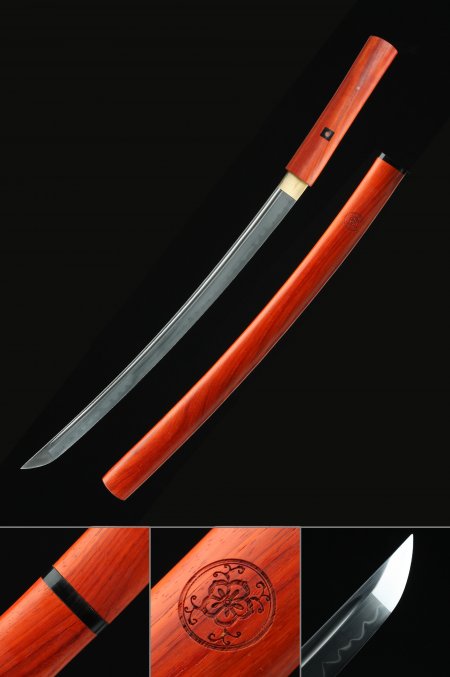
A genuine hamon produced by clay tempering has an organic, slightly irregular boundary line — it flows naturally along the edge and may show activity (small cloud-like formations called nie or nioi) within the transition zone when examined under focused light at an oblique angle. In contrast, an acid-etched or simulated hamon typically presents as a sharper, more uniform line with less visible grain structure in the transition area. On T10 clay-tempered tanto in this collection, the hamon is formed during differential quenching: clay applied thickly to the spine slows the cooling rate there, leaving the spine softer, while the exposed edge hardens rapidly. This metallurgical boundary is permanently embedded in the steel's microstructure — not a surface treatment.
Popular Products

20% OFFblack katana
209.00 USD
259.00 USD
15% OFFblack katana
199.00 USD
229.00 USD
20% OFFwakizashi sword
219.00 USD
279.00 USD
20% OFF
259.00 USD
329.00 USD
15% OFFshirasaya tanto
149.00 USD
179.00 USD
15% OFFpink katana
189.00 USD
219.00 USD
20% OFFshirasaya katana
209.00 USD
259.00 USD
20% OFFfull tang katana
319.00 USD
399.00 USD
20% OFFblue katana
209.00 USD
259.00 USD
20% OFFshirasaya wakizashi
219.00 USD
269.00 USD
15% OFFshirasaya tanto
149.00 USD
179.00 USD
20% OFFshirasaya wakizashi
179.00 USD
219.00 USD
20% OFFblack katana
209.00 USD
259.00 USD
15% OFFblack katana
199.00 USD
229.00 USD
20% OFFwakizashi sword
219.00 USD
279.00 USD
20% OFF
259.00 USD
329.00 USD
15% OFFshirasaya tanto
149.00 USD
179.00 USD
15% OFFpink katana
189.00 USD
219.00 USD
20% OFFshirasaya katana
209.00 USD
259.00 USD
20% OFFfull tang katana
319.00 USD
399.00 USD
20% OFFblue katana
209.00 USD
259.00 USD
20% OFFshirasaya wakizashi
219.00 USD
269.00 USD
15% OFFshirasaya tanto
149.00 USD
179.00 USD
20% OFFshirasaya wakizashi
179.00 USD
219.00 USD

Explore Our Collections