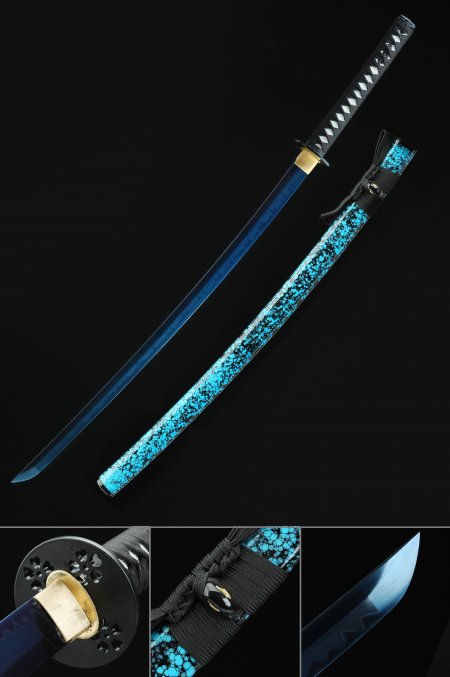
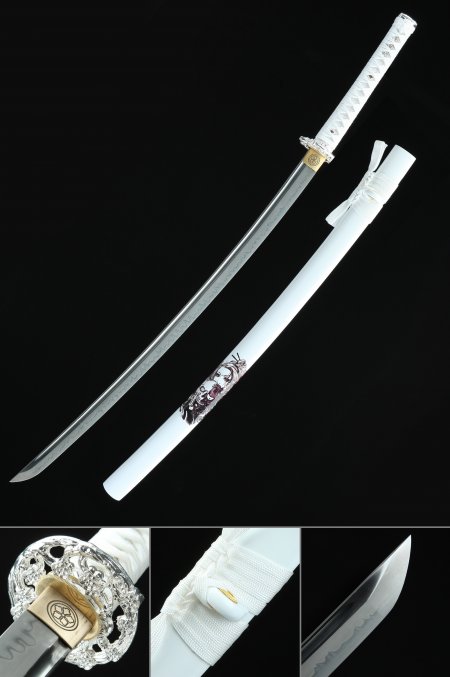
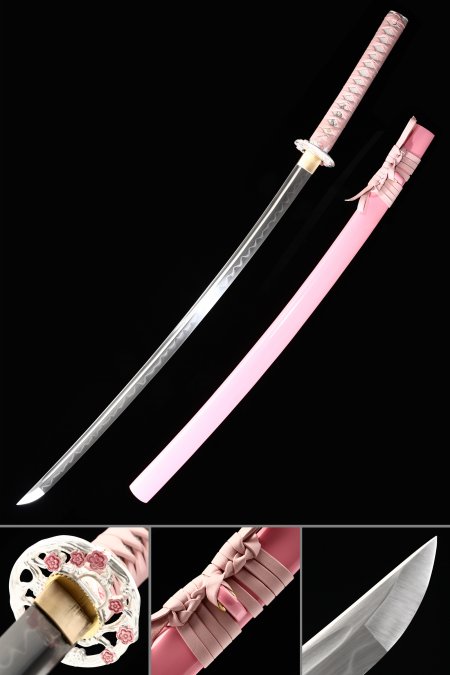
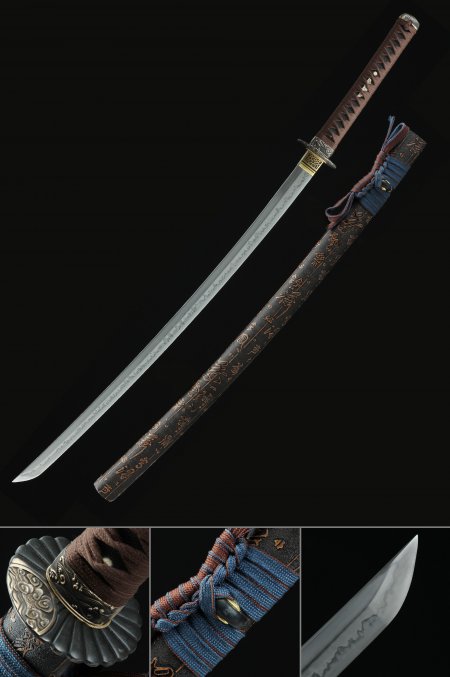
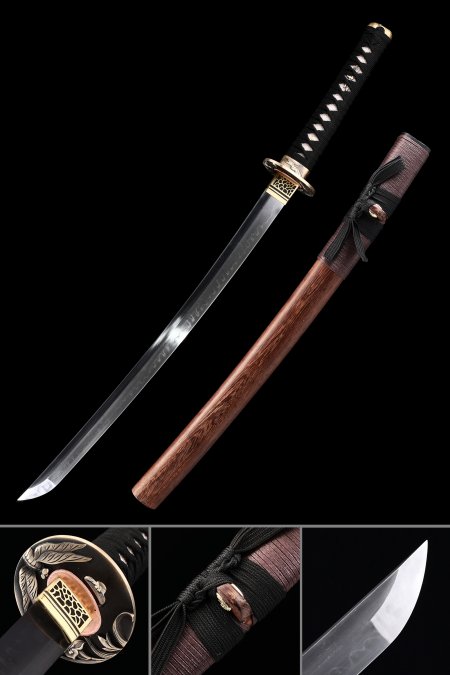
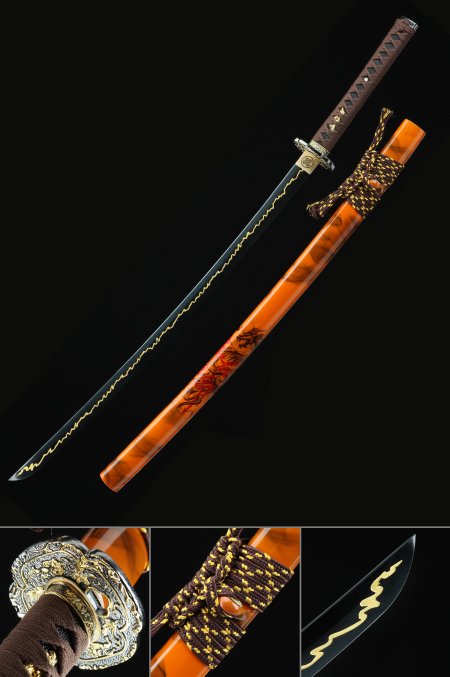
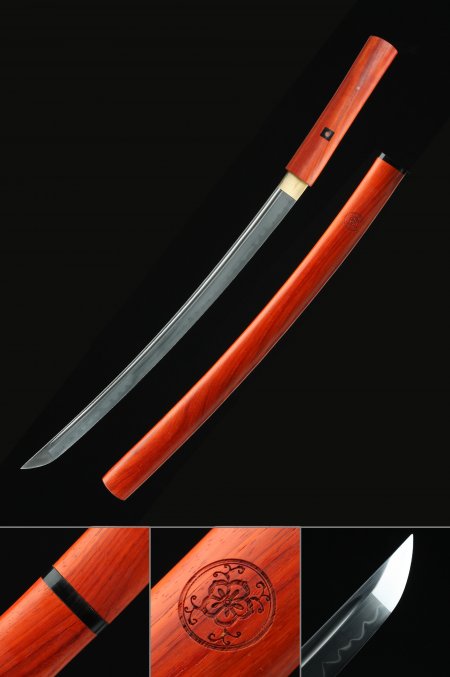
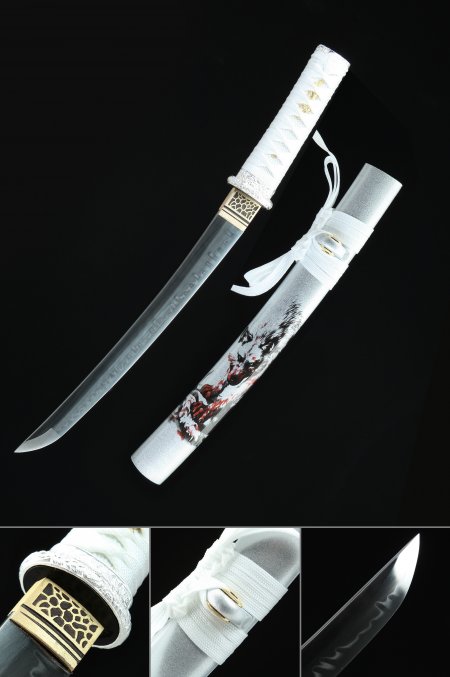
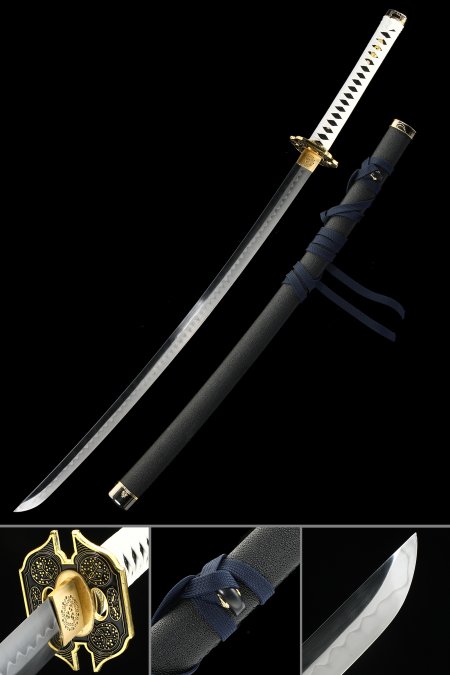
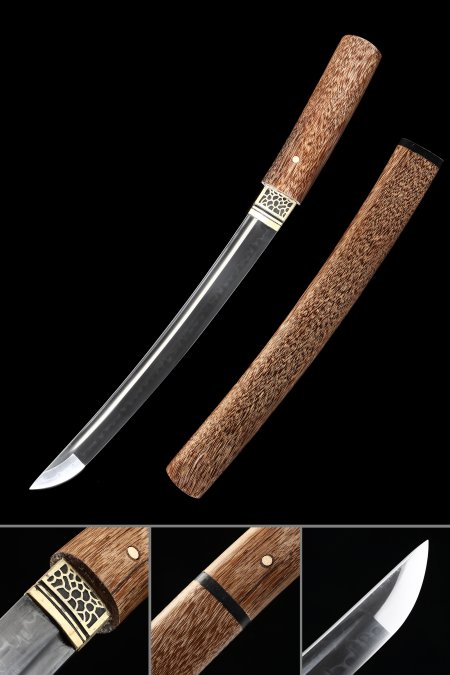
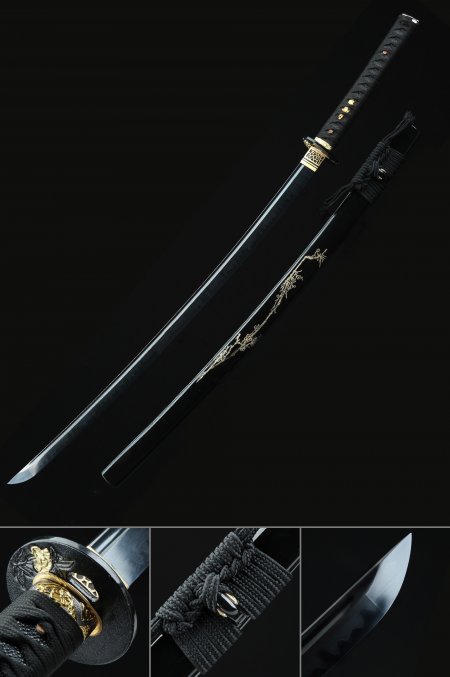
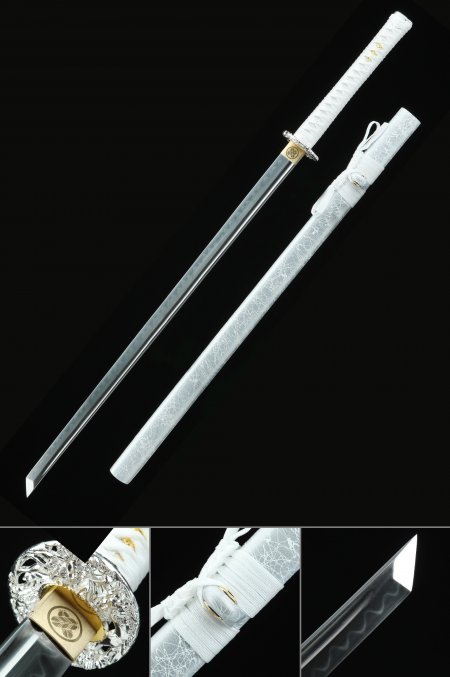
How does clay tempering affect the look of the blade on these katanas?
Updated Mar 2026
Clay tempering - known as tsuchioki in Japanese smithing - is the process of applying a clay mixture unevenly along the blade before the quench. The thickly coated spine cools more slowly, staying relatively soft, while the thinly coated or uncoated edge cools rapidly and hardens. The boundary between these two zones solidifies into a visible hamon, a wavy or irregular line running the length of the blade. On T10 and high-carbon steel blades, this hamon forms naturally and organically - no two are identical. Collectors prize authentic clay-tempered hamon because it is evidence of a genuine heat treatment process rather than an acid-etched cosmetic pattern applied after the fact. Under good lighting, a real hamon shows subtle activity: nie (tiny crystalline particles) and nioi (a misty transition zone) that give the blade visual depth.