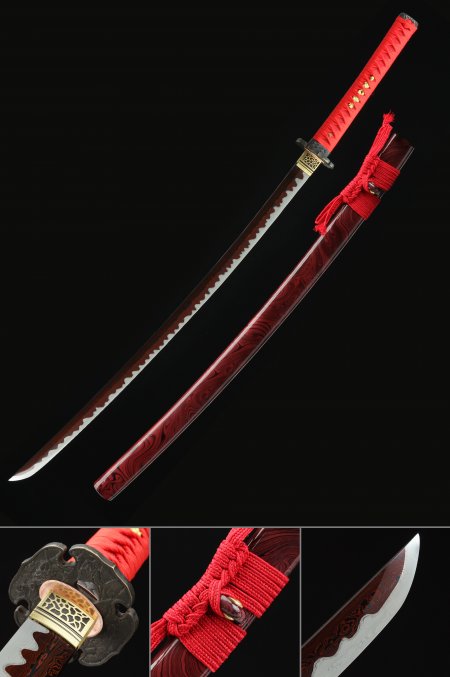
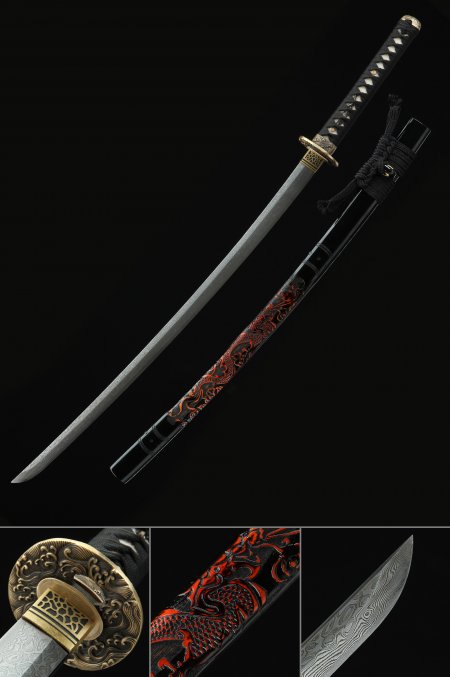
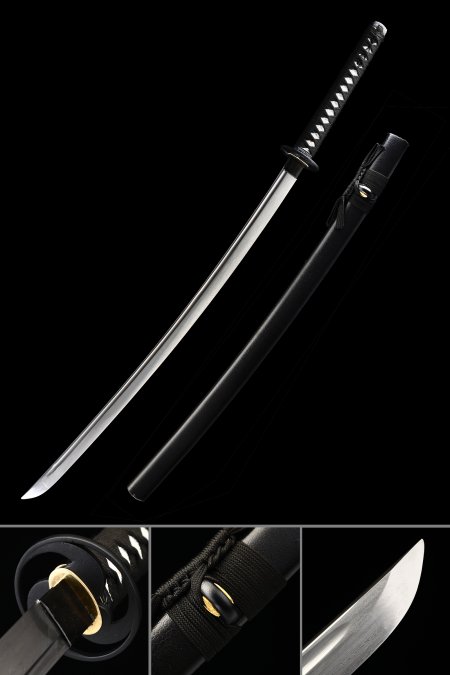
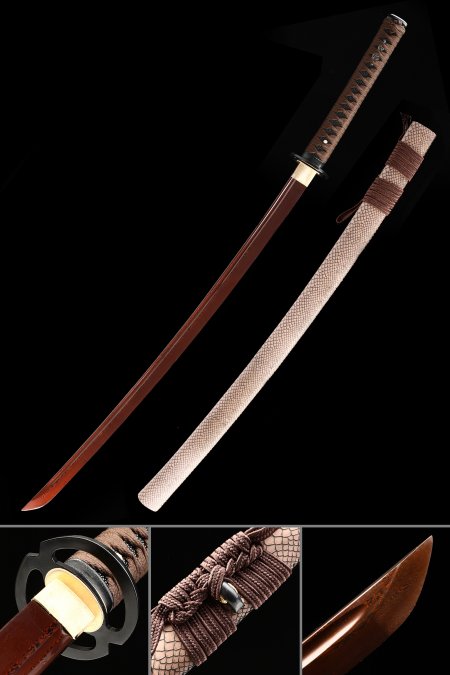
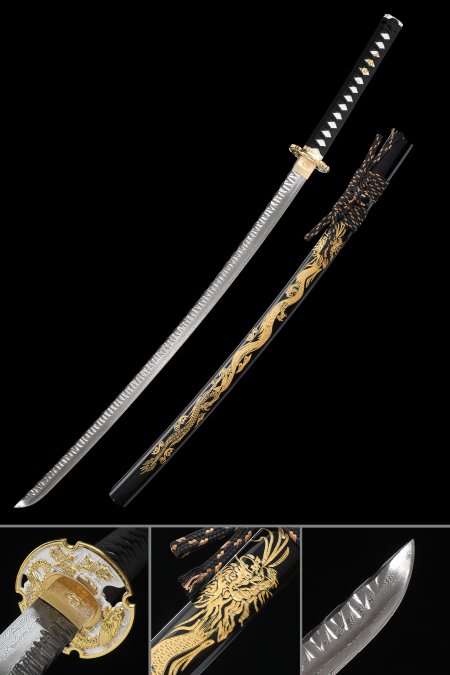
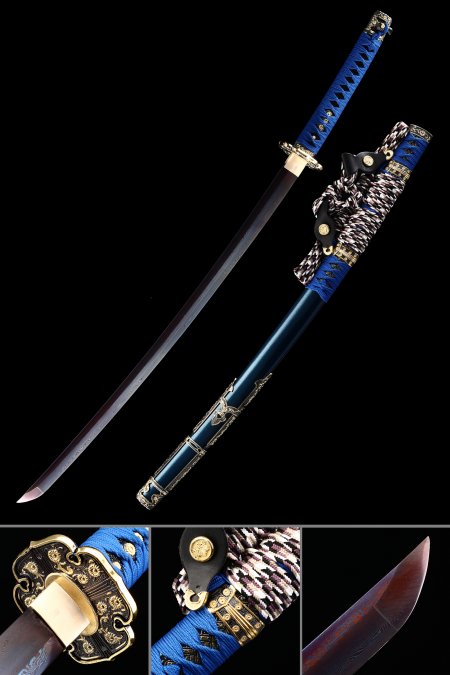
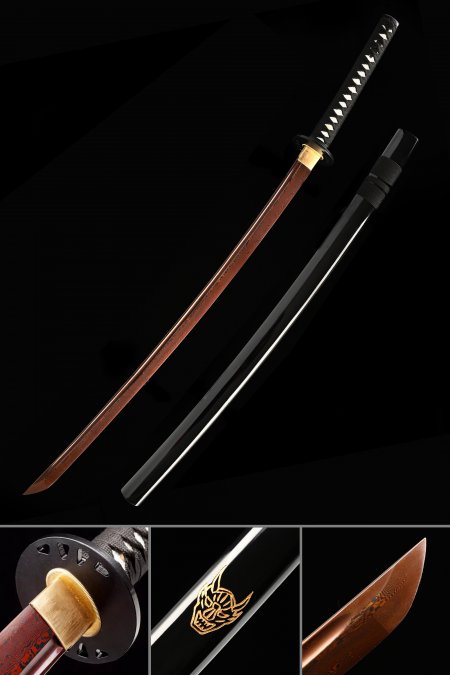
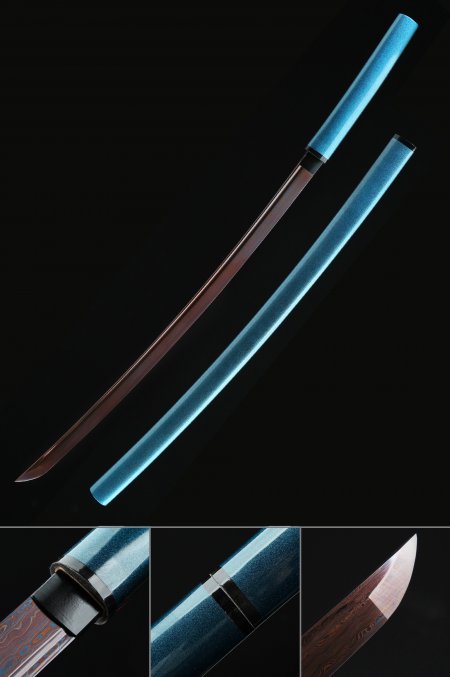
How does Damascus steel differ from T10 in these dragon katanas?
Updated Mar 2026
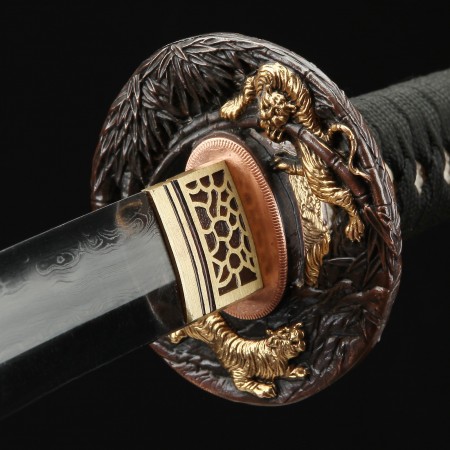
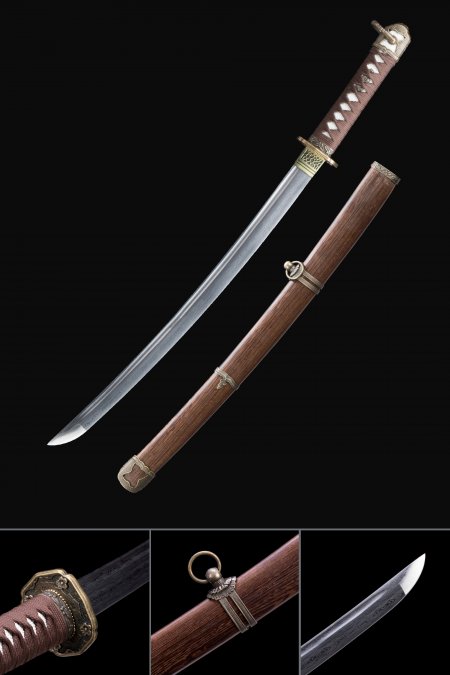
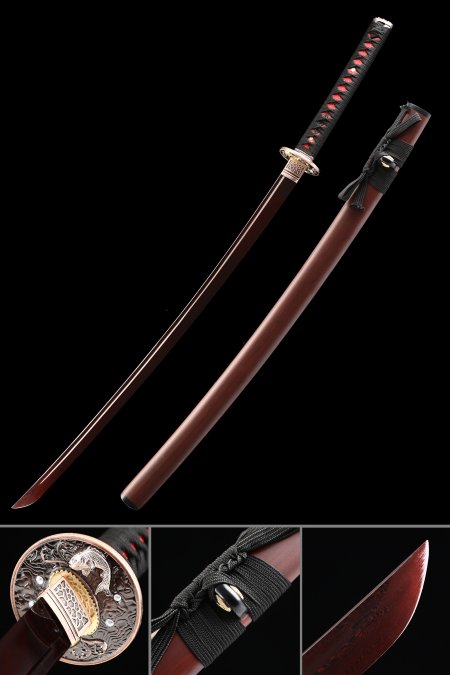
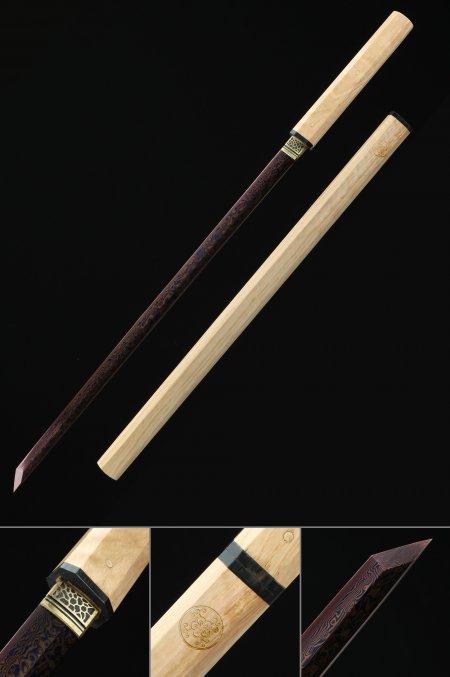
Damascus and T10 are fundamentally different steel types that appeal to different collector priorities. Damascus is produced by forge-welding multiple layers of steel together and folding them repeatedly — often 128 to 1,000-plus layers — creating the distinctive flowing grain pattern visible on the blade's surface. That visual complexity is the primary draw for collectors: no two Damascus blades are identical. T10, by contrast, is a high-carbon tool steel prized for its clay-tempering potential. When a T10 blade is clay-coated before quenching, the differential cooling produces a genuine hamon — a visible temper line separating the hardened edge from the softer spine. Collectors who value traditional Japanese metallurgical technique tend to gravitate toward T10 for that authentic hamon, while those who prioritize visual drama and layered aesthetics often prefer the patterned surface of Damascus.