What makes T10 steel ideal for clay-tempered tanto blades?
Updated Mar 2026
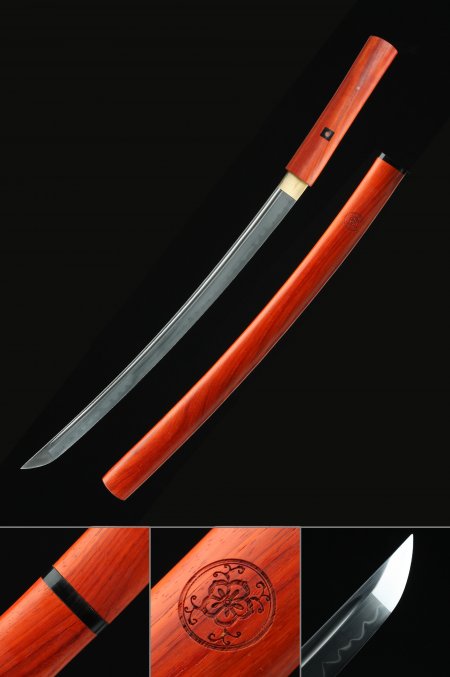
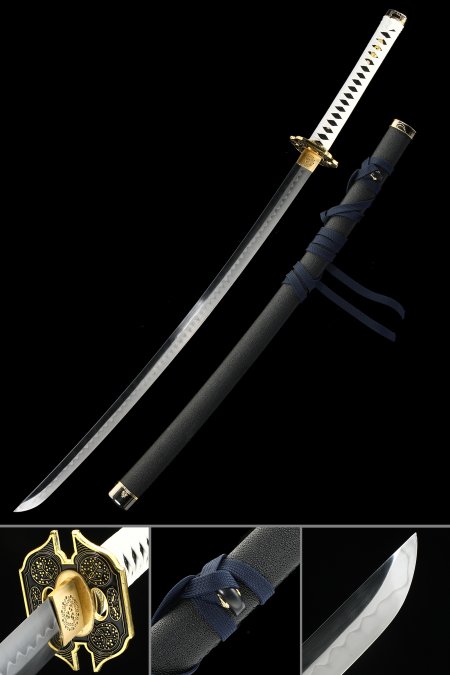
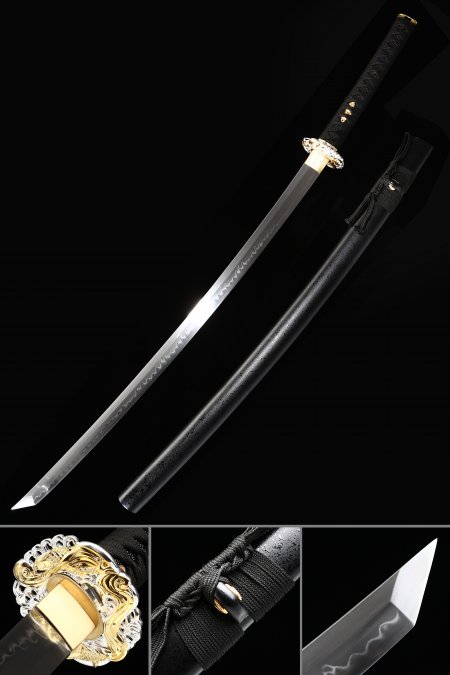
T10 tool steel carries roughly 1.0% carbon by weight, which places it at the upper range of high-carbon steels. That carbon concentration allows the edge zone to achieve very high Rockwell hardness — typically HRC 60–62 at the ha after quenching — while the clay-coated spine quenches more slowly and settles around HRC 40–42. The result is a blade with two distinctly different microstructures in a single piece of steel: a hard, wear-resistant edge and a tougher, more flexible spine. This differential hardness is exactly what produces a visible, authentic hamon line rather than a cosmetic etch. For display collectors, the practical consequence is a tanto that retains its surface polish and geometric sharpness over years of shelf display without the brittleness that would come from through-hardening the entire blade.