How does Damascus steel differ from standard high-carbon steel in a katana?
Updated Mar 2026
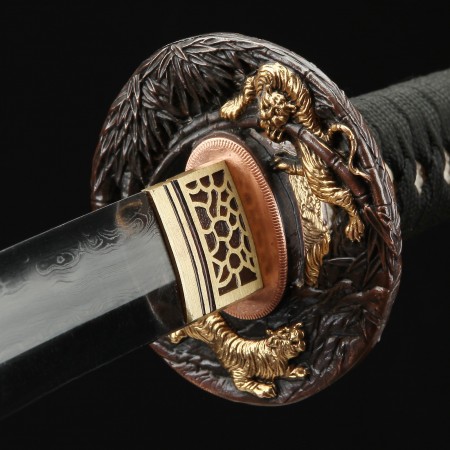
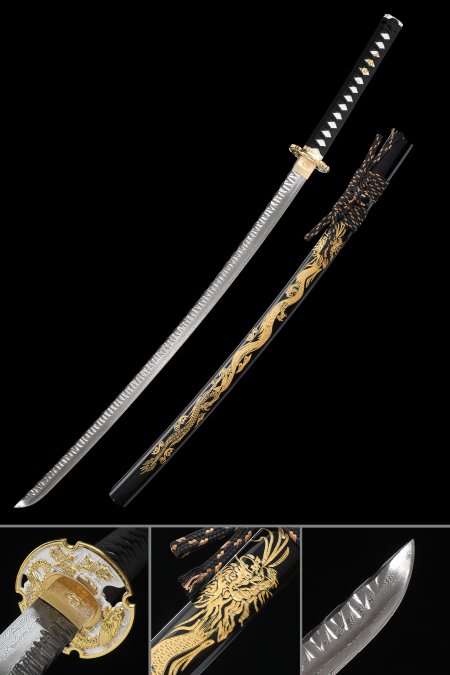
A standard high-carbon katana blade, such as one forged from 1075 or 1095 steel, is made from a single alloy composition ground and heat-treated to shape. Damascus steel, by contrast, is produced by forge-welding two or more steel types together repeatedly - commonly a high-carbon steel paired with a more ductile iron-rich alloy - then folding, drawing out, and re-welding the billet until the layers number in the dozens or hundreds. The practical outcome is a blade that exhibits micro-variations in hardness across its cross-section, which can improve overall toughness compared to a mono-steel blade of similar carbon content. The visual outcome is the flowing surface pattern that Damascus is recognized for. For collectors, the layer count, the fold pattern style, and the steel pairing used in the billet are all meaningful specifications that affect both appearance and character.