How do I identify a genuine hamon versus an acid-etched line?
Updated Mar 2026
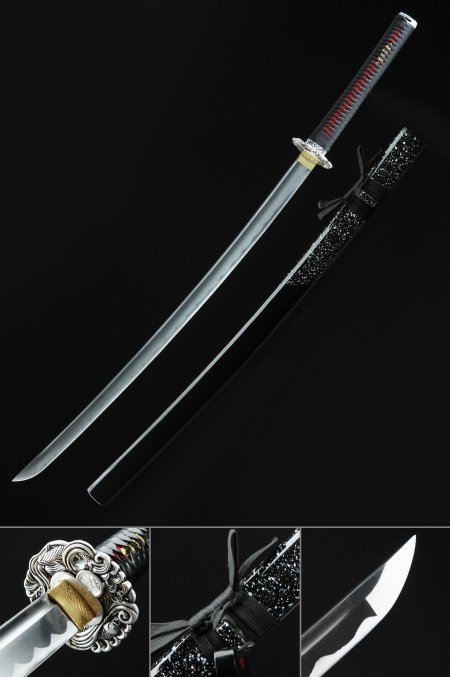
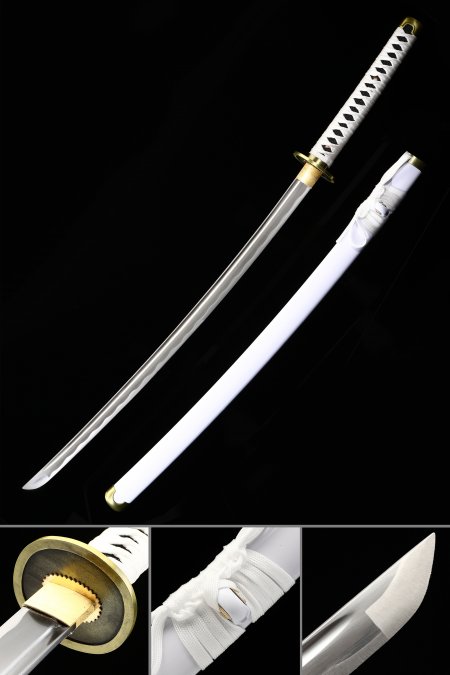
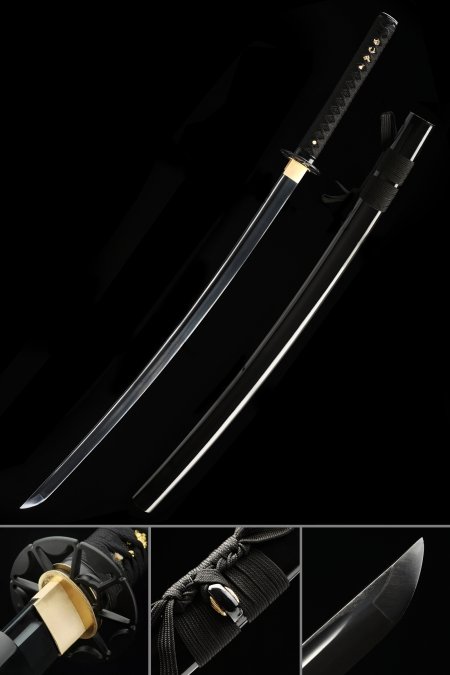
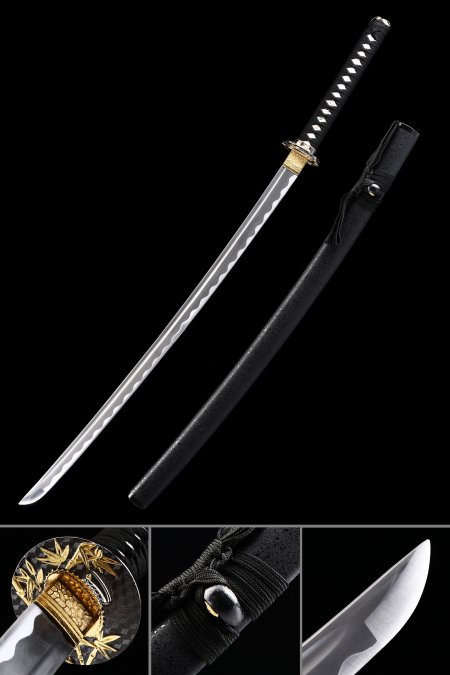
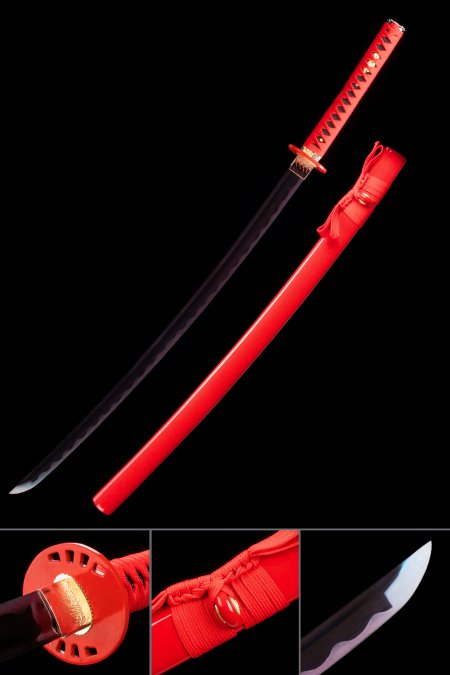
A genuine hamon is formed during the clay-tempering (tsuchioki) process: the blade is coated in clay - thick along the spine, thin near the edge - then heated and quenched in water. The differential cooling creates a true martensite boundary between the hardened edge (ha) and the softer spine (mune). Under a loupe or raking light, a genuine hamon displays interior activity such as nie (bright crystalline spots of martensite visible to the naked eye) and nioi (a misty, cloud-like diffusion). An acid-etched line, by contrast, is a surface-only treatment applied chemically after grinding; it appears as a flat, uniform band with no depth or interior texture. Acid etching does not alter the steel's metallurgical structure. All blades in this collection carry a real clay-tempered hamon, verifiable by examining the transition zone under direct light.