What defines an aikuchi katana compared to a standard katana?
Updated Feb 2026
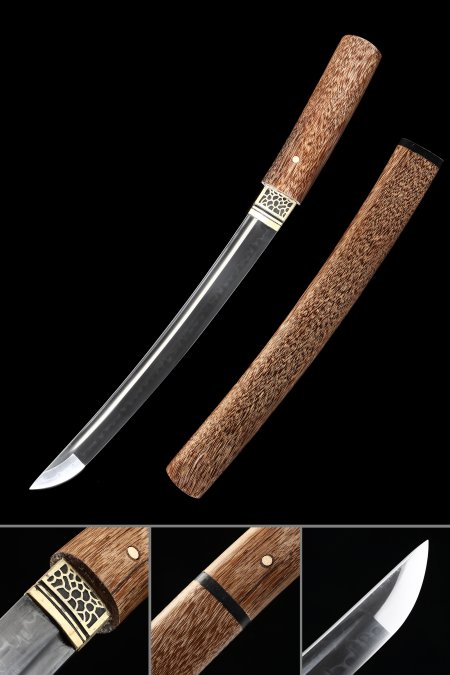
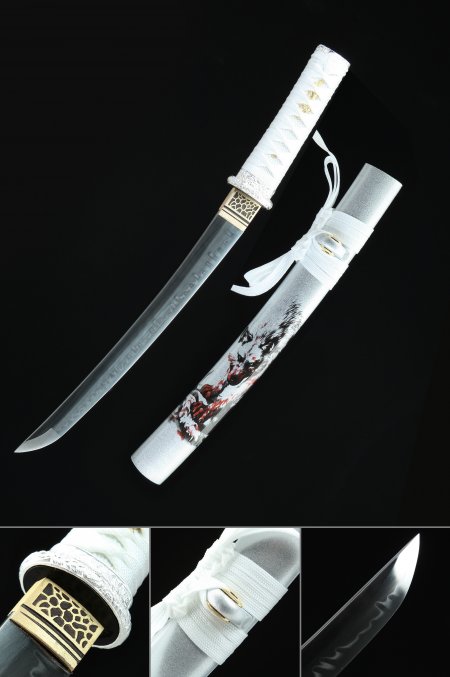
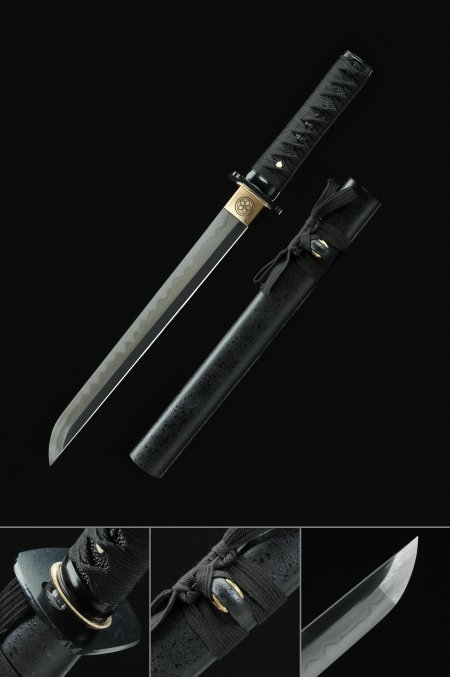
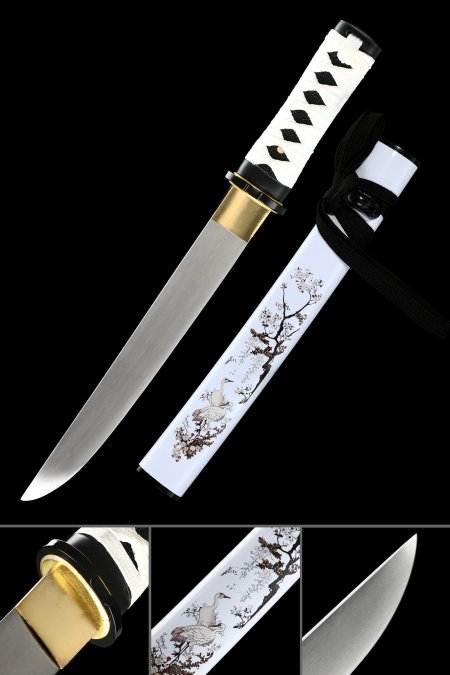
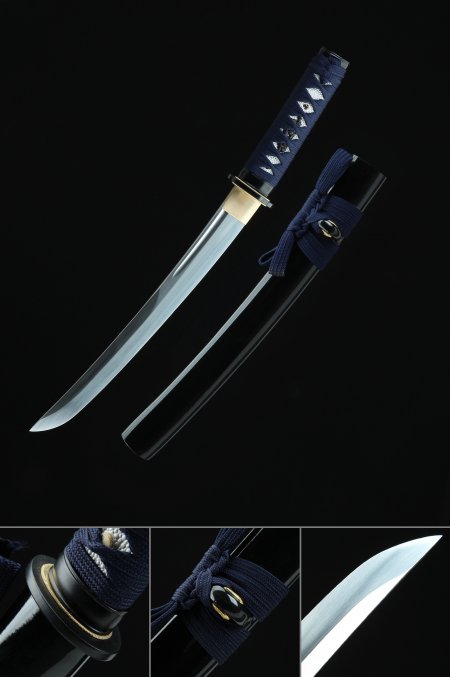
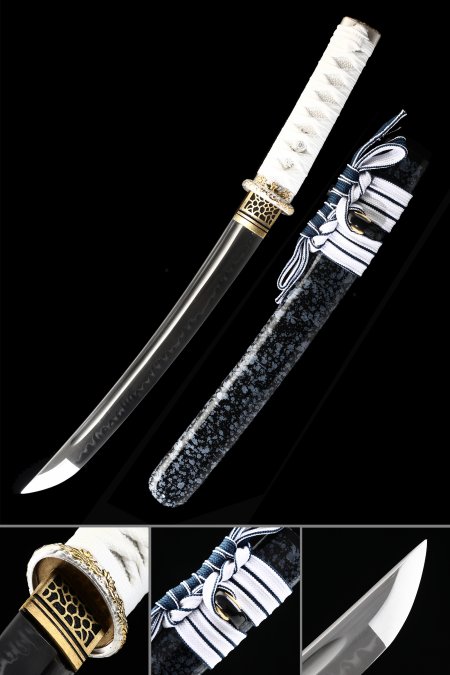
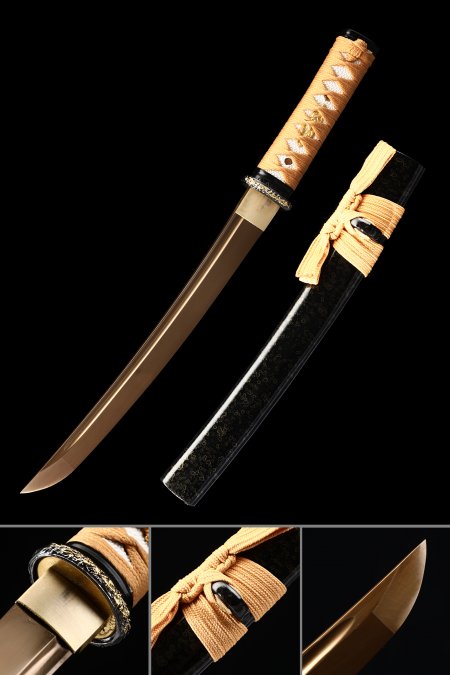
An aikuchi katana omits the tsuba (hand guard) entirely, so the tsuka and saya meet in a flush, seamless junction at the habaki. On a standard katana, a tsuba sits between the handle and scabbard, acting as both a visual accent and a functional barrier. The aikuchi design originated with shorter blades like tanto, where a low-profile fit was preferred for concealed or close-body carry. Extending this mounting to a full katana-length blade creates a strikingly minimalist look — the unbroken transition from handle to scabbard emphasizes the sword's overall line and forces every remaining fitting, from the fuchi to the kashira, to carry greater visual weight. For collectors, this makes the aikuchi a distinctive display piece that stands apart from guard-equipped swords.