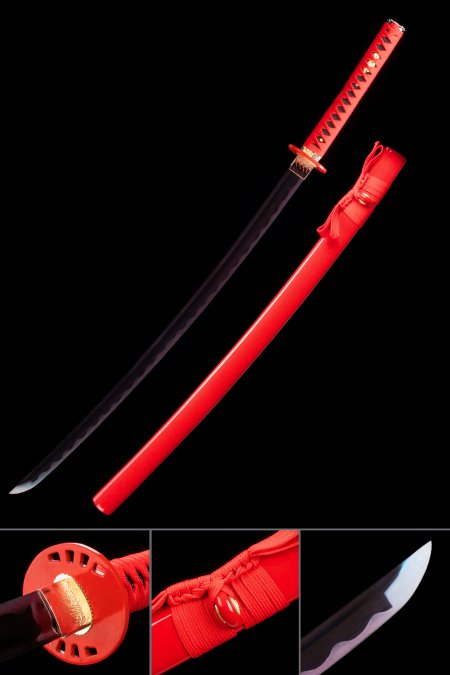
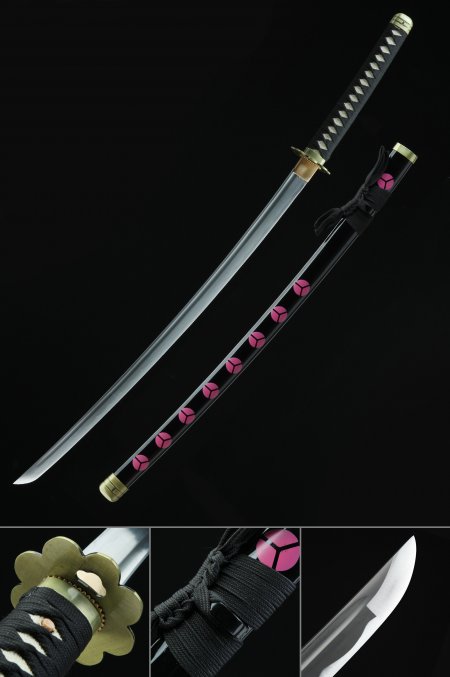
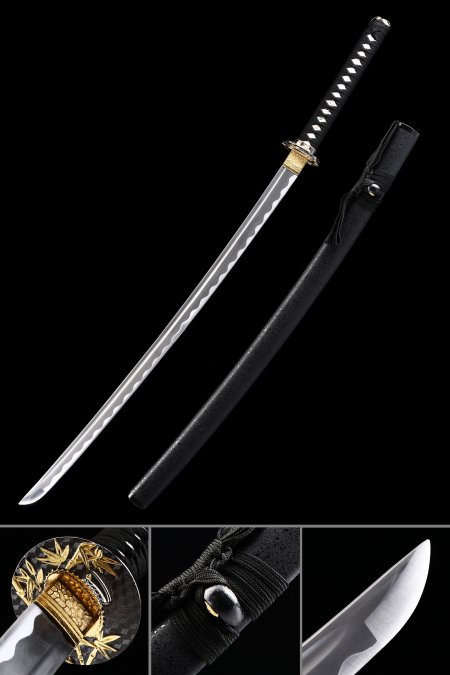
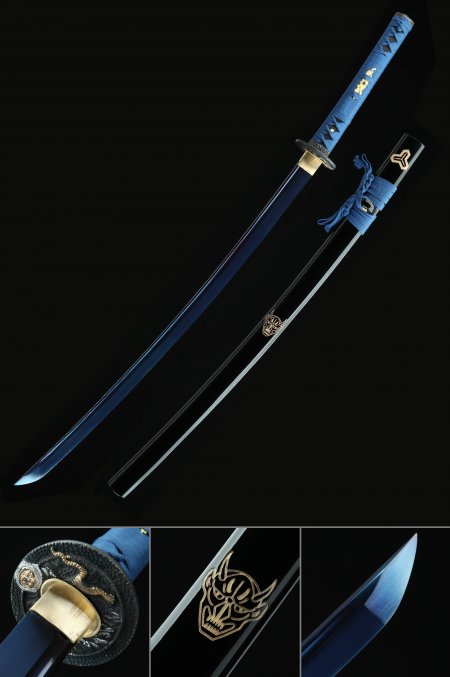
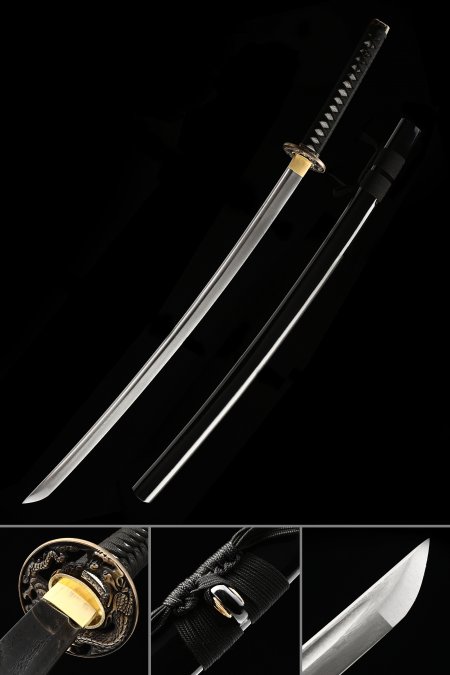
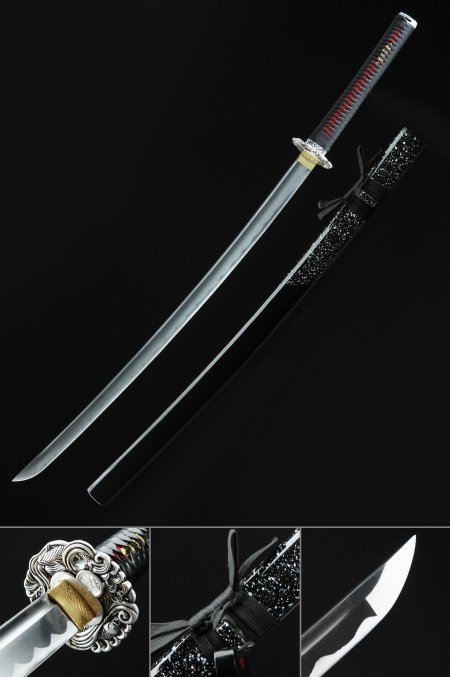
A genuine hamon is a physical byproduct of differential hardening, not a cosmetic etch. During production, a clay mixture is applied in a deliberate pattern along the blade — thicker over the spine, thinner or absent along the edge. When the blade is heated to critical temperature and quenched, the exposed edge cools rapidly into hard martensite while the insulated spine remains in softer pearlite. The boundary between these two crystalline structures is the hamon, and it becomes visible after careful polishing because the two grain structures reflect light differently. You can confirm authenticity by examining the line under magnification: a real hamon shows nie (individual martensite crystals) and nioi (misty clusters) within the transition zone. Acid-etched imitation lines, by contrast, appear flat and uniform with no micro-structural variation.