How is a real hamon different from an etched or cosmetic one?
Updated Feb 2026
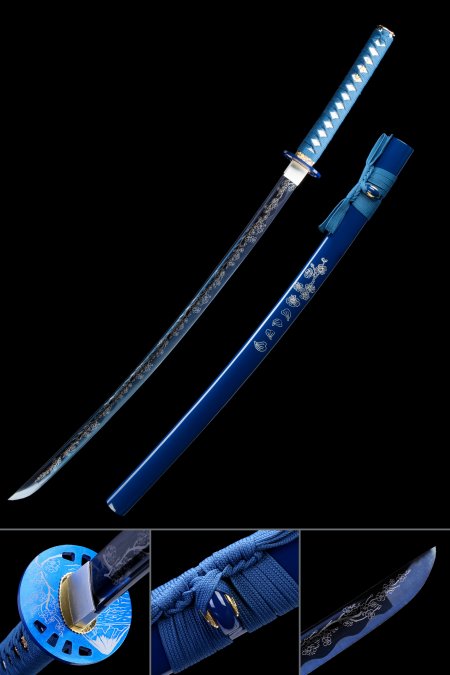
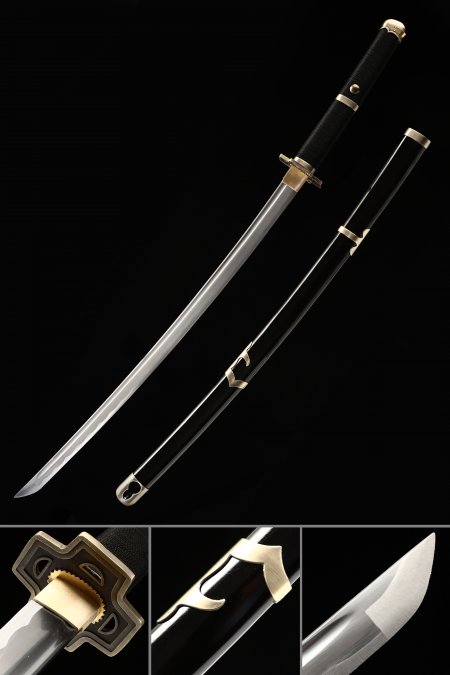
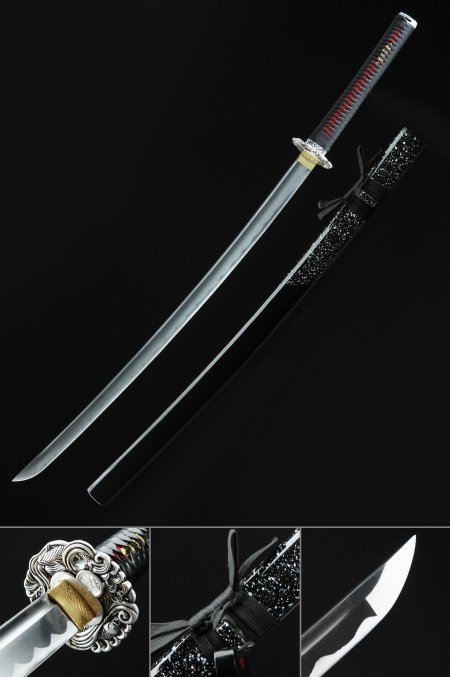
A real hamon is the visible boundary between the harder edge steel and the softer spine created during clay tempering — a process called tsuchioki in Japanese tradition. The smith coats the spine and flat of the blade with a clay mixture, leaving the edge exposed or thinly coated, then heats the blade to critical temperature and quenches it. The exposed edge cools rapidly into hard martensite, while the insulated spine cools slowly into softer pearlite. The transition zone produces the distinctive wavy line known as the hamon. An etched or wire-brushed cosmetic hamon, by contrast, is applied after hardening through acid or abrasion to mimic the appearance without actual differential hardness. Authentic hamon lines display subtle nie and nioi grain activity visible under close inspection — a hallmark that serious collectors look for when evaluating a tanto’s craftsmanship.