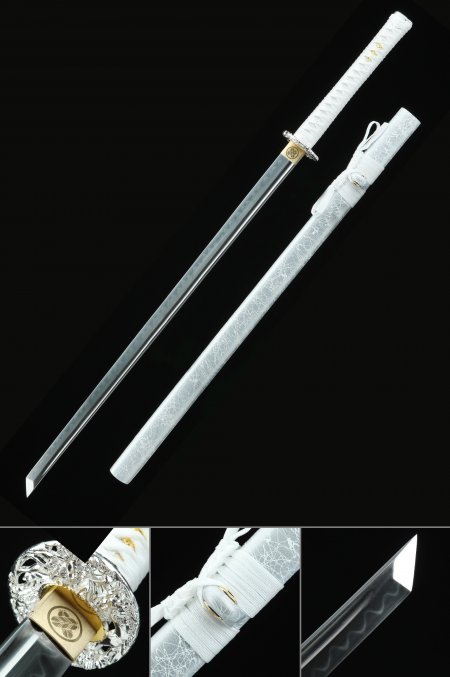
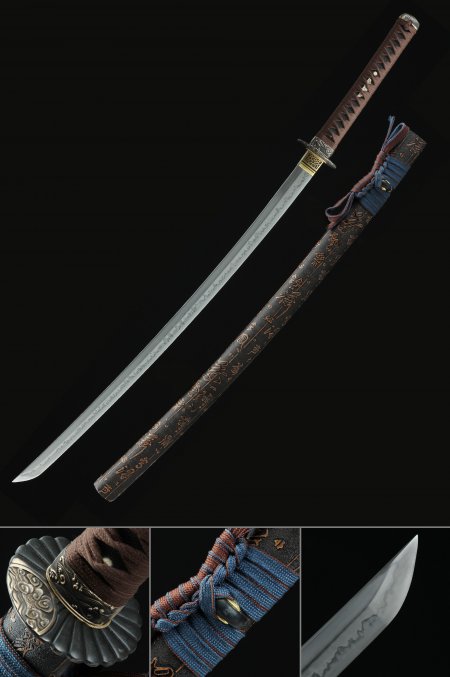
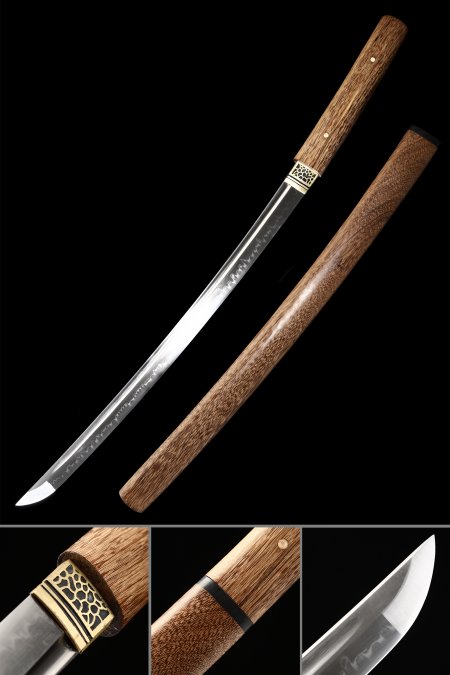
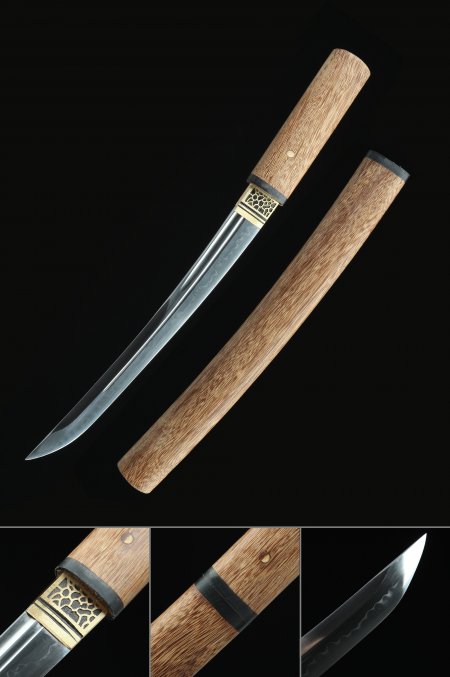
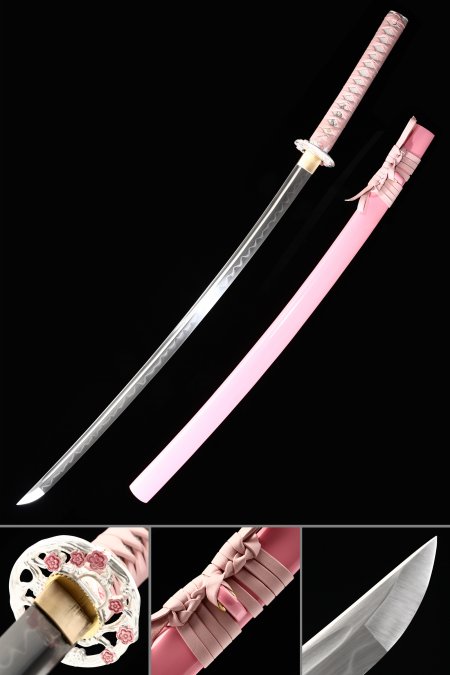
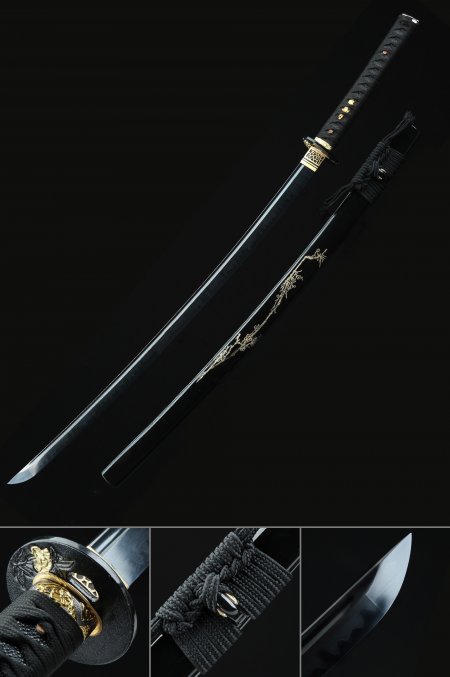
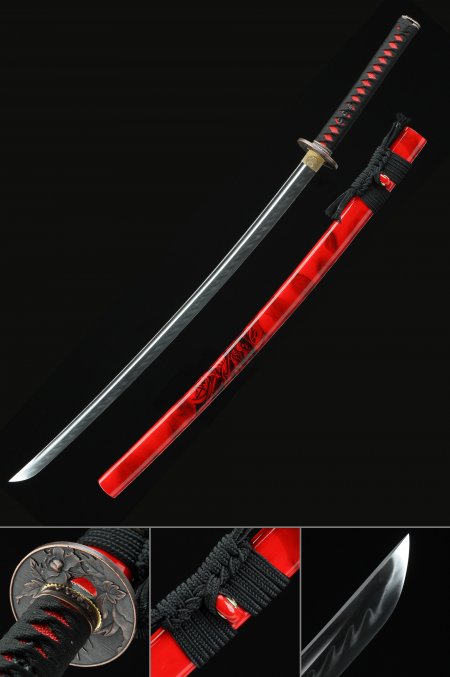
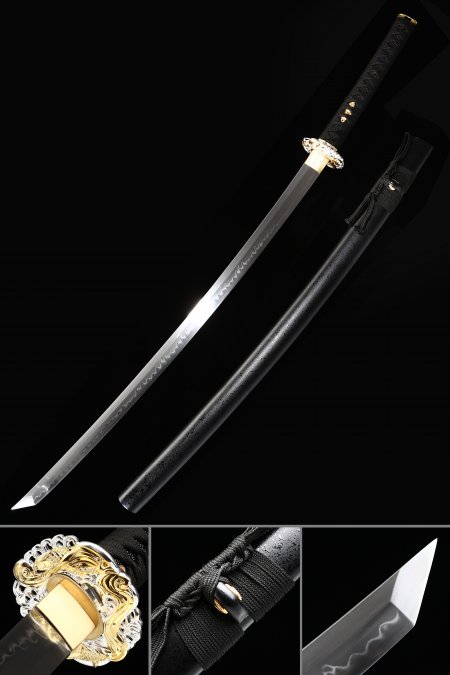
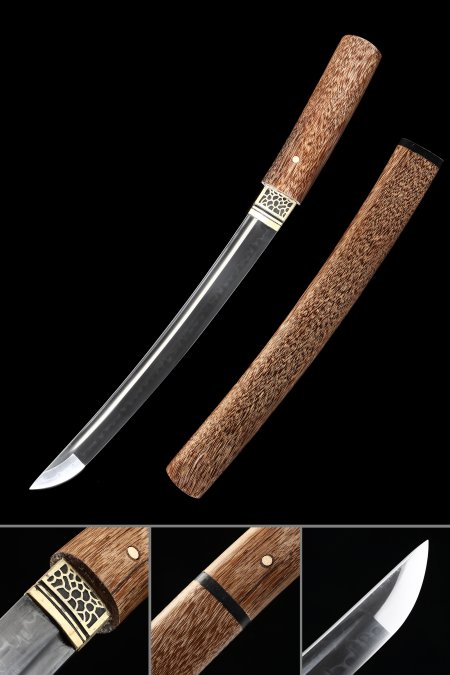
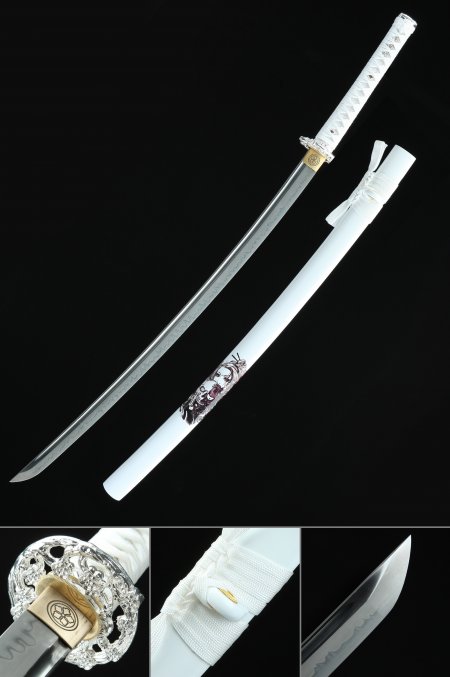
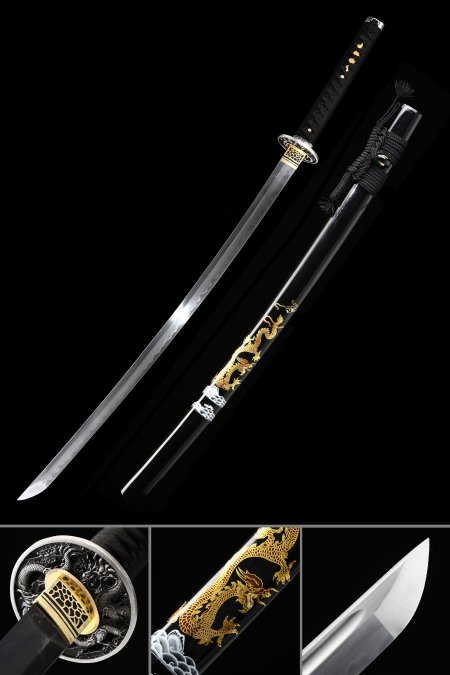
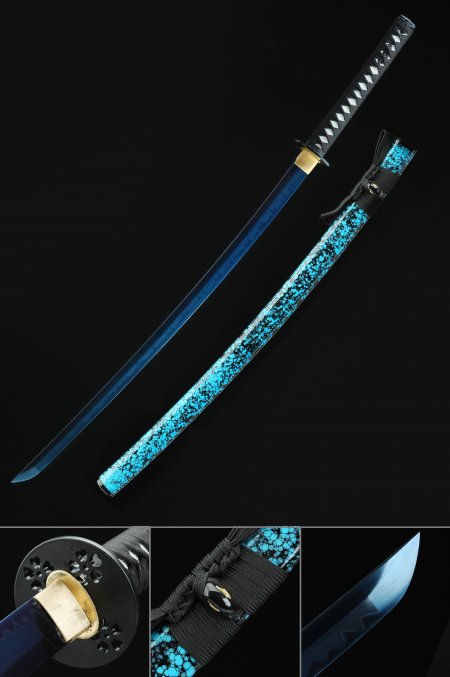
Clay tempering is a differential heat-treatment process borrowed directly from historical Japanese sword-making. A layer of refractory clay is applied along the blade's spine before quenching, which slows the cooling rate in that area. The exposed edge cools rapidly, hardening to a high Rockwell rating, while the spine remains softer and more resilient. The boundary between these two zones crystallizes into the hamon — the visible temper line that runs the length of the blade. On a properly clay-tempered T10 Sasuke katana, this hamon is a genuine metallurgical feature, not a polished or etched imitation. It is one of the clearest markers that separates a craftsmanship-oriented collector blade from a decorative wall-hanger.