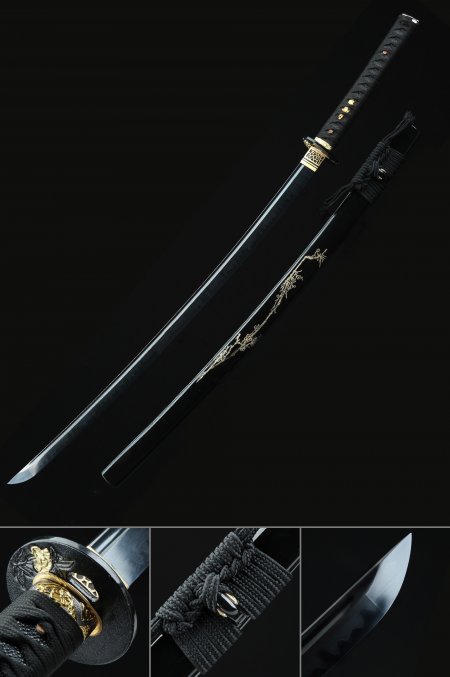
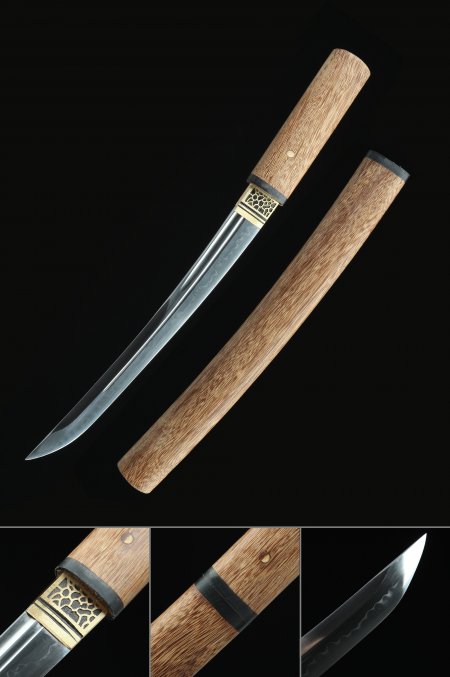
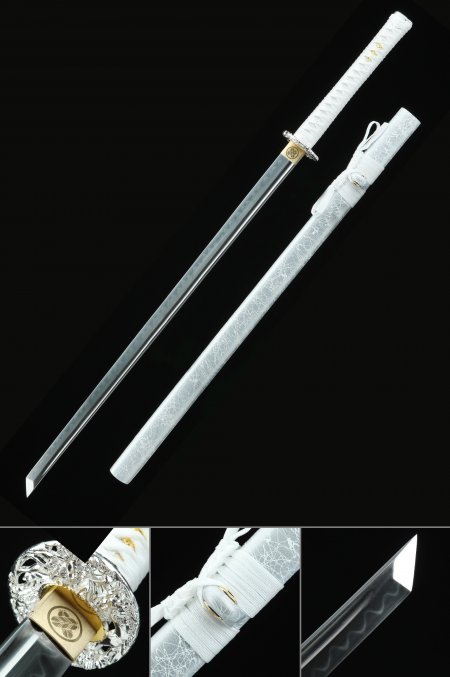
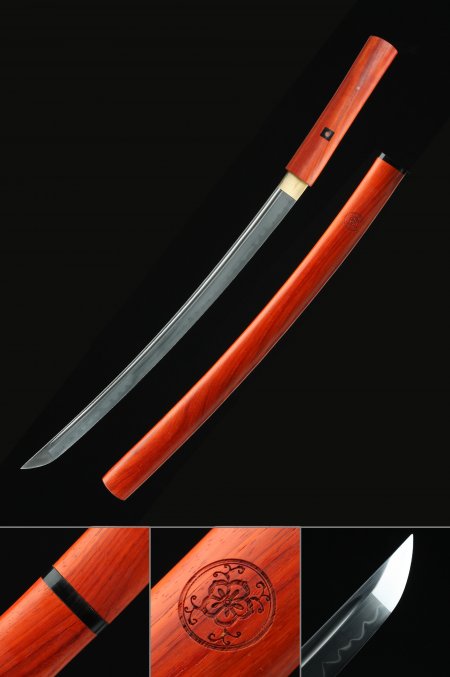
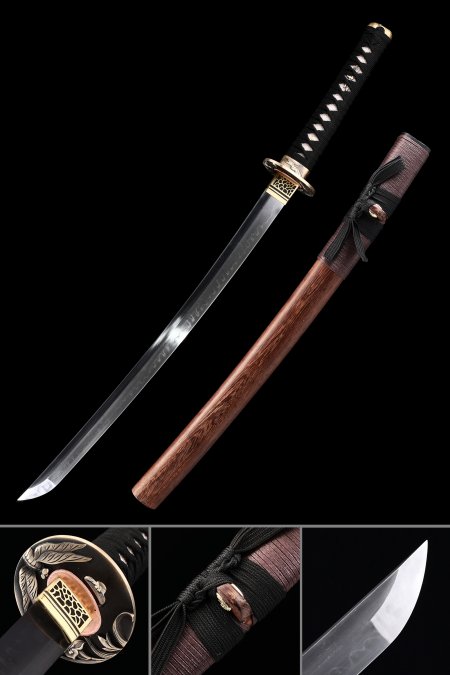
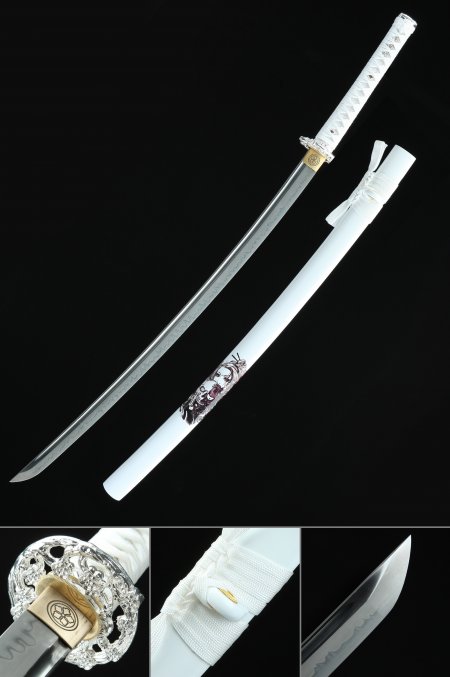
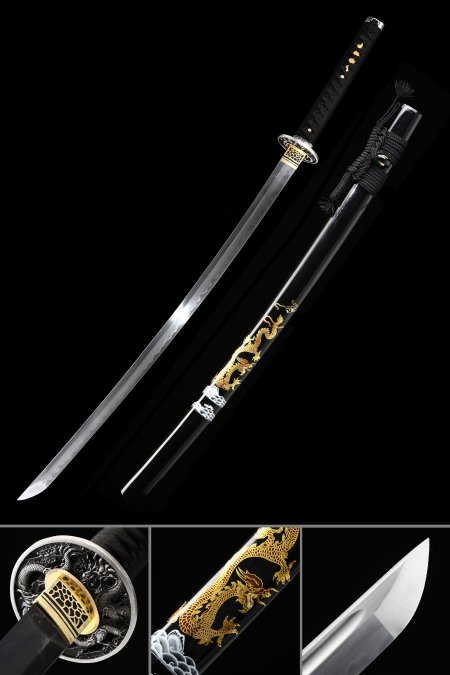
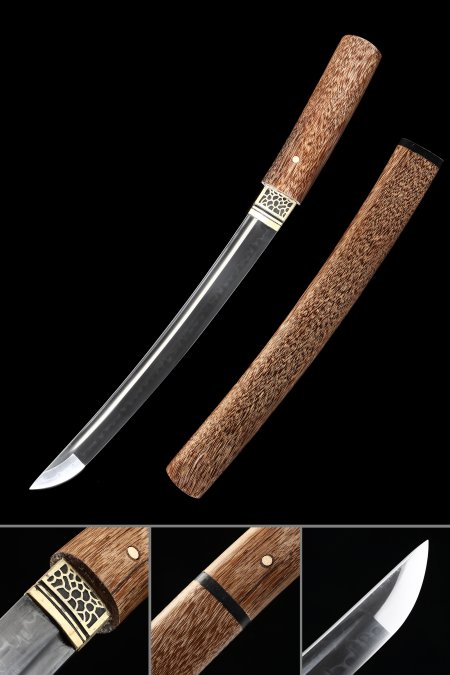
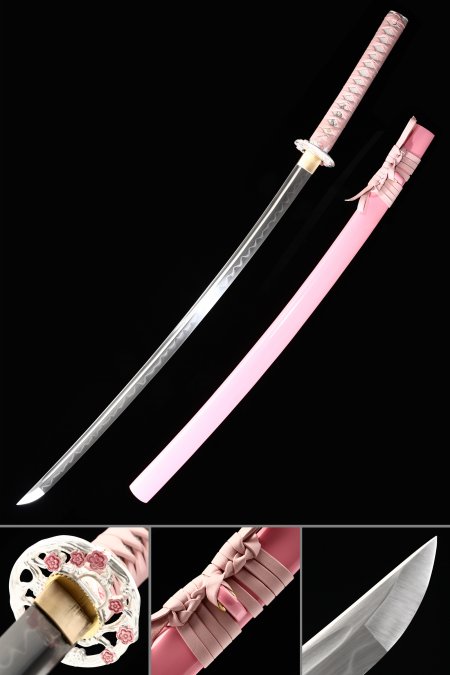
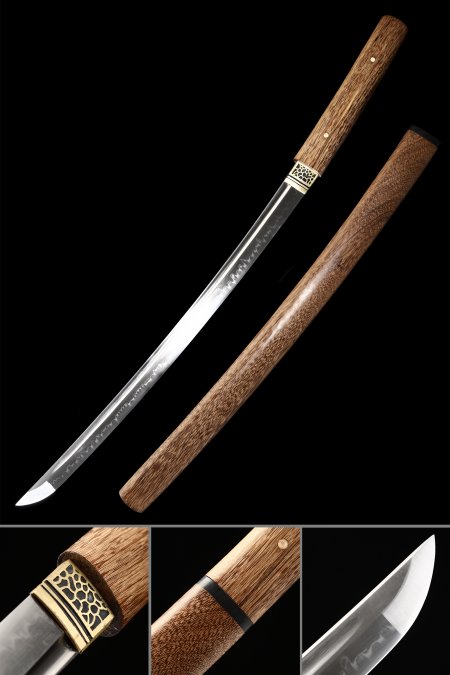
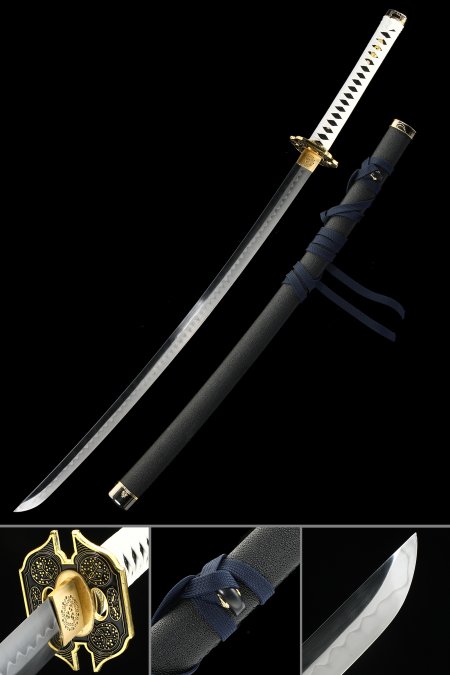
Clay tempering is a traditional Japanese heat-treatment process in which a clay mixture is applied unevenly along the blade before it is heated and quenched. The spine, coated in thicker clay, cools more slowly and remains relatively soft and resilient. The edge, left with minimal clay or none at all, cools rapidly and hardens. This differential cooling creates the hamon — the visible temper line that runs along the lower portion of the blade. On T10 and 1065 carbon steel mini katana, the hamon appears as a natural, undulating line with a misty or crystalline texture called nie and nioi, depending on the grain structure. Collectors specifically seek clay-tempered pieces because the hamon is a byproduct of the actual metallurgical process, not an etched or polished-in cosmetic feature. It is considered the clearest indicator of authentic forging technique in the collectible katana market.