What makes a tachi different from a katana in terms of design?
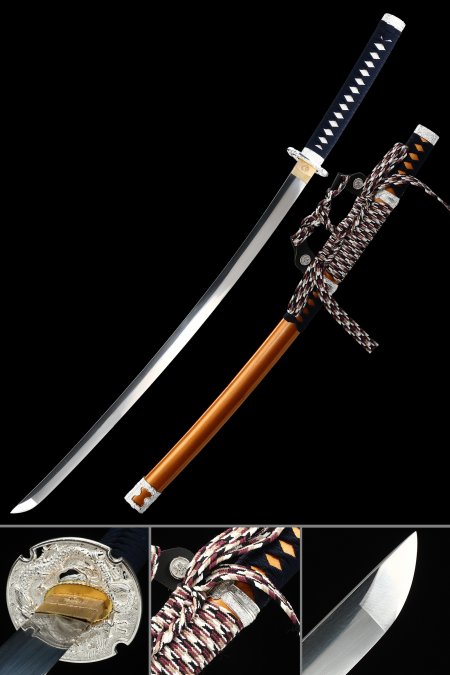
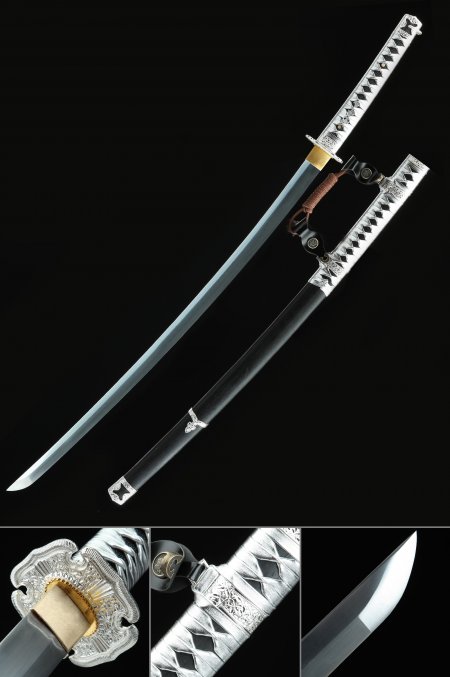
The tachi predates the katana by several centuries and differs in both geometry and intended use. A tachi typically measures over 60 cm at the blade and features a more pronounced curve (sori) distributed along the lower portion of the blade, which suited mounted samurai who drew from a suspended, edge-down carry position. The katana, developed later for foot soldiers, is shorter on average, carries its curvature higher toward the kissaki, and is worn edge-up through the obi. For collectors, this means a tachi or odachi display piece has a visually more dramatic arc and a longer overall silhouette - both qualities that make it a stronger focal point on a wall mount or display stand.
Why do silver tsuba stand out compared to brass or iron fittings?
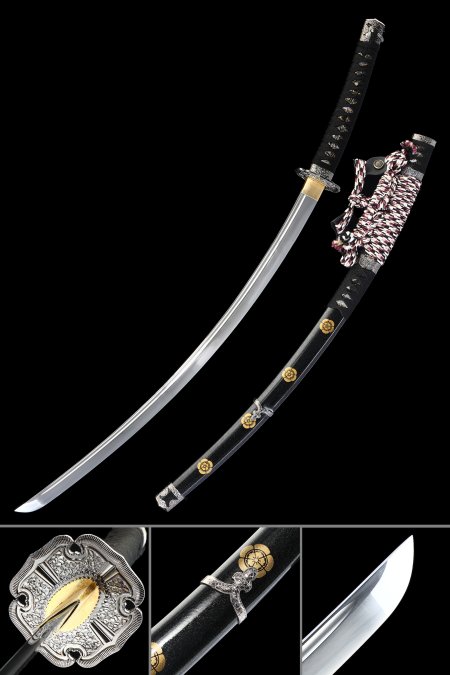
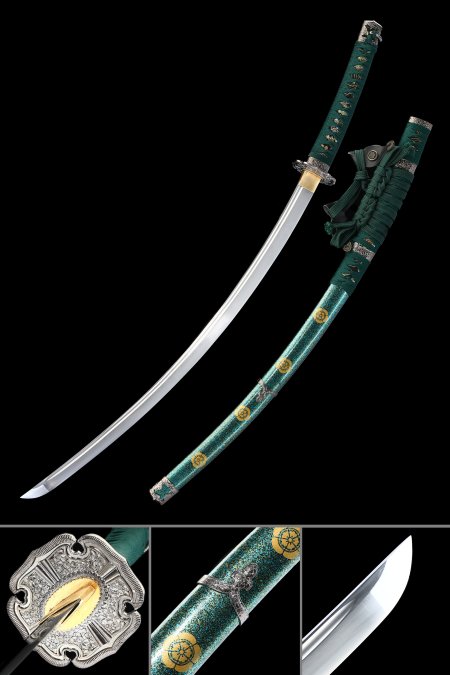
Silver-tone fittings occupy a middle ground between the warmth of brass and the austerity of iron. Historically, silver was used in high-status sword furniture to signal rank and refinement, often combined with gold inlay or detailed engraving. On a modern collectible tachi, a silver scroll or dragon tsuba creates strong visual contrast against dark lacquer saya - particularly black or deep teal - while remaining neutral enough to complement almost any ito wrap color. Iron tsuba tend to recede visually and emphasize texture over shine; brass leans warm and pairs better with earth tones. Collectors building a multi-piece wall display often use silver-fitted pieces as visual anchors because the finish photographs clearly and reads well from a distance.
Is 1095 carbon steel or Damascus better for a display tachi?
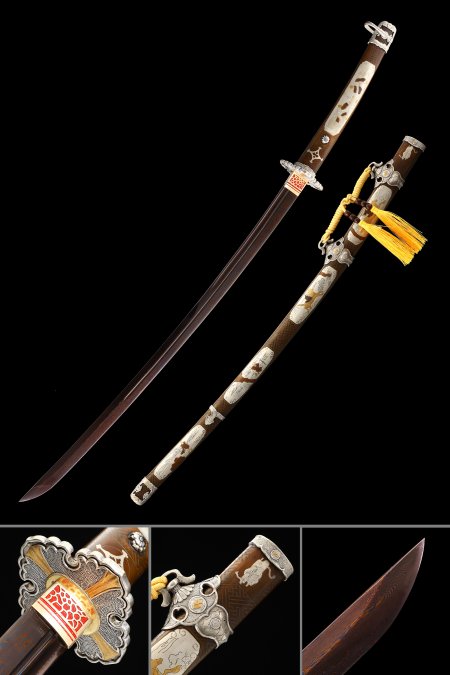
The answer depends on what you value most in a display piece. 1095 high-carbon steel is a single-alloy steel with a consistent, fine grain structure that takes a clean polish and maintains its geometry with minimal maintenance - ideal if you want a blade that looks sharp and uniform under lighting. Damascus (or pattern-welded) steel is forge-welded from multiple layers of differing steel, producing the flowing surface patterns visible after acid etching. No two Damascus blades display identical hada, making each collectible a unique object. Damascus requires slightly more attentive care because the exposed layering can be more reactive to humidity. Both are full-tang constructions in this collection, so structural integrity for long-term display is equivalent.
How should I oil and store a silver tsuba tachi long-term?
Apply a light coat of choji oil or camellia oil to the blade every two to three months, more frequently if your display environment is humid. Use a soft, lint-free cotton cloth and wipe in one direction from habaki toward kissaki - never back and forth, which can leave micro-scratches over time. Remove the blade from its saya for oiling and allow it to air briefly before resheathing to prevent moisture trapping inside the lacquered scabbard. Store the piece on a horizontal sword rack or angled katana stand, away from windows and heat sources. For the silver-tone tsuba, a dry microfiber cloth is sufficient for routine cleaning; avoid liquid cleaners or abrasive polishes that can strip surface treatments or soften engraved edges.
Can a tachi set work as a coordinated wall display for gifting?
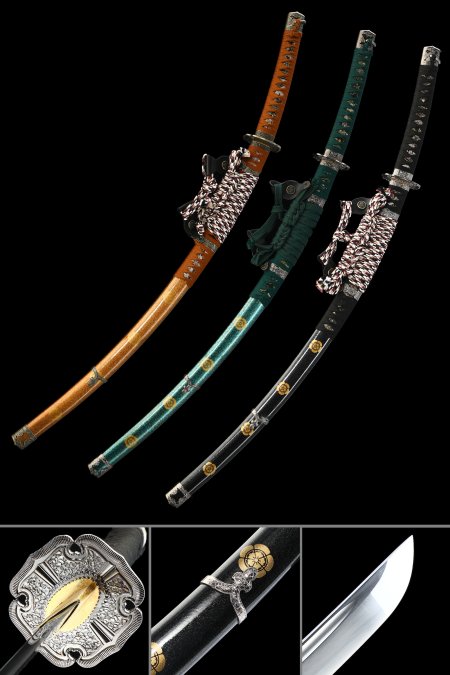
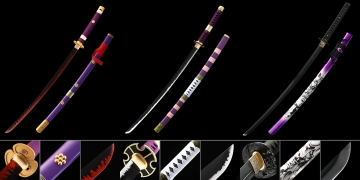
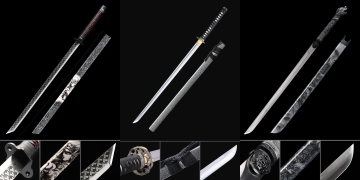
Yes - tachi and odachi pieces with matching or complementary fittings are among the most requested collectible gifts for enthusiasts of Japanese history, martial arts culture, or decorative arms. A three-piece set covering different saya colorways (orange, teal, and black, for example) creates an immediately cohesive wall grouping without requiring the recipient to source matching pieces separately. For single-piece gifts, a tachi featuring a silver dragon tsuba paired with a contrasting lacquer saya is visually striking and substantial enough to feel significant as a standalone display. When gifting, include the original packaging and any care documentation - proper storage instructions add practical value for a recipient new to blade collecting.