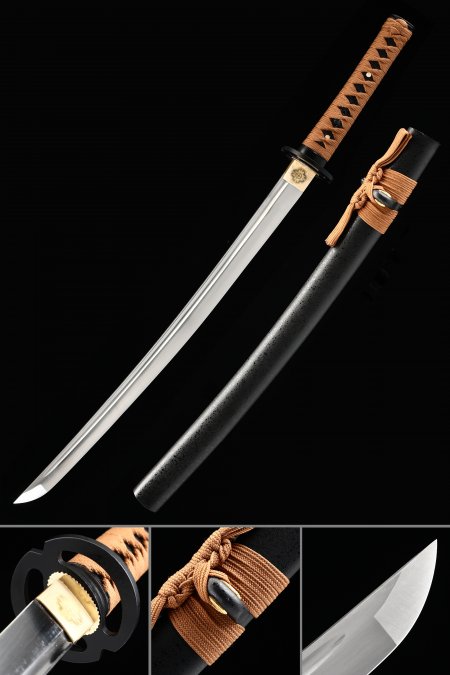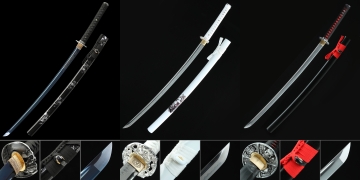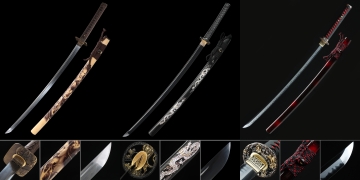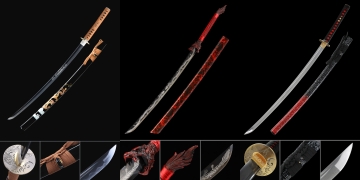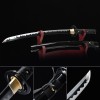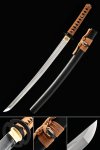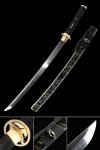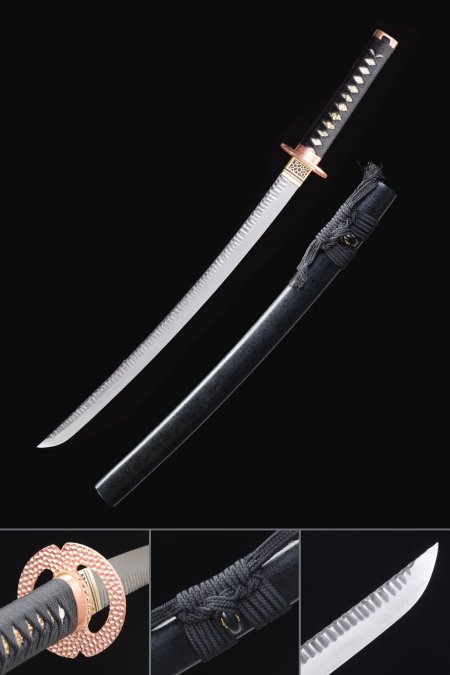
Round Plain Tsuba Wakizashi

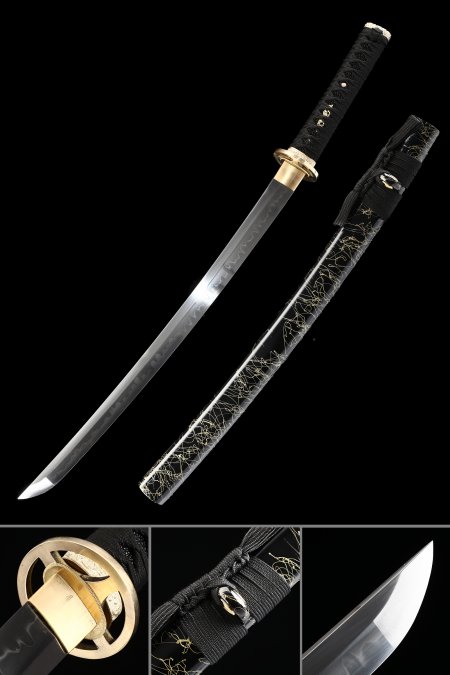
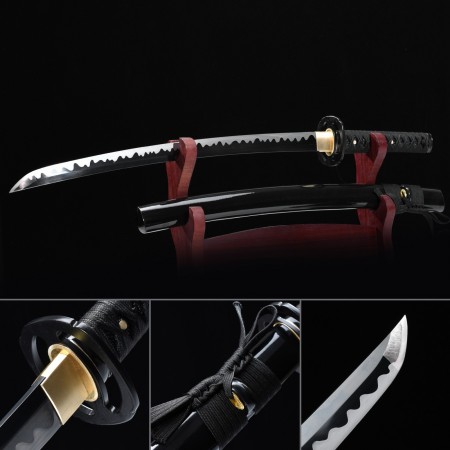
The Round Plain Tsuba Wakizashi collection brings together finely crafted short Japanese swords defined by their clean, circular guard - a hallmark of classical Edo-period aesthetics. Each piece features hand-selected materials including T10 tool steel, Damascus billets, and manganese alloys, paired with lacquered hardwood saya and hand-wrapped ito for an authentic presentation. Complimentary free shipping and free returns are included with every order, so you can collect with confidence.
Showing 4 Products

Related Collections

Skull Tsuba Katana28 items


109 Reviews

Lion Tsuba Katana27 items


107 Reviews

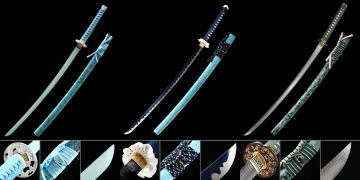
Teal Saya Katana26 items


43 Reviews

Phoenix Tsuba Katana28 items


63 Reviews

Frequently Asked Questions

What makes a round plain tsuba distinct from other guard styles?
A round plain tsuba - called maru-gata in Japanese sword terminology - is defined by its unbroken circular outline and smooth, unadorned face. Where other guard styles incorporate pierced openings (sukashi), relief carvings, or irregular silhouettes to create visual interest, the maru-gata achieves its appeal purely through proportion and finish. This restraint was highly valued in classical Japanese aesthetics, particularly during the Edo period, when refined simplicity signaled sophistication. For collectors, the round plain tsuba is also one of the most display-versatile forms: it reads cleanly at a distance, does not compete visually with an active blade hamon or decorated saya, and suits both traditional and contemporary interior settings equally well.
How does T10 steel differ from manganese steel in a wakizashi?
T10 is a high-carbon tool steel with a carbon content around 1.0%, commonly used in hand-forged Japanese-style blades because it responds well to clay tempering - the process that creates a visible hamon along the edge. The resulting hamon line is a genuine result of differential hardening, not an acid-etched simulation, which makes T10 blades particularly valued among collectors who appreciate authentic metallurgical detail. Manganese steel, by contrast, is an alloy that prioritizes surface hardness and impact resistance, producing a brighter, more uniform finish that lends itself to polished chrome-style aesthetics. Neither is inherently superior - the right choice depends on whether you prioritize hamon activity and traditional craft character (T10) or a bold, reflective visual presentation (manganese).
Is Damascus steel in a wakizashi functional or purely decorative?
Damascus-billet wakizashi in the collectible market are valued primarily for their visual character - the layered, flowing grain patterns produced by folding and forge-welding different steel alloys together. Each blade carries a unique surface pattern, making it a one-of-a-kind display piece. While the underlying steel does hold an edge, collectors acquire Damascus wakizashi for their aesthetic and artistic merit rather than utility. The rose gold or contrasting tsuba options paired with Damascus blades in this collection are specifically chosen to complement the organic swirl patterns of the steel, creating a cohesive visual identity across blade and fittings.
How should I store and maintain a wakizashi in its saya long-term?
For long-term display and storage, the most important practice is controlling moisture exposure. High humidity accelerates oxidation on carbon steel blades, so storing the wakizashi in a climate-controlled environment - ideally between 40-50% relative humidity - is strongly recommended. Apply a thin coat of choji oil or mineral oil to the blade every three to six months, using a soft lint-free cloth to distribute it evenly. Avoid storing the blade inside the saya for extended periods without periodic inspection, as trapped moisture between blade and saya can cause localized rust spotting. When displaying on a stand, position the cutting edge facing upward in the traditional Japanese convention, which also helps prevent oil from pooling unevenly along one side of the blade.
Does a round tsuba wakizashi pair well with a katana for display?
A round tsuba wakizashi is one of the most natural partners for a matching katana in a daisho display - the traditional Japanese pairing of a long sword and short sword worn together. When both pieces share a round plain tsuba, the visual unity across the pair is immediate and historically resonant, reflecting how matched mountings were prized in feudal Japan as a mark of status and taste. For a cohesive display, look for matching saya finish, ito color, and tsuba material across both pieces. Our Wakizashi Swords collection includes options across multiple mounting styles to help collectors build a harmonious set.

Customer Reviews

Cart 0 Items

Your cart is empty