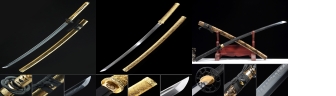
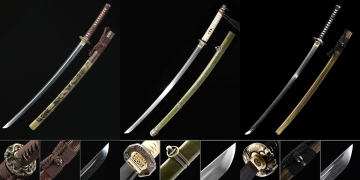
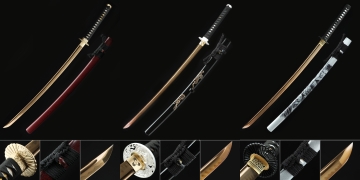
What makes T10 steel a preferred choice for tachi collectibles?
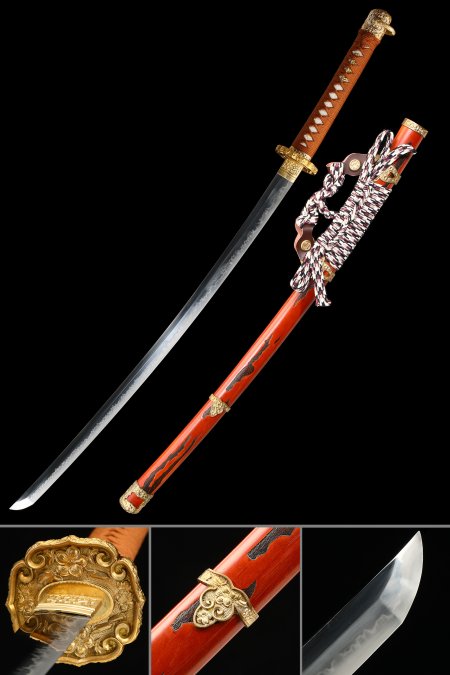
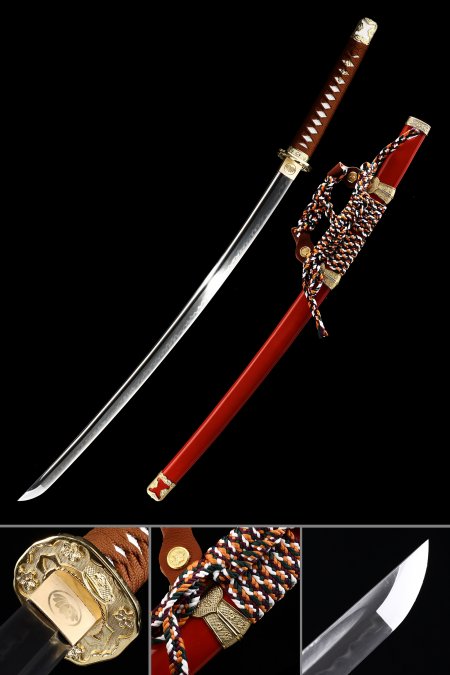
T10 is a high-carbon tool steel with a carbon content near 1.0%, which allows it to reach meaningful surface hardness during heat treatment. What sets it apart from generic high-carbon steels is a trace tungsten content that improves wear resistance at the edge—a quality that matters even for display pieces where collectors examine blade geometry and surface finish closely. When clay-tempered, T10 produces a distinct hamon that is considered more defined and active-looking than what many lower-grade steels can achieve. For tachi collectors, the combination of reliable heat-treat response and expressive hamon formation makes T10 a steel worth specifically seeking out.
How is a tachi different from a katana in length and wear?
The most practical distinction is blade length and carrying convention. A tachi typically measures 70 cm or more in nagasa and was traditionally suspended edge-down from the belt using a pair of hangers called ashi. The katana, which emerged later, is generally shorter and was worn edge-up thrust through the obi. For display purposes, this means a tachi requires different mounting hardware and tends to present more dramatically on a horizontal stand due to its deeper curvature and longer silhouette. Collectors who display both forms often find the tachi creates a visually dominant centerpiece precisely because of those extended proportions.
What does a real hamon on a T10 tachi blade indicate?
A genuine hamon is the direct visual record of the clay-tempering process. Before quenching, the smith applies a thicker layer of clay toward the spine and a thinner layer near the edge. The differential cooling rates create two distinct crystalline zones in the steel—a hard martensitic edge and a tougher pearlitic spine—and the boundary between them becomes visible as the hamon after polishing. On T10 steel, this line often displays nie (granular crystalline activity) and a well-defined transition that is absent on blades that are simply acid-etched to simulate the effect. When purchasing a collectible tachi, a real hamon is one of the clearest indicators that genuine differential heat treatment was performed.
How should I store and maintain a red lacquer saya long-term?
Red lacquer saya require a stable environment to preserve their finish. Avoid direct sunlight, which can fade and crack lacquer over time, and keep humidity between 40–60% to prevent the wooden core from warping or the lacquer from lifting at the edges. For the blade itself, apply a light coat of choji oil or a neutral mineral oil every few months using a soft cloth, then re-seat the blade gently. Never store the blade inserted so tightly that moisture becomes trapped. When displaying on a wall mount or stand, orient the tachi edge-down in the traditional tachi manner to both honor the form and distribute any internal stress on the saya evenly.
Is a T10 tachi suitable as a display gift for a Japanese history enthusiast?
A T10 tachi with red lacquer fittings makes an unusually substantive gift for collectors interested in Heian or Kamakura period Japanese history. Unlike decorative replicas made from stainless steel, a clay-tempered T10 blade carries a visible and verifiable record of its own making in the hamon, giving the recipient something genuinely educational to study. The red lacquer saya and gold-tone peony tsuba also connect to period Japanese decorative conventions, making the piece historically contextual rather than purely ornamental. It presents well in a gift box and is striking enough to anchor a display shelf, desk, or study wall as an immediate conversation piece.