FAST SHIP
Free Shipping
189.00 USD
ON SALE! 15% OFF
Was: 219.00 USD

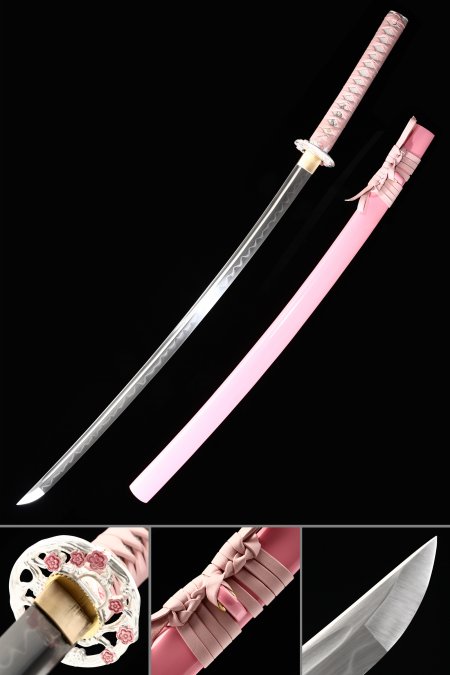
The Pink T10 Carbon Steel Katana collection brings together hand-forged blades crafted from high-carbon T10 tool steel, celebrated for its fine grain structure and natural hamon activity through clay tempering. Each piece pairs authentic metallurgical tradition with striking pink lacquer saya, ornate tsuba, and carefully wrapped handles - making every katana a display-worthy centerpiece. Free standard shipping is included on all orders, and we stand behind every piece with a hassle-free return policy.
This was a Christmas gift and she absolutely loved it. This was my 2nd purchase from here and always quality stuff. You won't be disappointed.
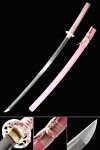 |
T10 Carbon Steel Clay Tempered Pink Katana with Cherry Blossom Tsuba and Piano Lacquer Saya |
Everything about it is great, but the saya/sheath. The outside of it was fine, no problems. The inside was weak, and chips would often come off. Also it would be helpful to throw in a paper that shows the specs of the blade. (metal type, length, proper care oils, ect)
|
T10 Carbon Steel Clay Tempered Pink Katana with Cherry Blossom Tsuba and Piano Lacquer Saya |
Fantastic Sword for the price; I’ve never seen a pink katana before so I just had to have it!
|
T10 Carbon Steel Clay Tempered Pink Katana with Cherry Blossom Tsuba and Piano Lacquer Saya |
Me and my mother love Japanese katana's and I wanted to get her one for mother's day. She absolutely loves this sword and I can't wait to buy another one for myself.
|
T10 Carbon Steel Clay Tempered Pink Katana with Cherry Blossom Tsuba and Piano Lacquer Saya |
Product was amazing love it but it got shipped to my uncles garage for some reason when i put my home address in
|
T10 Carbon Steel Clay Tempered Pink Katana with Cherry Blossom Tsuba and Piano Lacquer Saya |
It’s cool looking sword but realizing that’s it’s really bright pink makes me look gay asf so imma buy a different looking blade that has a better sheathe
|
T10 Carbon Steel Clay Tempered Pink Katana with Cherry Blossom Tsuba and Piano Lacquer Saya |
Love this thing. Best katana I own. It’s sturdy, it’s durable, it feels nice in the hand, it’s not too heavy or too light, it actually stays in the scabbard, and it’s sharp. My only complaint is that the main photo is slightly deceiving. The scabbard color doesn’t actually have a fade-to-white design on it. But I still give it 5 stars. 100% recommend.
|
T10 Carbon Steel Clay Tempered Pink Katana with Cherry Blossom Tsuba and Piano Lacquer Saya |
A feminine, elegant and beautiful katana. Well balanced; slashing feels graceful and effortless. Handle has a fine, non slip grip. Tsuba is large and sturdy. Blade glides easily into scabbard without any noise or resistance. I love this katana
|
T10 Carbon Steel Clay Tempered Pink Katana with Cherry Blossom Tsuba and Piano Lacquer Saya |