What makes T10 steel a preferred choice for odachi collectors?
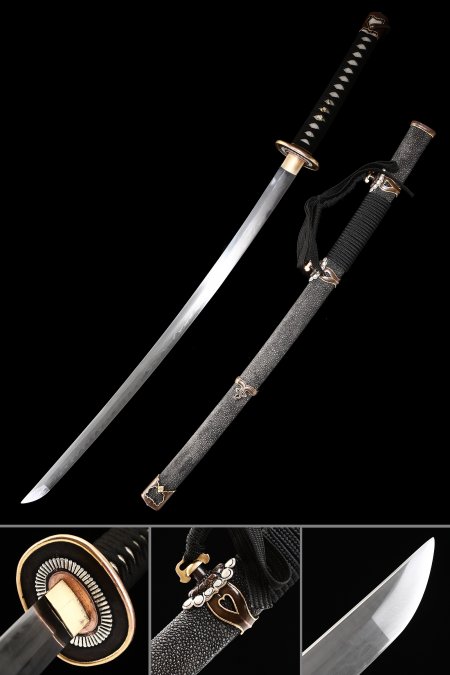
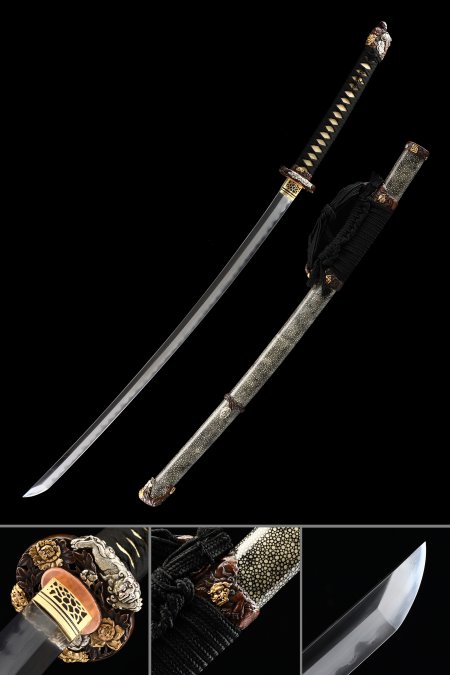
T10 is a high-carbon tool steel containing roughly 1.0% carbon along with a small amount of silicon, which refines the grain structure during forging. For collectors, the key advantage is that T10 responds exceptionally well to clay tempering — the differential hardening process that produces a genuine, visible hamon along the blade. Unlike simpler high-carbon steels, T10's composition allows the edge zone to reach high hardness while the spine retains flexibility, giving the finished blade both structural integrity and the aesthetic complexity serious collectors look for. The hamon on a properly clay-tempered T10 blade shows activity and depth that acid-etched lines on cheaper steels simply cannot replicate.
How is a real hamon different from an acid-etched one?
A genuine hamon is produced through differential clay tempering during the forging process itself. A clay mixture is applied to the blade in a specific pattern — thinner near the edge, thicker along the spine — before the final quench in water or oil. The difference in clay thickness causes the two zones to cool at different speeds, creating a hardened martensitic edge and a softer pearlitic spine. The boundary between them is the hamon. An acid-etched hamon, by contrast, is simply a chemical treatment applied after the blade is made, producing a cosmetic line with no underlying metallurgical difference. On a real hamon, you can observe nie (fine crystalline particles) and nioi (a misty glow) along the temper line, details that shift subtly under different lighting conditions — a quality no acid treatment can reproduce.
Why is gray ray skin used on the saya instead of lacquer?
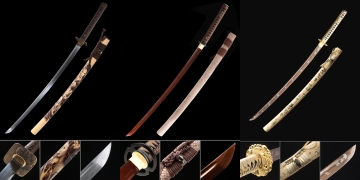
Ray skin, or same in Japanese, has been used on sword mountings for over a thousand years precisely because its natural nodular texture provides a non-slip grip surface and resists cracking under changes in humidity — a practical concern for long-term storage and display. A lacquered saya can look pristine but is more susceptible to chipping and moisture fluctuation over time. The gray finish applied to the ray skin in this collection is a stylistic choice that reflects historical precedent: many high-rank Japanese sword mountings used natural or lightly toned same to signal restraint and refinement. On a display stand, the matte gray texture catches light in a way that lacquer cannot, giving the scabbard a tactile presence that complements the blade's polished surface.
What is the best way to store and maintain an odachi for display?
For long-term display, keep the odachi horizontally on a proper sword stand with the edge facing upward — the traditional orientation that relieves stress on the habaki and saya joint. Apply a thin coat of high-quality camellia oil (choji oil) to the blade every two to three months using a soft cotton cloth or traditional uchiko powder ball to remove old oil before reapplying. Avoid display locations with direct sunlight, heating vents, or high humidity fluctuation, all of which accelerate oxidation and can warp the wooden saya core over time. The ray skin saya requires no special treatment beyond gentle dusting. If the sword is stored rather than displayed, wrap the blade in a soft cloth — never plastic, which traps moisture — and check it seasonally.
How does an odachi differ from a standard tachi in proportions?
The tachi is generally defined by a blade length of approximately 60–75 cm with a pronounced curvature designed for mounted use, worn suspended edge-down from the belt. The odachi — sometimes called nodachi — extends this format considerably, with blades often reaching 90 cm or beyond. The additional length changes the balance point and the visual weight of the piece entirely, making the odachi one of the most striking long-form Japanese swords for display purposes. Historically, the odachi's extreme proportions made it a ceremonial and prestige object as much as a practical one, which aligns naturally with a collector's interest in pieces that carry both aesthetic authority and historical resonance.