What makes a ninjato different from a katana?
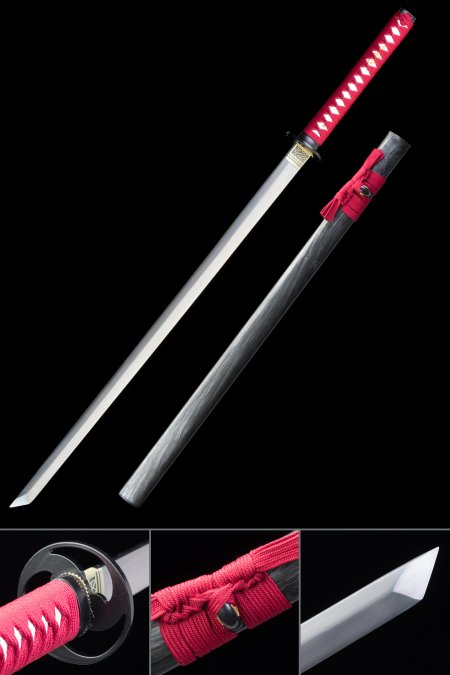
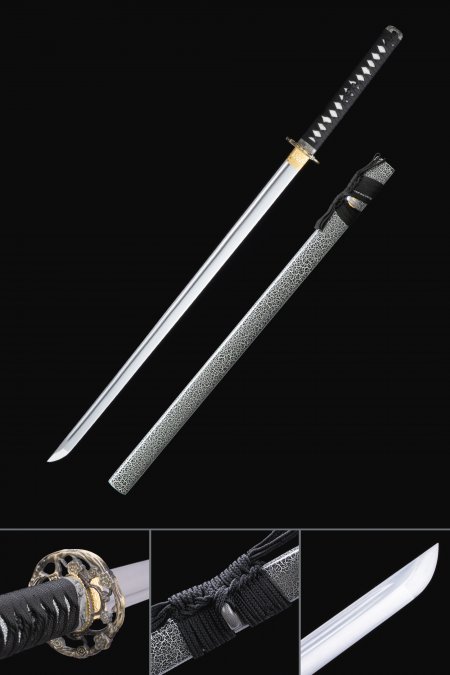
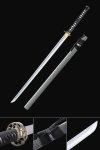
The most immediate distinction is blade geometry. A katana features a pronounced curve - the sori - that develops during the differential hardening process known as tsuchioki and yaki-ire. A ninjato has a straight or nearly straight blade, placing it closer to the chokuto tradition of pre-Heian Japanese swords. This straight profile changes how the blade interacts with the saya: without curvature to guide the draw, the koiguchi fit must be especially precise to keep the blade centered. For collectors, the ninjato's angular silhouette offers a visually distinct alternative to curved-blade pieces, and its compact form makes it easier to integrate into tighter display configurations alongside other Japanese-style collectibles.
Why choose a gray saya over black or natural wood?
Color choice in a saya is largely an aesthetic and contextual decision for display collectors. Black lacquered sayas are the most traditional and widely recognized finish - formal, high-contrast, and visually dominant. Natural wood tones read as rustic or unfinished, depending on the grain. A matte gray saya occupies a considered middle ground: it has the neutrality to complement virtually any tsuka wrap color without competing with it, while the matte surface adds tactile interest that glossy finishes lack. Gray also ages gracefully, resisting the visible fingerprinting and micro-scratching that can diminish the appearance of high-gloss scabbards over time. For collectors who rotate displayed pieces or handle them frequently, matte gray is a practical and visually sophisticated finish choice.
How does manganese steel compare to 1060 carbon steel for display pieces?
These two materials serve slightly different collector priorities. Manganese steel is alloyed for toughness and moderate corrosion resistance - it is less reactive to ambient humidity than plain high-carbon steel, which is an advantage in coastal or high-humidity display environments where maintaining a strict oiling schedule is inconvenient. 1060 carbon steel is a well-documented material in hand-forged Japanese-style blades, known for taking a clean, defined edge geometry and developing a natural patina over time that many collectors find aesthetically appealing. If your display environment is climate-controlled and you enjoy the maintenance ritual, 1060 rewards attentive care. If low-maintenance resilience is the priority, manganese steel is the more forgiving option.
How should I store and maintain a ninjato with a hardwood saya?
Hardwood sayas are sensitive to rapid humidity changes, which can cause slight expansion or contraction that affects the koiguchi fit. Store your ninjato horizontally in a stable environment - ideally between 40-60% relative humidity - away from direct sunlight, heating vents, or exterior walls that experience temperature swings. For the blade itself, apply a thin coat of choji oil or food-grade mineral oil every one to three months, depending on your climate. Use a soft cloth to wipe away previous oil before reapplying. Avoid storing the blade inside the saya for extended periods without occasional removal to check for trapped moisture, which can promote surface oxidation even on manganese steel over time. A light wipe of the saya interior with a dry cloth a few times per year helps remove any accumulated dust or particulate.
Is a gray saya ninjato a good choice as a display gift?
For a recipient who appreciates Japanese aesthetic traditions or collects Asian art objects, a gray saya ninjato is a distinctive and considered gift. The gray scabbard reads as thoughtfully chosen rather than default - it signals that the giver understands finish options and made a deliberate selection. The straight-blade form is visually striking and immediately recognizable without requiring the recipient to have deep knowledge of Japanese sword history. Pairing options matter: a black-and-white koshirae configuration suits a more austere or modern display space, while a red tsuka wrap against the gray saya works well in a warmer, more traditionally decorated room. Including a quality horizontal display stand as part of the gift package makes the piece immediately displayable and reinforces the collectible framing.