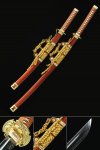
Dark Red Saya Tachi

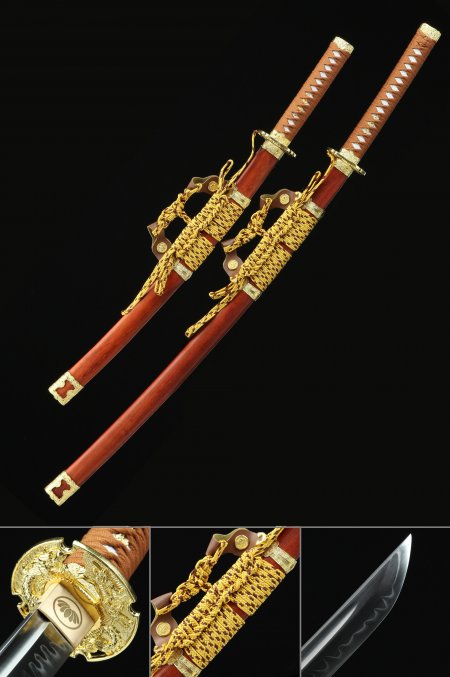
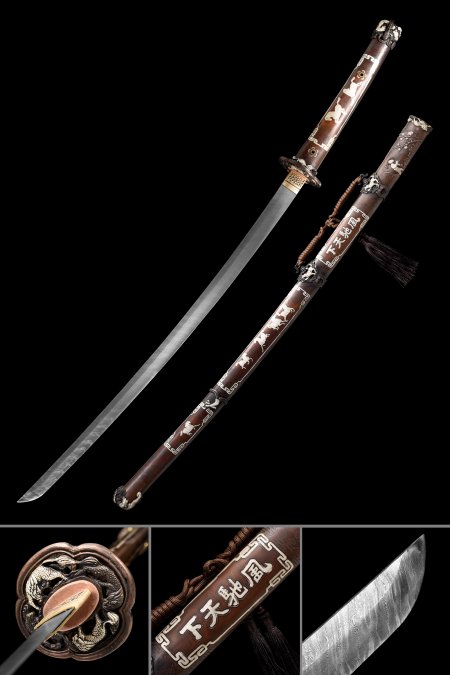
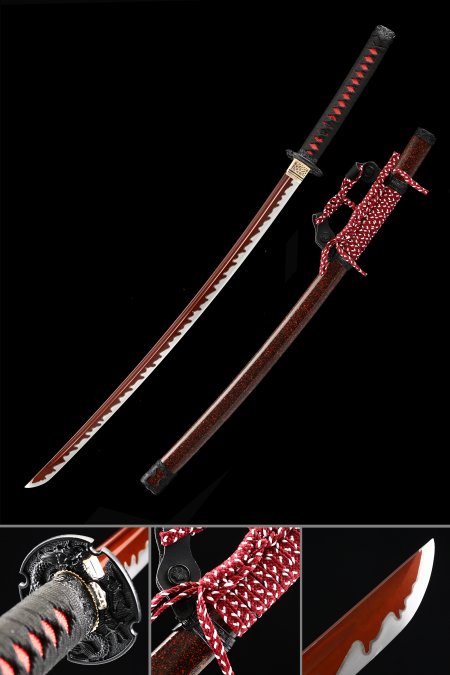
The Dark Red Saya Tachi collection brings together hand-forged tachi swords dressed in rich crimson lacquered hardwood scabbards — a finish historically reserved for nobility and ceremonial presentation. Each piece pairs high-carbon or Damascus steel blades with ornate tsuba in dragon, chrysanthemum, and gold-black alloy designs, creating display pieces of genuine visual authority. Every sword arrives full-tang constructed and finished to exhibition standard. Free standard shipping is included on all orders, and we offer hassle-free returns for your peace of mind.
Showing 4 Products

Related Collections

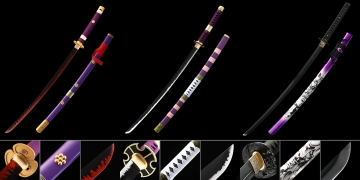
Purple Katana22 items


99 Reviews

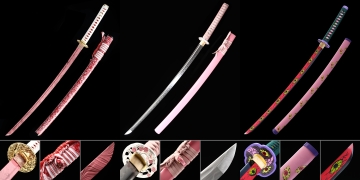
Pink Katana5 items


78 Reviews

Green Katana30 items


127 Reviews

Red Naginata1 items


Reviews

Frequently Asked Questions

What makes tachi swords different from katana in design?
The tachi predates the katana by several centuries and differs in three key ways: overall length, curvature, and how it was worn. A tachi typically measures 70 cm or more along the blade, carries a more pronounced sori (curvature), and was suspended edge-downward from the belt — the opposite of the katana's edge-upward carry. This suspension method influenced the geometry of the blade curve, which was optimized for a drawing arc from a mounted position. For collectors, this means a tachi presents a distinctly different profile on display, with a longer, more sweeping silhouette that commands more visual space than a standard katana mounting.
Why is dark red chosen for the saya on these tachi?
Dark red lacquered saya carry a specific historical weight in Japanese sword culture. Crimson and deep red finishes were associated with high-ranking samurai households and ceremonial presentation pieces, as the lacquer process — involving multiple applied and cured layers of urushi resin — was labor-intensive and therefore costly. The color also creates a strong visual contrast against polished steel blades and gold or black tsuba hardware, making these tachi particularly effective as display centerpieces. In a modern collection, a dark red saya tachi reads immediately as a formal, ceremonial piece rather than a field sword, which is precisely the aesthetic intent.
How do T10 steel and Damascus steel tachi blades compare?
T10 tool steel is a high-carbon alloy with added tungsten that produces a hard, wear-resistant edge with fine grain structure. When differentially hardened, T10 blades display a clearly defined hamon — the temper line — that is a primary point of visual interest for collectors. Damascus steel, by contrast, achieves its character through pattern welding: layers of different steel alloys are forge-welded and manipulated to create flowing grain patterns visible across the entire blade surface. A T10 tachi rewards close examination of the hamon and polish; a Damascus tachi rewards examination of the blade's overall surface texture. Both represent distinct craft traditions, and many serious collectors seek one example of each type.
How should I store a lacquered hardwood saya long-term?
Lacquered saya are sensitive to two main environmental factors: humidity swings and prolonged UV exposure. High humidity can cause the wood beneath the lacquer to swell, potentially cracking the finish over time, while very dry conditions can cause shrinkage and micro-fractures. Aim to store your tachi in an environment between 40–60% relative humidity, away from exterior walls, heating vents, and direct sunlight. Wipe the saya occasionally with a clean, dry microfiber cloth to remove dust and skin oils. Avoid applying any wax or oil-based polish to the lacquered surface, as these can cloud the finish. A padded sword bag or enclosed display case provides the most stable microclimate for long-term preservation.
Does a dark red saya tachi work well as a display gift?
A tachi in dark red saya is one of the more distinctive choices in Japanese sword collecting, and it works well as a gift precisely because it stands apart from the more common katana format. The crimson saya combined with an ornate tsuba — whether dragon motif or chrysanthemum — creates an immediately striking visual impression that requires no prior collector knowledge to appreciate. For recipients who do have a background in Japanese history or martial arts culture, the tachi form carries additional resonance as a classical, pre-Edo period sword type. Pairing it with a coordinating wakizashi from our daisho configurations adds further ceremonial weight for a more substantial presentation.

Customer Reviews

Kyle Colorado, United States

I am very pleased with the quality and the price and I cannot wait to get my hands on one of the battle ready katanas. The only thing and it’s not even worth docking a star over is I would love at least the option to pay for a razor sharp polish on it. Also you guys should make some swords modeled after weapons of the SoulsBorne video game series and I will buy all of them. Black Blade Katana from Dark Souls 3 is a good place to start :)
Manganese Steel Tachi Sword with Red Blade, Dragon Tsuba in Dark Red Hardwood Saya Manganese Steel Tachi Sword with Red Blade, Dragon Tsuba in Dark Red Hardwood Saya
Cart 0 Items

Your cart is empty