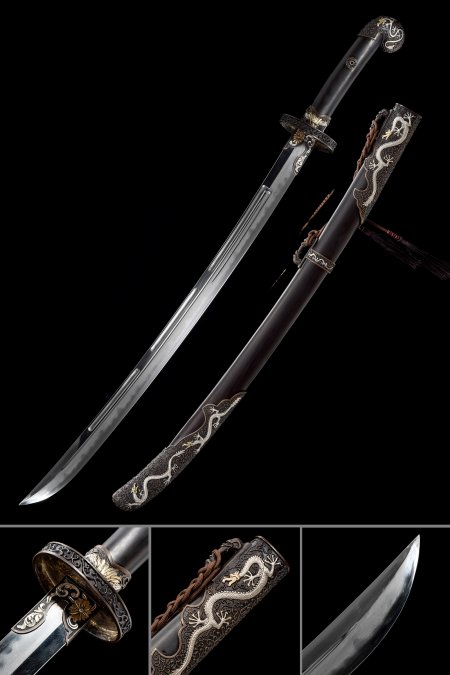
Damascus Broadsword
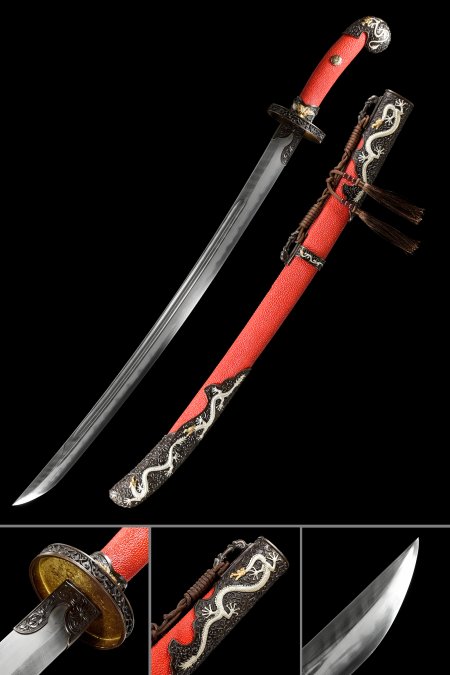
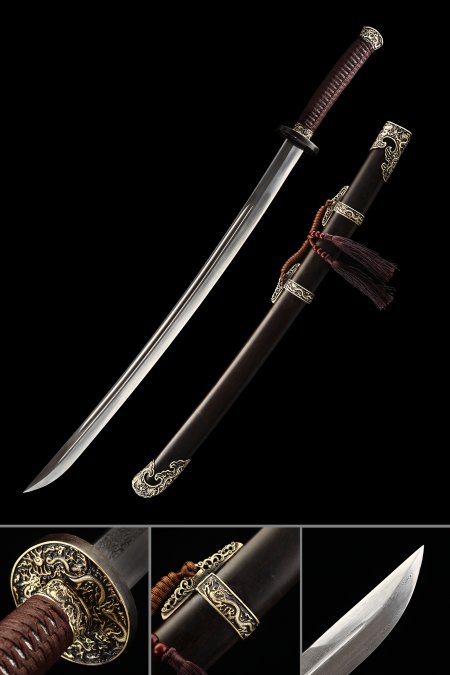
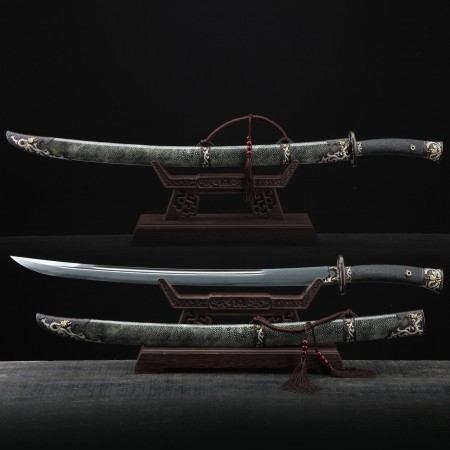
The Damascus Broadsword collection at TrueKatana brings together masterfully hand-forged blades that showcase the flowing grain patterns and layered steel construction that serious collectors genuinely seek. Each piece in this collection is crafted with full-tang construction, authentic Damascus steel, and period-accurate fittings — from rayskin-wrapped scabbards to hand-finished furniture that honors Chinese sword-making traditions. Every order ships free with hassle-free returns, so adding a distinguished piece to your display is always risk-free.
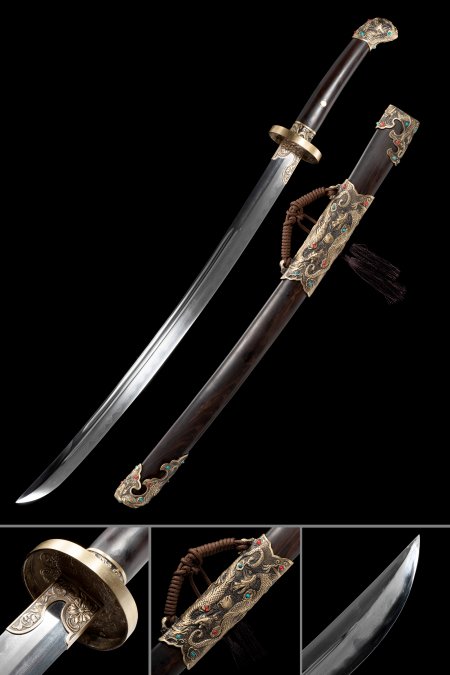
Free Shipping
599.00 USD
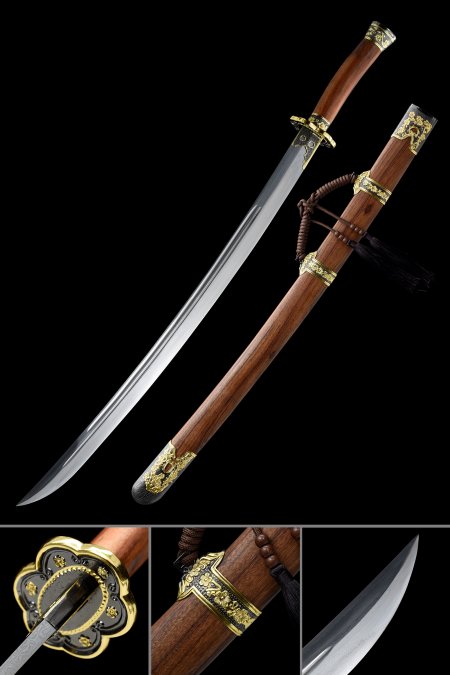
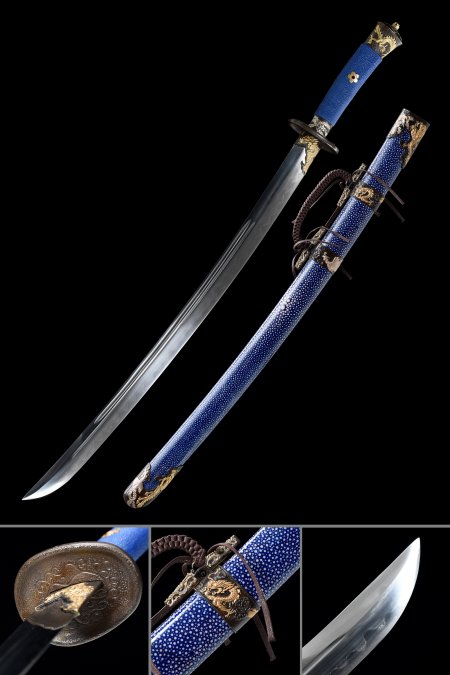
Free Shipping
679.00 USD
Free Shipping
1,239.00 USD
Free Shipping
1,009.00 USD
Related Collections
Frequently Asked Questions
What makes Damascus steel visually distinct from other blade steels?
Damascus steel — produced through pattern-welding — gets its visual identity from the layering process itself. Alternating steel billets with differing carbon content are forge-welded, drawn out, folded, and welded again repeatedly. When the finished blade is etched with an acidic solution, the two steel types react at different rates, revealing the layers as a flowing, organic surface pattern. This watered-silk or ladder effect is not a coating or engraving — it runs through the full depth of the blade. No two Damascus blades produce identical patterns, which is a significant part of what makes them appealing to serious collectors. The pattern is permanent and becomes part of the blade's individual identity.
What is the historical background of the Chinese Oxtail Dao?
The Oxtail Dao — niuwei dao in Mandarin — takes its name from the distinctive flared and widened tip that curves outward, loosely resembling the shape of an ox's tail. This blade form became prevalent during the Qing Dynasty and into the Republican era and was widely adopted across Chinese martial arts traditions. Its flared tip shifts the blade's balance point forward, which gives the sword a particular feel during cuts and makes it a recognizable silhouette in both historical and martial arts contexts. For collectors, the Oxtail Dao's dramatic profile and strong visual identity make it one of the most recognized Chinese sword forms — a compelling centerpiece in any display focused on East Asian blade traditions.
How does a Damascus broadsword differ from a Qing Dynasty sword in this collection?
The primary distinction is one of form and historical context rather than steel type. Damascus broadswords in this collection include the curved, flared Oxtail Dao — a civilian and martial arts-associated form — while the Qing Dynasty sword models represent the more formal, military-associated dao that was standardized under the Qing imperial court. The Qing Dynasty variants tend to feature straighter spines, more restrained blade geometry, and fittings that reflect court aesthetic preferences, including lacquered and rayskin-covered scabbards in period-appropriate colorways. Both types can be made from Damascus steel, but the Qing models sometimes also feature a real hamon, giving collectors a choice between two distinct surface-finish traditions on historically informed blade forms.
How should I maintain a Damascus blade kept on display?
Damascus steel requires more attentive care than stainless alternatives because the high-carbon layers are reactive to humidity and airborne contaminants. For display maintenance, apply a thin coat of camellia oil or mineral oil to the blade surface every one to three months, depending on the humidity of your environment. Wipe the blade with a clean, lint-free cloth before oiling to remove any fingerprints — skin oils are mildly acidic and can initiate surface oxidation if left in contact with the steel. Store or display the blade in a low-humidity environment and avoid positioning it near exterior walls where temperature fluctuation accelerates moisture cycling. If any surface discoloration appears, a light application of oil and gentle buffing with a soft cloth is usually sufficient to restore the finish.
Are rayskin scabbards purely decorative or do they serve a practical function?
Rayskin — known as same in Japanese sword traditions and used across East Asian blade cultures — is a genuinely functional material with properties that made it historically preferred over plain wood or leather for high-quality scabbards. The skin's natural nodule texture provides an inherent grip surface and is resistant to moisture absorption compared to untreated wood. On the scabbards in this collection, the rayskin is typically applied over a wood core, adding a layer of impact resistance that protects the blade during handling and repositioning. From a collector's perspective, rayskin scabbards also age gracefully — the texture remains stable and the surface accepts dye evenly, which is why you find them in blue, red, and natural finishes across different models in this collection.
Customer Reviews
Ernest Balderrama
California, United States
This is a very beautiful sword and scabbard.
Very nice steel, fittings are tight and look great.
Good job on this beauty.
It has good balance, clean fullers, straight lines.
Awsome sword.
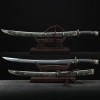 |
Chinese Oxtail Dao Saber Sword Broadsword Damascus Steel With Rayskin Scabbard |