What makes a chrysanthemum tsuba different from other tsuba styles?
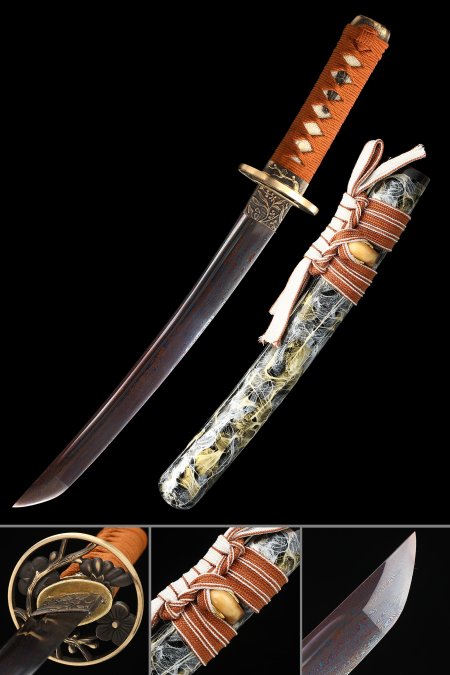
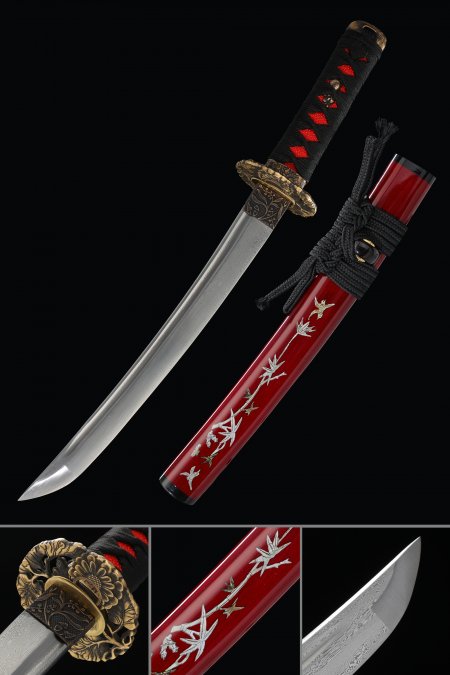
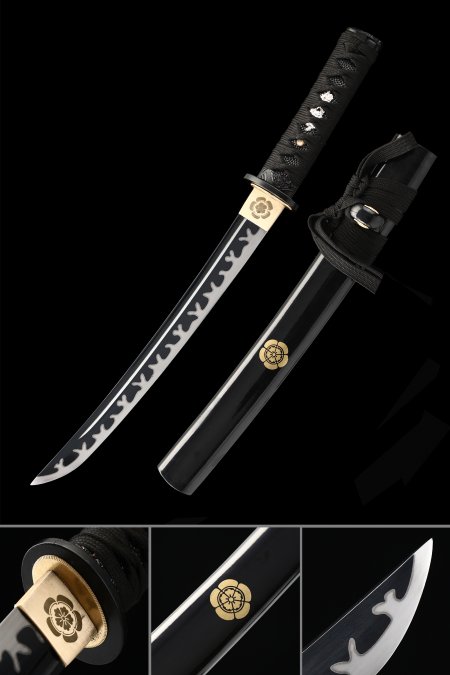
The chrysanthemum tsuba is modeled after the kiku — Japan's imperial sixteen-petal bloom — and is one of the most historically significant motifs in Japanese metalwork. Unlike geometric or dragon-motif tsuba, the kiku design carries specific cultural weight: it was codified as an imperial symbol during the Meiji period and appeared on imperial mon and ceremonial fittings. On tanto in this collection, the tsuba is rendered in cast iron or hammered copper, each with distinct surface characteristics. Cast iron versions have a denser, matte texture that reads as austere and formal; copper versions develop a warmer patina over time. Both are fitted to tanto proportions, meaning the diameter is smaller than a typical katana tsuba, which concentrates the floral detail into a tighter visual field and makes the engraving or casting appear more intricate up close.
How does clay tempering affect T10 tanto blades in this collection?
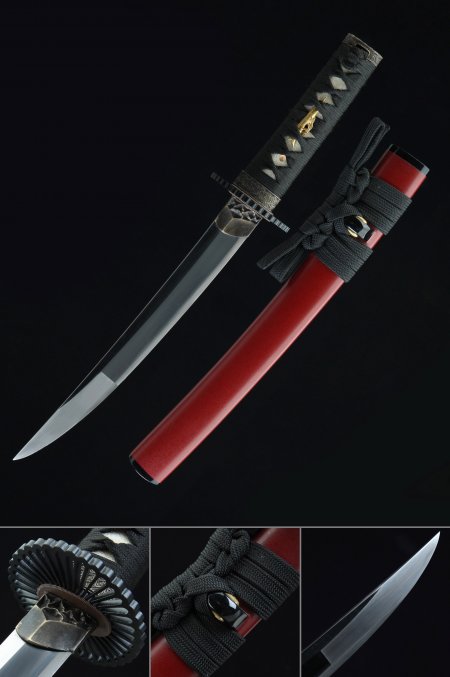
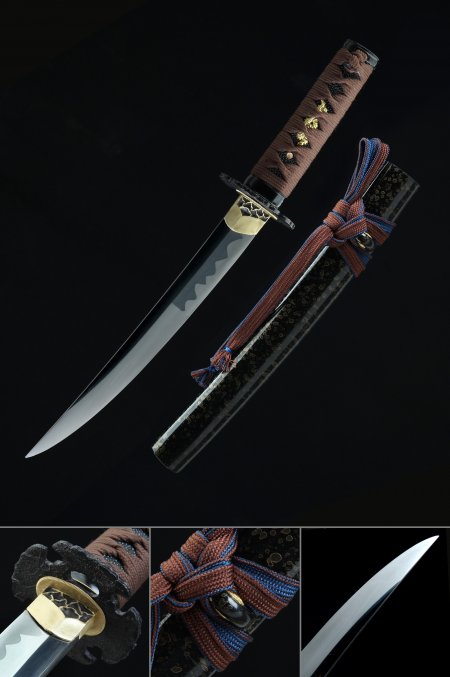
Clay tempering — known as tsuchioki — is a heat-treatment process in which a layer of refractory clay is applied to the spine of the blade before quenching. Because the clay insulates that section during cooling, the spine cools slowly and remains relatively soft and flexible, while the exposed edge cools rapidly and hardens. The boundary between these two zones forms the hamon, the undulating temper line visible along the blade's length. On T10 carbon steel tantos in this collection, the hamon is a structural feature rather than a decorative finish, meaning it cannot be buffed away or replicated by etching. Each blade's hamon is unique because the clay application is done by hand. T10 steel's higher carbon content also means it holds a finer, more mirror-like polish than many production steels, which makes the hamon contrast — the bright edge against the misty transition zone called the nie — more visually dramatic on display.
What is the difference between Damascus and high manganese tanto blades?
Damascus steel in this context refers to pattern-welded construction: two or more steel alloys are forge-welded together, twisted, and drawn out repeatedly to create flowing grain layers visible on the surface after polishing and etching. The layering creates distinctive visual movement across the blade — no two pattern-welded tantos look identical. High manganese steel, by contrast, is a single-alloy steel with elevated manganese content that enhances toughness and resistance to surface impact. It does not show layered grain patterns but holds a consistent, clean polish. For display collectors, Damascus is often preferred for its visual complexity and the conversation it generates; high manganese is valued for its uniform appearance and lower maintenance requirements, as it is somewhat less reactive to ambient humidity than higher-carbon alternatives.
How should I store and maintain a tanto from this collection?
Store the tanto horizontally in its saya — the wooden scabbard — on a dedicated blade stand to prevent warping of the handle wrap and to protect the blade from dust and humidity exposure. Every two to three months, remove the blade from the saya, wipe it clean with a soft, lint-free cloth, and apply a very thin coat of choji oil (a traditional mineral oil blend) using a silk or cotton applicator. This prevents surface oxidation on carbon and Damascus steel blades, which are more reactive than stainless alternatives. Avoid storing the blade in leather sheaths for extended periods, as leather retains moisture. Keep the display environment below 60% relative humidity. The saya interior should also be inspected periodically — if it shows signs of trapped moisture or debris, allow it to air dry fully before resheathing the blade.
Is a tanto a good starting point for a Japanese blade collection?
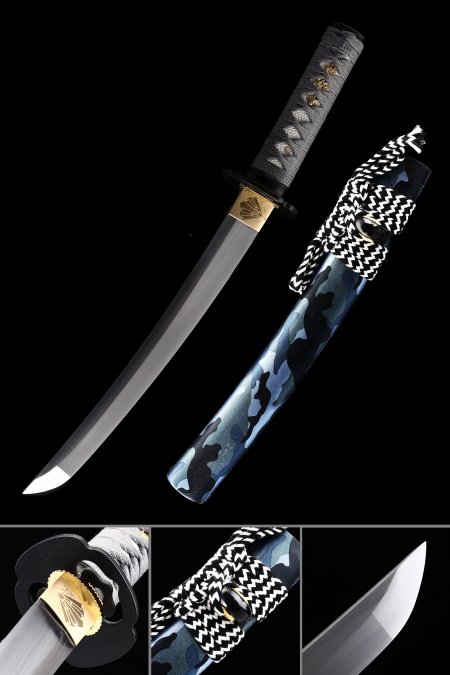
The tanto is an excellent entry point for collectors for several practical reasons. Its compact size — typically 15 to 30 cm in blade length — makes it easier to display in limited space and simpler to store safely compared to a full-length katana. The shorter format also places the tsuba and koshirae fittings in closer visual proximity to the viewer, making decorative elements like the chrysanthemum guard more immediately legible. From a budget perspective, tanto often allow access to the same high-quality steel and mounting traditions — clay tempering, Damascus layering, lacquered hardwood saya — at a more accessible price point than longer blades of equivalent craftsmanship. Collectors who begin with a tanto frequently find that its proportions complement a katana display naturally when they expand their collection, creating a visually cohesive paired arrangement.