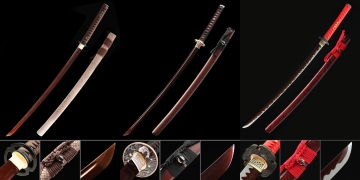
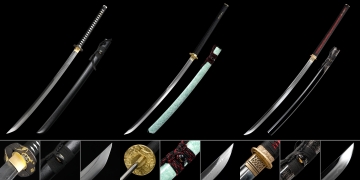
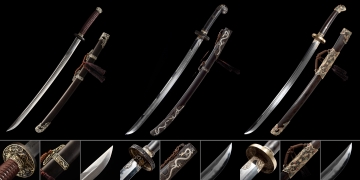
Bronze Damascus Steel Wakizashi

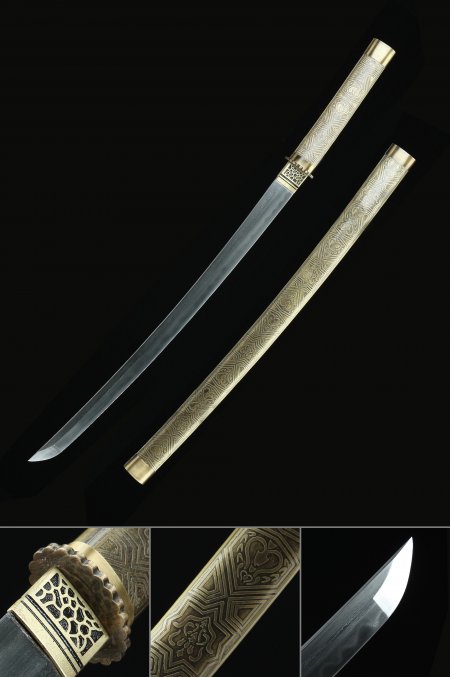
Bronze Damascus Steel Wakizashi blends the layered artistry of pattern-welded steel with warm bronze-tone fittings, producing a short blade that commands attention on any display stand or shadow box. Each piece is crafted for collectors who appreciate the visual depth of folded-steel patterning alongside ornate mountings — from dragon-carved saya to gemstone-set tsuba. Free standard shipping is included on every order, and hassle-free returns ensure your collecting experience is as refined as the pieces themselves.
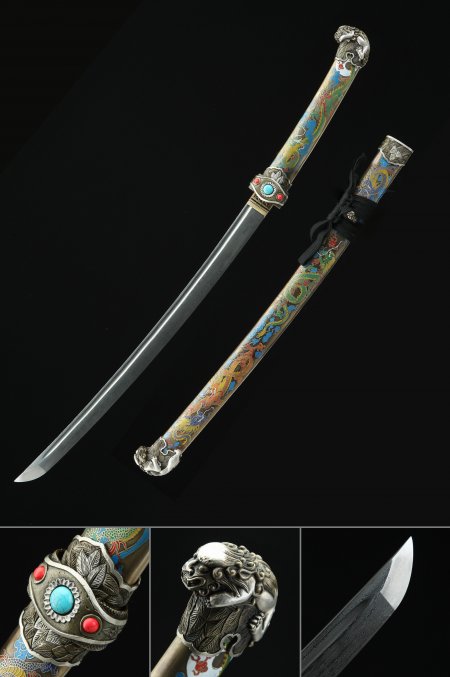
Showing 2 Products

Related Collections

Red Damascus Katana14 items

5 Reviews

Damascus Steel Sword78 items


337 Reviews

Damascus Naginata4 items


3 Reviews

Damascus Broadsword7 items


1 Reviews

Frequently Asked Questions

What makes Damascus steel visually unique on a wakizashi?
Damascus pattern-welded steel is produced by forge-welding multiple layers of steel with differing carbon content, then manipulating the billet through twisting, folding, or grinding to create distinct surface patterns. When the blade is polished and acid-etched, the contrasting carbon levels oxidize at different rates, revealing flowing grain structures — common patterns include ladder, raindrop, and tight twist. On a wakizashi's shorter blade length, these patterns appear concentrated and highly detailed, making the surface far more visually complex than a monosteel equivalent. No two Damascus blades are identical because the pattern emerges from physical manipulation of the billet, giving each collector piece a genuinely unique surface.
How does a bronze-tone wakizashi differ from a silver-fitted one?
The primary difference is aesthetic temperature and thematic cohesion. Silver or white-metal fittings (often zinc alloy or stainless) produce a cool, high-contrast look against a dark saya, which suits minimalist or traditionally styled displays. Bronze-tone fittings — applied through plating, patination, or the use of actual brass alloy components — introduce warmth and an aged, antiquarian quality. This makes bronze-fitted wakizashi particularly well-suited for display themes centered on historical weaponry, East Asian decorative arts, or fantasy-influenced collector aesthetics. The warmer metal also complements gold engraving on lacquered saya more naturally than cool silver tones, creating a harmonious overall composition rather than competing visual temperatures.
What is a hamon, and why do collectors care about it?
A hamon is the visible temper line that forms along a blade's edge during differential heat treatment, where the edge is heated and quenched more rapidly than the spine. In genuine differential heat treatment, this produces a martensitic edge and a softer pearlitic spine, with the boundary manifesting as a misty, cloud-like line visible after polishing. On display-grade Damascus wakizashi, a real hamon adds a second layer of surface artistry independent of the Damascus patterning — the two visual elements interact across the blade's width, with the hamon's irregular topography cutting across the steel's grain lines. Collectors value this because it signals authentic heat-treatment process rather than a cosmetic acid wash alone, and it adds depth and authenticity that elevates a piece from decorative replica to genuine craft object.
How should I maintain a Damascus wakizashi kept on display?
The primary maintenance task is preventing surface oxidation on the blade. Apply a thin coat of choji oil (traditional clove-based blade oil) or a light mineral oil every two to three months, wiping with a clean, lint-free cloth. Avoid fingerprints on the blade surface, as skin oils accelerate rust formation on pattern-welded steel. Store the piece in an environment with relative humidity below 60% — silica gel packets inside a display case help regulate moisture. The saya should be inspected periodically to ensure its interior is dry; moisture trapped inside the saya is a common cause of blade pitting. Bronze-tone metal fittings can be gently wiped with a dry cloth to maintain their finish without chemical polish, which may strip plating.
Is a Damascus wakizashi a good display companion to a katana?
A wakizashi and katana displayed together form a daisho pairing — historically, the two-sword set carried by Japanese samurai. For display purposes, matching the aesthetic language between both blades creates a far more compelling presentation than mismatched pieces. A bronze Damascus wakizashi pairs most naturally with a katana sharing similar fitting styles — matching tsuba metalwork, complementary saya finish, and consistent hardware tone. Displaying both on a tiered stand allows the Damascus patterning on each blade to be viewed simultaneously, and the size contrast between the longer katana and the wakizashi emphasizes the distinct character of each blade length. Our Bronze Damascus Steel Katana collection offers pieces designed with compatible hardware aesthetics for exactly this kind of paired display.

Customer Reviews

De'andre Evans Colorado, United States

This sword is beyond gorgeous. The craftsmanship is absolutely impeccable!! It’s a sleek well balanced blade and razor sharp! The detail on the full bronze metal tsuka and saya is gorgeous! I am so happy with my purchase and will be returning for more. I highly recommend truekatana as they were fast to reply and very helpful! Thank you!
Damascus Steel Wakizashi with Real Hamon in Gold Engraved Saya and Geometric Gold Tsuba Damascus Steel Wakizashi with Real Hamon in Gold Engraved Saya and Geometric Gold Tsuba
Cart 0 Items

Your cart is empty