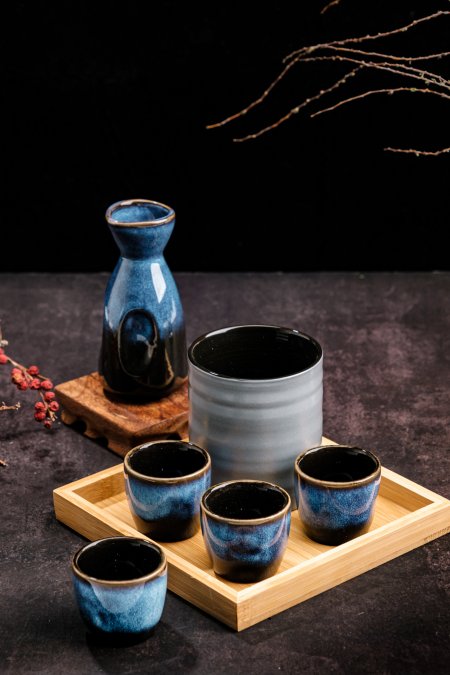
Blue Japanese Sake Set
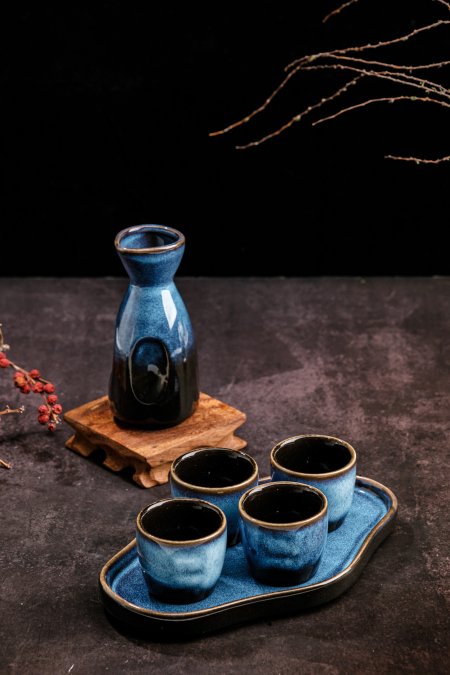
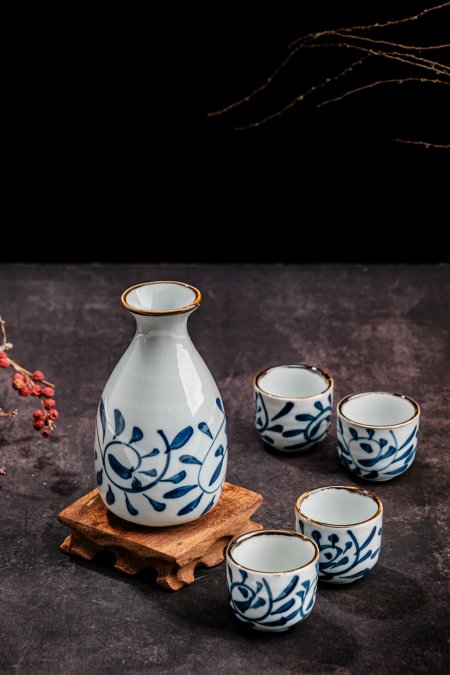
Blue Japanese sake sets bring together the quiet elegance of traditional ceramics and the depth of indigo glazework, making each piece a joy to display and use. From hand-painted carafes to matched cup sets arranged on bamboo or ceramic trays, every detail reflects the refined sensibility of Japanese craft culture. Explore our collection and find the set that speaks to your aesthetic - plus, enjoy free shipping and hassle-free returns on every order.
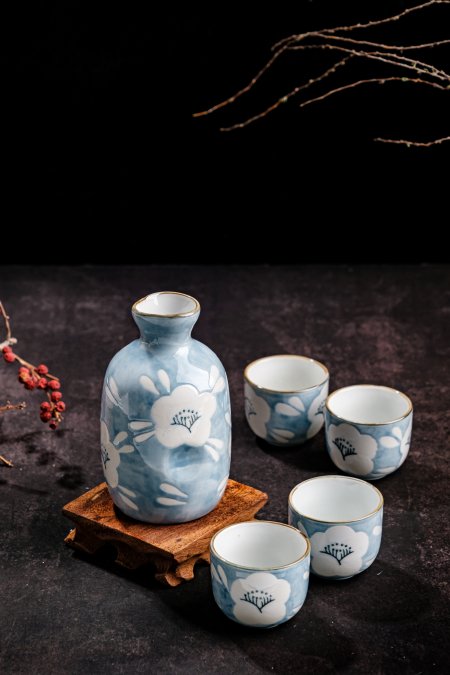
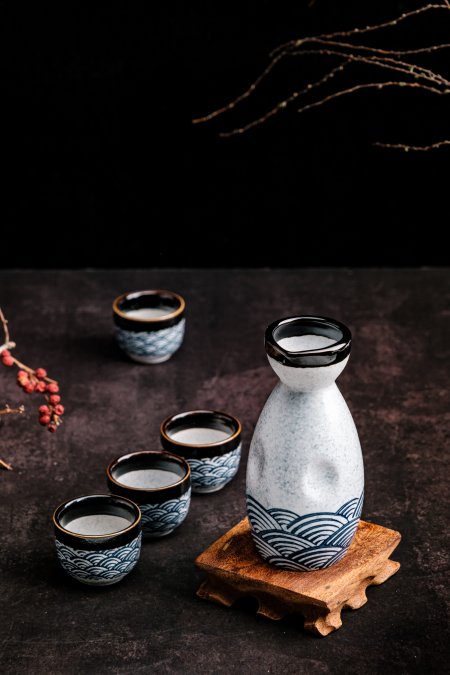
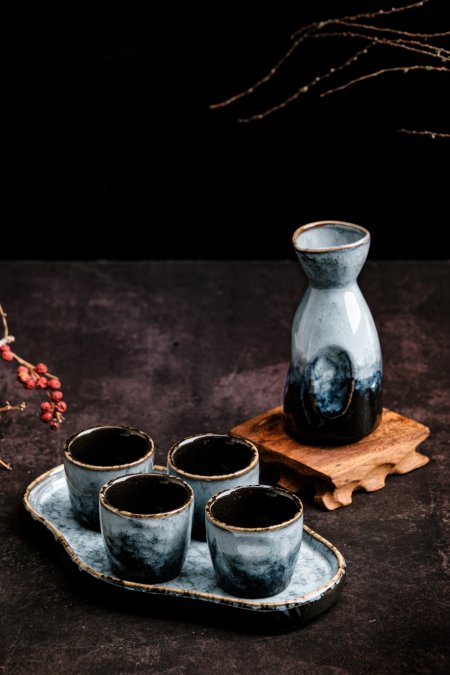
Related Collections

Frequently Asked Questions
What makes a sake set traditionally Japanese in design?
Traditional Japanese sake sets - typically composed of a tokkuri carafe and ochoko or guinomi cups - are shaped around specific rituals of pouring and receiving that reflect Japanese social customs. The proportions are deliberate: a tokkuri's narrow neck controls pour rate, while small cups encourage slow, mindful sipping and frequent refills as a gesture of hospitality. Aesthetically, authentic Japanese ceramic sets often draw from regional kiln traditions such as Arita, Mino, or Hasami, each with distinct surface textures, glaze characters, and decorative motifs. Blue sets in particular frequently reference sometsuke (blue-and-white) porcelain, a style influenced by Chinese Ming dynasty ceramics that was adapted and refined in Japan from the 17th century onward.
What is the difference between ochoko and guinomi sake cups?
Both ochoko and guinomi are small cups used for drinking sake, but they differ in size, shape, and the experience they offer. Ochoko are the more common of the two - shallow, wide-mouthed, and typically holding around 30-60 ml. Their open form allows the aroma of the sake to dissipate quickly, which suits lighter, more delicate varieties. Guinomi are deeper and narrower, holding slightly more liquid and concentrating the nose of the sake within the cup. Guinomi have a more personal, robust feel and are often associated with heavier, earthier sake styles. Most sets sold for display and everyday use feature ochoko-style cups, which also tend to stack more neatly on a tray.
How should I care for a ceramic sake set to keep it looking its best?
Ceramic sake sets with hand-applied glazes benefit most from gentle hand-washing using warm water and a soft cloth or non-abrasive sponge. Avoid dishwashers, as repeated high-heat cycles and harsh detergents can erode fine glaze details and dull the surface finish over time. After washing, allow all pieces to air-dry completely before storing or replacing them on a tray - residual moisture trapped under a cup on a ceramic tray can cause surface discoloration. For sets kept primarily as display pieces, a soft dry cloth to remove dust periodically is sufficient. Store cups upright or separated by a thin layer of felt or cloth to prevent rim chips where the glaze is thinnest.
Can a blue sake set work as a display piece alongside Japanese art?
Absolutely. Blue-toned ceramics pair naturally with a wide range of Japanese decorative art, from ink paintings and woodblock prints to lacquerware and textile panels. The cool, composed quality of indigo and cobalt glazes complements both minimalist and layered display styles. On a shelf or cabinet alongside other Japanese collectibles, a matched sake set - particularly one presented on a coordinating ceramic or bamboo tray - reads as a cohesive and intentional piece of cultural display rather than a functional kitchen item. Collectors who appreciate blue as an aesthetic through-line across different mediums may also find resonance with pieces like those in the Blue Scabbard Naginata collection, where the same color sensibility extends into traditional Japanese martial arts craftsmanship.
Is a Japanese sake set a good gift for someone new to Japanese culture?
A sake set is one of the most accessible and universally appreciated introductions to Japanese material culture. Unlike more specialized collectibles that require background knowledge to fully appreciate, a sake set communicates its purpose and beauty immediately - the tray, carafe, and cups form a self-contained presentation that is visually elegant and practically usable. For someone new to Japanese aesthetics, a blue ceramic set offers a gentle entry point: the color is recognizable, the form is familiar enough to be approachable, yet the craftsmanship and design language are distinctly Japanese. Sets that include a tray require no additional presentation effort and arrive as a complete, gift-ready grouping.