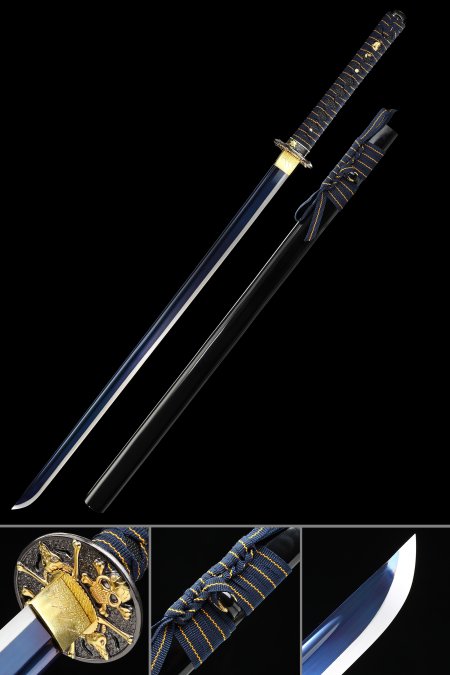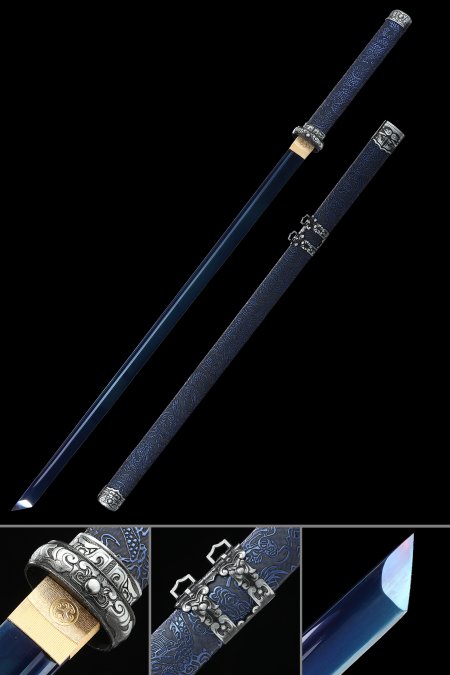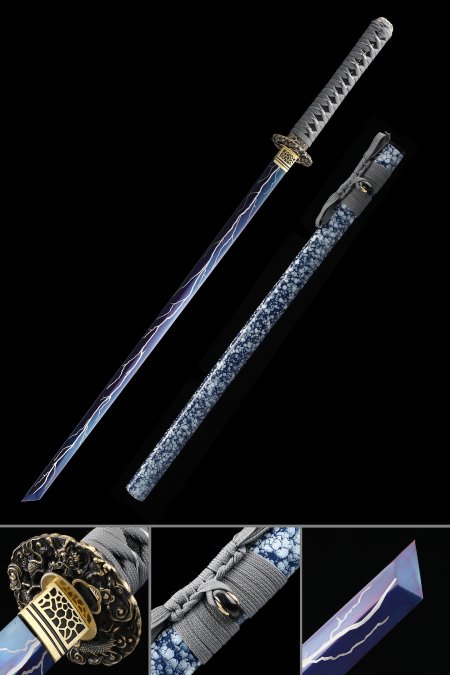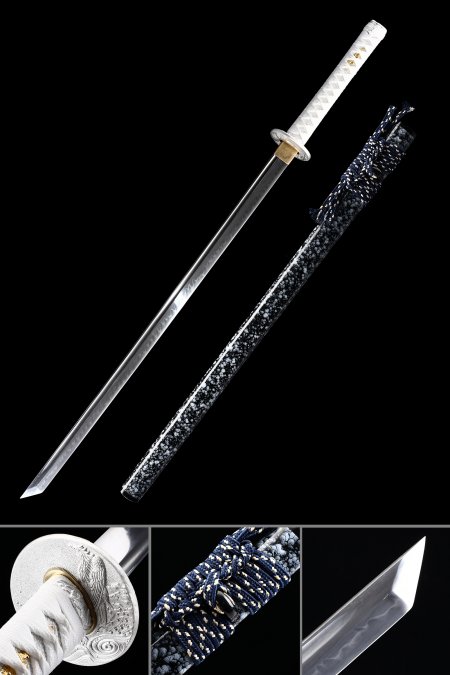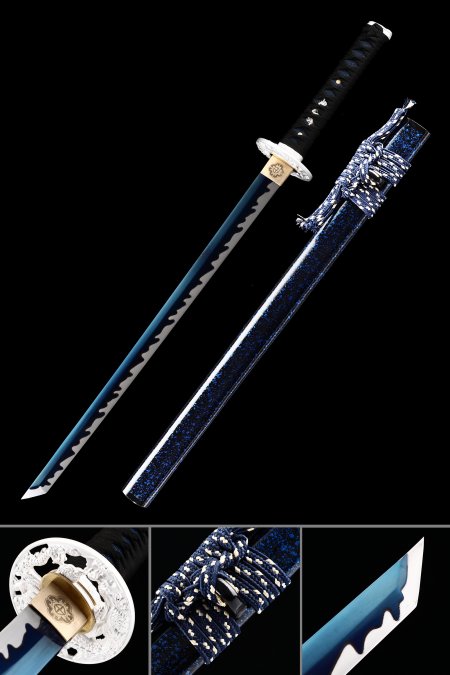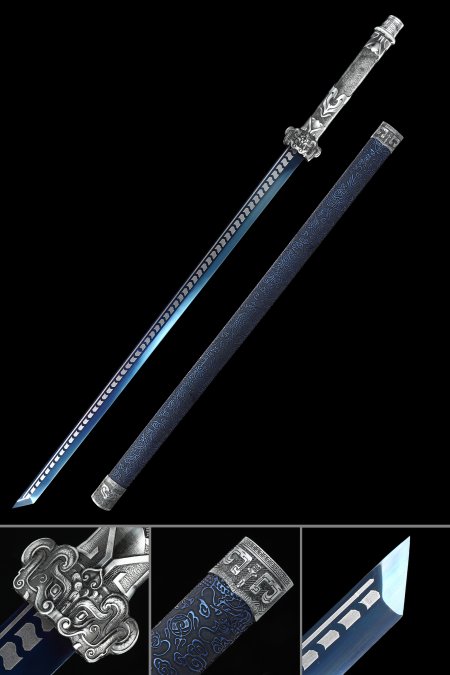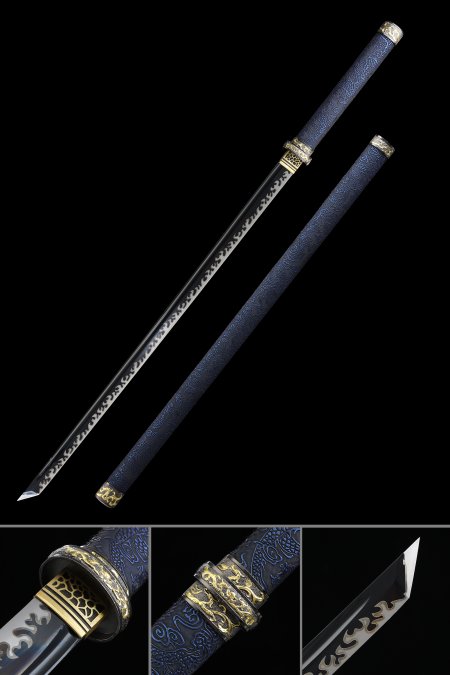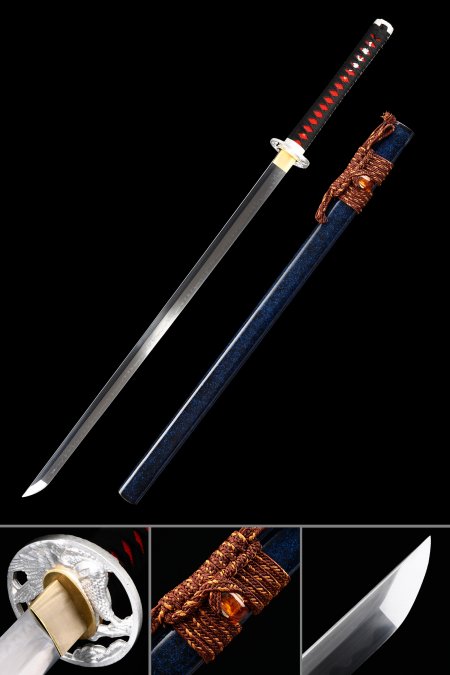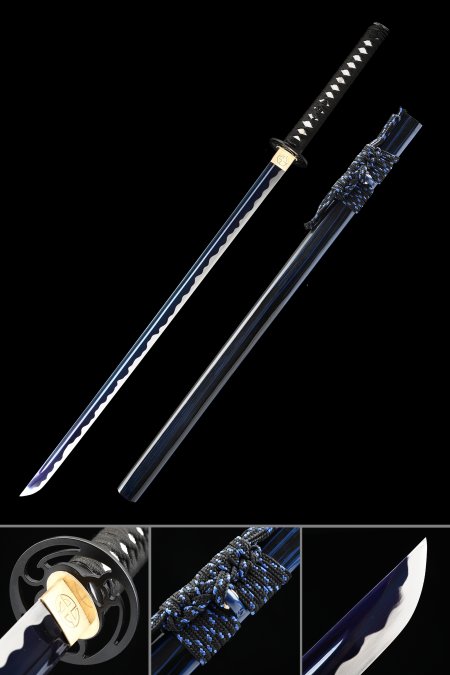
Dark Blue Saya Ninjato

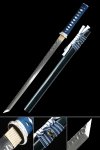
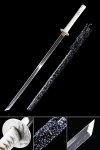
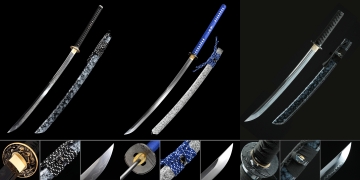
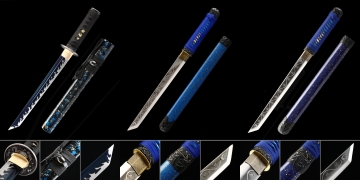
A dark blue saya transforms a ninjato from a simple straight-bladed collectible into a striking display centerpiece - and every piece in this collection is built to that standard. From T10 carbon steel with authentic hamon to manganese steel with hand-applied blue lacquer, each ninjato is fully hand-forged and assembled with ornamental fittings that reward a close look. Enjoy free shipping on your order, and if anything falls short of your expectations, returns are always on us.
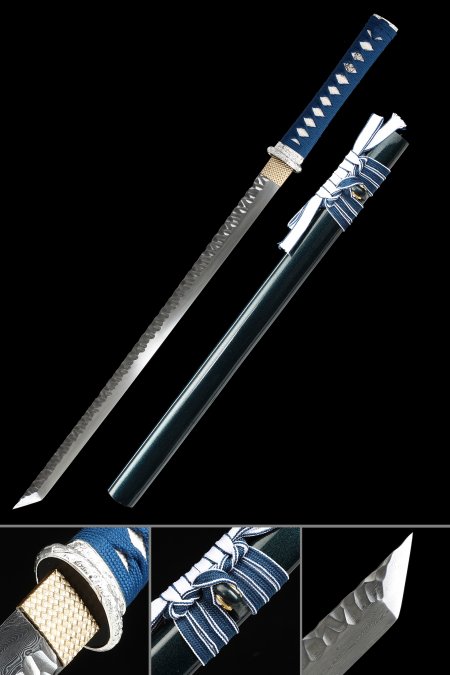
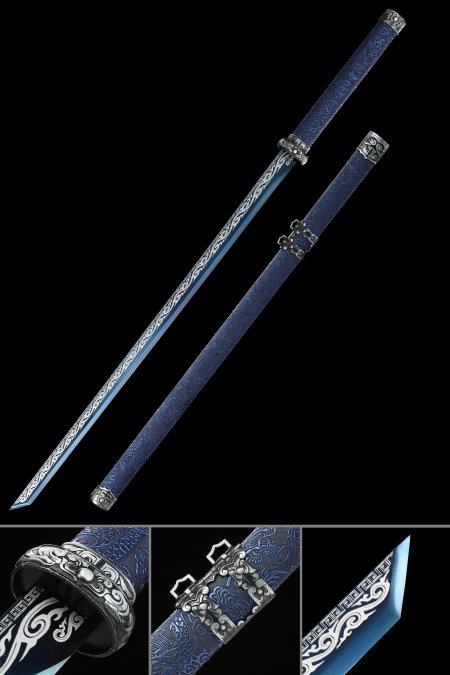
Showing 12 Products

Related Collections

Blue Tanto10 items


68 Reviews

Blue Odachi4 items


16 Reviews

Blue Naginata3 items


7 Reviews

Blue Hamidashi3 items


3 Reviews

Frequently Asked Questions

What makes a ninjato different from a katana?
The ninjato and katana differ in three immediately visible ways: blade geometry, length, and guard shape. A ninjato features a straight or very slightly curved blade - closer to a chokuto in profile - while the katana is defined by its pronounced curvature, or sori. Ninjato are generally shorter, with blades often in the 24-28 inch range, and are traditionally paired with a square or simply shaped tsuba rather than the elaborate guards common on formal katana. From a collector's perspective, the straight blade and compact proportions give the ninjato a distinctly modern, architectural quality that displays very differently from the fluid lines of a katana. The dark blue saya and decorative fittings in this collection lean into that aesthetic, making each piece as interesting to look at as it is to study.
How does T10 steel differ from 1095 in a ninjato blade?
Both T10 and 1095 are high-carbon steels, but they have meaningful differences that matter to collectors evaluating blade quality. T10 contains a small amount of silicon and trace tungsten, which contributes to a finer grain structure and greater wear resistance at the edge. More importantly for display collectors, T10 responds exceptionally well to differential clay-tempering, producing a visible hamon - the temper line that appears along the blade's edge - with more complex activity than 1095 typically yields. 1095, on the other hand, is a cleaner, simpler steel that hardens predictably and offers a smooth, mirror-polish-friendly surface. It is excellent for pieces where blade geometry and finish are the focal point rather than hamon character. If hamon visibility is important to your display preference, T10 pieces in this collection are the stronger choice.
Does manganese steel take blue blade finishes differently than carbon steel?
Yes, and the difference is significant for collectors interested in decorative blade treatments. Manganese steel has a denser, more uniform surface structure that accepts chemical and heat-applied coloring - such as the blue lightning and blue flame finishes seen across several pieces in this collection - with greater consistency and vibrancy than standard high-carbon steel. The result is a more saturated, graphic visual effect that reads as intentionally ornamental rather than incidental. High-carbon steel treated similarly tends to show more variation in the finished color, which can be appealing for a more organic look but is less predictable. If you want a ninjato where the blade finish is itself a design statement, manganese steel pieces deliver that more reliably.
How should I care for a dark blue lacquer saya long-term?
Dark blue lacquer sayas are more durable than they look, but they do require a few specific habits to maintain over years of display. Avoid exposing the saya to prolonged direct sunlight, which can cause the pigment to fade or the lacquer surface to develop a chalky texture. Heat sources - radiators, heating vents, direct fireplace proximity - are the biggest threat, as thermal cycling causes the lacquer to contract and eventually crack. Store the saya horizontally rather than vertically; standing a lacquered saya upright for extended periods can introduce stress along the seam line. For cleaning, a soft dry cloth is sufficient for dust. Never use water or solvent-based cleaners on the lacquer surface. The blade inside should be lightly oiled every few months to prevent any moisture migration that could affect the wood beneath the finish.
Are these ninjato suitable as gifts for sword collectors?
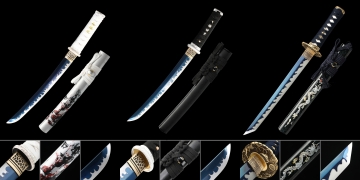
A dark blue saya ninjato makes a genuinely distinctive gift precisely because it sits outside the most common collector categories. Most casual enthusiasts already own or have considered a katana; far fewer have a ninjato in their display, and even fewer have one with a lacquered saya and ornamental fittings of this caliber. The visual distinctiveness - straight blade, bold saya color, varied tsuba designs ranging from dragon motifs to skull or wave patterns - means the piece stands out in any collection. For collectors who already appreciate Japanese blades, the steel and construction details give them something specific to engage with. If you are building a complementary gift, the Dark Blue Cord Handle Tanto collection offers shorter blades in a matching color palette that pair naturally with a ninjato as a displayed set.

Customer Reviews

Alex Cousins North Carolina, United States

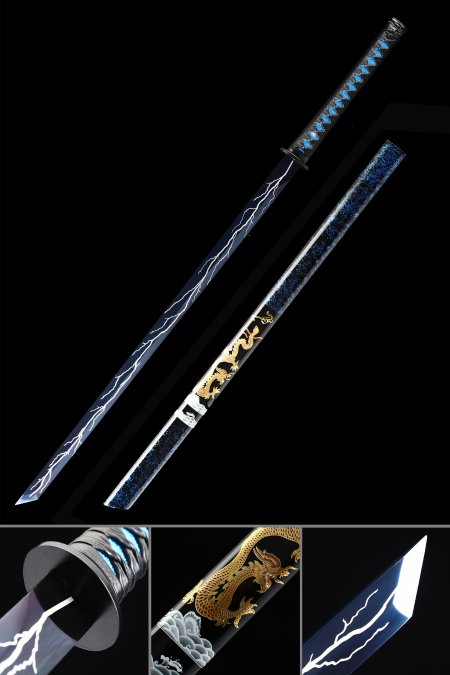
I love this sword;the fact it came early on the Sabbath, I actually prayed over it and had it blessed. I love the color, the lightning, the sheath,the character of the blade overall regarding design, even the leather grip ,feels amazing.

It feels like a full tang in the blade, great weight for me and working on my forearms. Haven't done a cutting test quite yet but I felt the edge slide against my finger and I know for sure it's sharp, yet it didn't cut me to cause bleeding.

Awesome blade, I recommend.

Chokuto Ninjato Straight Sword in Manganese Steel with Blue Lightning Blade and Dragon Saya Chokuto Ninjato Straight Sword in Manganese Steel with Blue Lightning Blade and Dragon Saya
Cart 0 Items

Your cart is empty