What makes Damascus steel visually unique on a ninjato blade?
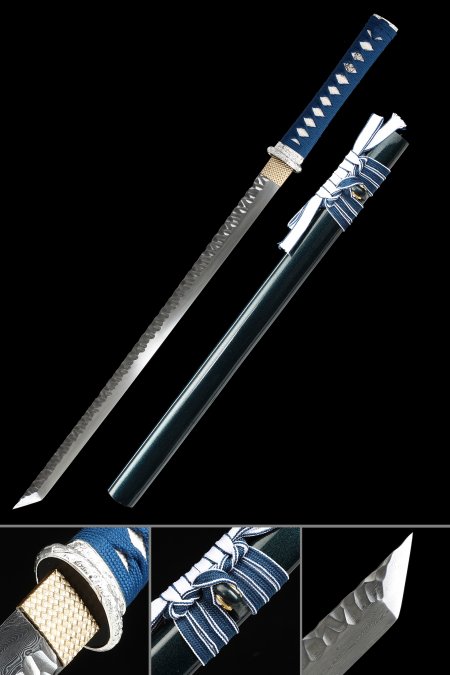
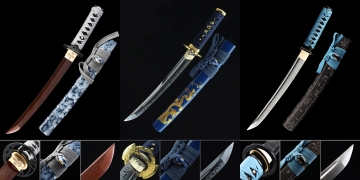
Damascus steel is produced by forge-welding multiple layers of steel with differing carbon content, then repeatedly folding and drawing out the billet. When the finished blade is ground and acid-etched, those layers emerge as flowing, wave-like surface patterns — often described as woodgrain or water ripple depending on how the billet was manipulated. Because the ninjato features a straight or very slightly curved blade profile, there is no dramatic curvature to distract from the steel's surface detail. The pattern runs in uninterrupted bands from the base to the tip, giving collectors a clear view of the full Damascus work. Every blade's pattern is unique to that specific forging sequence, which is a significant part of why Damascus pieces are prized as display collectibles rather than mass-produced novelties.
How does a ninjato differ from a katana in construction?
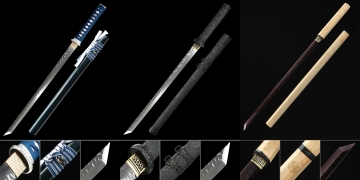
The most immediately visible difference is blade geometry. A katana has a pronounced curved profile (sori) optimized for a particular drawing motion, while a ninjato is typically straight or only very slightly curved, with a shorter overall length and a more compact handle. The tsuba (guard) on a ninjato is classically square or rectangular rather than the rounded forms more common on katana mounts. This gives the ninjato a more geometric, angular appearance when displayed. From a collector's standpoint, these differences make the ninjato a visually distinct complement to katana pieces — the two blade forms tell different stories about Japanese sword design, and pairing them in a display creates an interesting study in contrasts.
Is real rayskin actually used on these ninjato handles?
Yes — genuine rayskin (same, pronounced "sah-meh") is used on the handles of select pieces in this collection. Same is the traditional grip material on Japanese swords and has been used for centuries because its pebbly, calcified surface provides a reliable texture base beneath the ito wrapping. Synthetic alternatives exist and are visually similar in photos, but genuine same has a distinct tactile quality and a more complex surface texture that experienced collectors notice immediately when handling a piece. The blue ito is wrapped directly over the same in the traditional cross-wrap pattern, with the same's white nodules visible in the diamond-shaped gaps of the wrapping — a detail that signals authentic construction rather than purely decorative assembly.
How should I store a Damascus ninjato to preserve the blade finish?
Damascus blades require consistent moisture management because the acid-etched surface, while visually striking, can be more susceptible to oxidation than a polished monosteel blade. Store the ninjato horizontally or at a slight angle with the edge facing upward to allow any residual oil to distribute evenly. Apply a thin coat of food-grade mineral oil or traditional choji oil to the blade surface every two to three months, or more frequently in humid climates. When displaying outside the saya, avoid environments with significant humidity swings. Keep the blade away from prolonged direct sunlight, which can fade the lacquer finish on the saya over time. Never store the blade in the saya long-term without periodic inspection — trapped moisture inside a lacquered hardwood saya is the most common cause of preventable surface damage.
Are blue lotus fittings a historically grounded design choice?
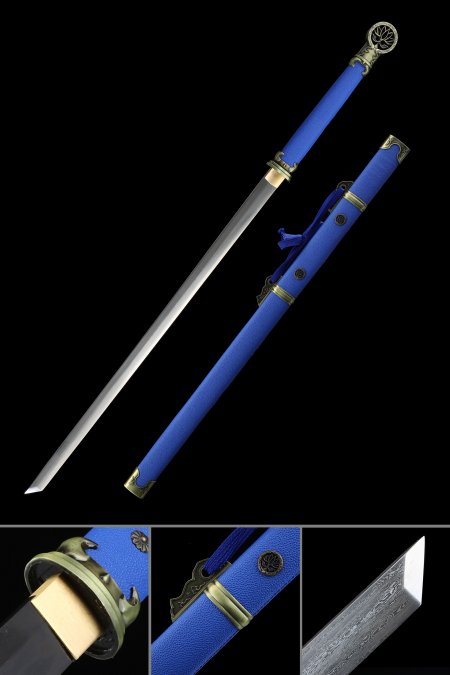
The lotus motif has deep roots in East Asian decorative arts, appearing across Japanese, Chinese, and Korean craft traditions for over a millennium. In Buddhist iconography, the lotus represents purity and enlightenment — a flower that rises clean from muddy water. On sword fittings, floral and nature motifs were common choices for tsuba, menuki, and fuchi-kashira, often selected to communicate the owner's aesthetic sensibility or philosophical outlook. Bronze was a widely used material for decorative fittings because its warm golden-to-amber patina develops naturally over time, giving aged pieces a distinctive character. The pairing of bronze lotus fittings with a blue color scheme on these ninjato is a contemporary collector interpretation of classical motifs — not a strict historical reproduction, but grounded in genuine decorative traditions that make the design feel substantive rather than arbitrary.