What makes an Aikuchi different from a standard tanto?
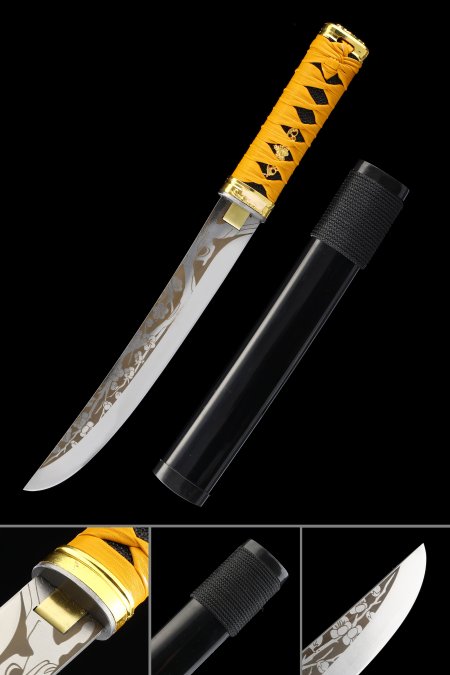
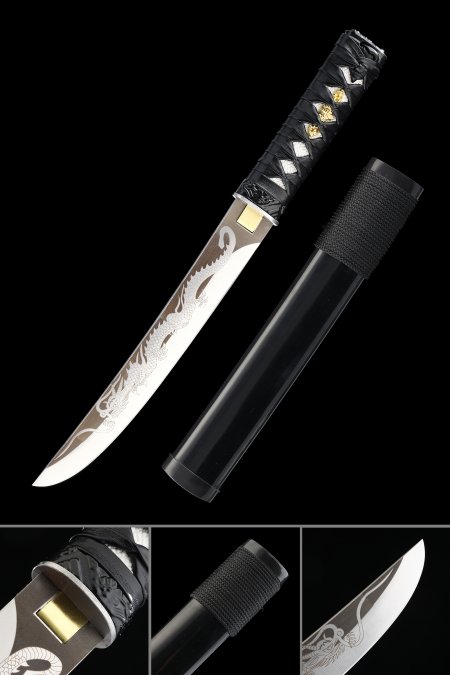
The defining feature of an Aikuchi is the complete absence of a tsuba, or handguard. On a standard tanto, the tsuba sits between the handle and the scabbard as a visible, separate component. On an Aikuchi, the handle and saya meet flush with no gap and no guard — creating a seamless, unbroken profile. This design originated in Japanese court culture, where the Aikuchi was carried as a formal accessory emphasizing elegance over any practical function. As a collectible, this guardless construction is precisely what makes Aikuchi visually distinctive: the silhouette is cleaner, more geometric, and immediately recognizable to anyone familiar with Japanese blade forms.
Is stainless steel a good material for a display tanto?
For display and collectible purposes, stainless steel is an excellent choice. Its chromium content — typically 13% or higher — creates a passive oxide layer that resists rust and surface corrosion without requiring the frequent oiling that high-carbon steel demands. This makes stainless steel tanto well-suited for display cases, wall mounts, or shelf arrangements where the piece may go weeks without hands-on maintenance. The trade-off compared to high-carbon steel is reduced edge retention if sharpened, but for a collectible Aikuchi displayed rather than used, this is entirely irrelevant. Stainless steel also holds engraved surface detail exceptionally well, making it ideal for decorative blade motifs like dragons or floral patterns.
How does the black finish affect long-term appearance?
A blackened finish on stainless steel is typically applied as an oxide coating or achieved through surface treatment processes that alter the outermost layer of the steel without adding significant thickness. Because the underlying material is already corrosion-resistant, the finish does not rely on sealing the steel from moisture the way a painted or blued carbon steel surface would. For display purposes, the black finish remains stable under normal indoor conditions. However, prolonged direct sunlight can dull certain oxide treatments over time, so positioning the piece away from UV exposure is advisable. Occasional light wiping with a soft, dry cloth keeps the surface clean without disturbing the finish.
Can engraved blade motifs affect the value of a collectible tanto?
For decorative collectibles, blade engravings are one of the primary value-adding elements because they represent additional skilled craft work applied directly to the steel. Motifs such as dragons — long associated with strength and transformation in Japanese and East Asian iconography — and cherry blossoms, which carry deep cultural symbolism tied to the transience of beauty, elevate a blade from a plain decorative piece to one with layered artistic meaning. Collectors who focus on thematic displays often specifically seek engraved pieces because they anchor a collection around a visual or cultural narrative. The quality and depth of the engraving, and how well it reads against the blade's finish, are the key factors to evaluate.
How should I store a black stainless steel Aikuchi long-term?
Store the Aikuchi in its saya whenever it is not being displayed, as the scabbard protects both the blade surface and the engraved details from dust accumulation and incidental contact. For extended storage, a wooden display box or a silk-lined case is preferable to plastic containers, which can trap humidity. Keep the piece away from basements or storage areas with significant temperature swings. Unlike high-carbon steel, stainless steel does not require periodic oil applications to prevent rust, but a light wipe with a microfiber cloth before storage removes fingerprint oils that can dull the blackened finish over time. Avoid contact with harsh cleaning chemicals, which can strip oxide coatings.