Stainless Steel Katana
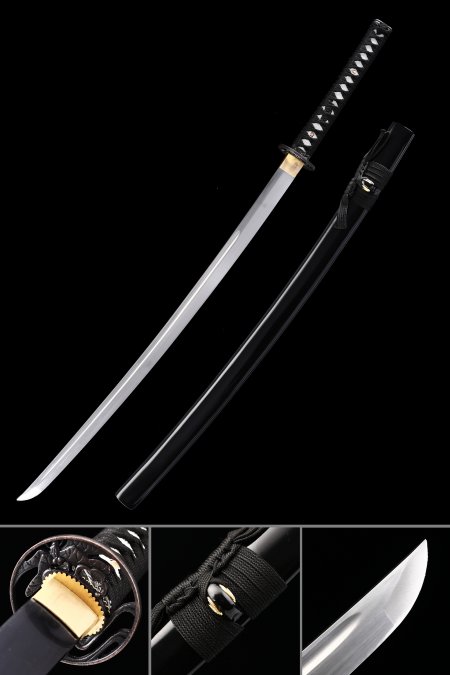
The Stainless Steel Katana collection at TrueKatana brings together meticulously crafted display pieces that honor the visual legacy of Japan's iconic swordsmithing tradition. Each katana features a high-grade stainless steel blade prized for its lasting luster and resistance to tarnish - making it a low-maintenance centerpiece for any serious collector's display. From WWII-era military replica styling to ornate dragon tsuba fittings, every piece is selected for its authentic aesthetic and fine detailing. Enjoy free shipping and hassle-free returns on every order.
Related Collections

Frequently Asked Questions
What makes stainless steel a good choice for display katana?
Stainless steel contains chromium - typically 13% or higher - which forms a passive oxide layer on the surface that resists rust and tarnish. For a display katana that spends most of its life mounted on a wall or housed in a cabinet, this means the blade retains its polished, mirror-like appearance for years without requiring frequent oiling or controlled storage conditions. High-carbon steel blades, by contrast, will develop rust spots within days if exposed to humidity without proper treatment. For collectors prioritizing visual consistency and low upkeep, stainless steel is a sensible and practical material choice.
How does a Kyu Gunto replica differ from a classical katana?
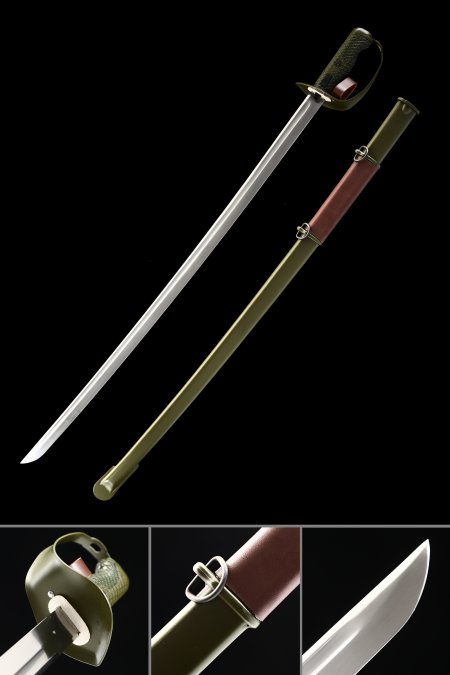
The Kyu Gunto was a standardized military sword adopted by the Imperial Japanese Army beginning in the late Meiji period, designed to replace the variety of privately owned tachi and katana that officers had previously carried. Its distinguishing features include a slightly straighter blade curvature compared to classical feudal katana, a regulation-style brass or alloy tsuba, and a saya - often finished in olive or brown hardwood - that reflects field utility rather than ceremonial aesthetics. The Kyu Gunto occupies a unique historical niche: it is neither a traditional feudal-era sword nor a purely modern design, but rather a bridge between samurai heritage and 20th-century military necessity. Collectors interested in WWII Japanese military history often seek this replica for its specific period accuracy.
What does full-tang construction mean on a display katana?
In sword construction, the tang is the portion of the blade that extends into the handle. A full-tang design means the steel runs the entire length of the handle, enclosed beneath the tsuka-ito wrapping and handle fittings. This is distinct from a partial tang or rat-tail tang, where only a narrow spike of steel extends partway into the handle. For a collectible or display katana, full-tang construction signals higher build integrity - the handle feels solid and balanced in the hand, the weight distribution is more authentic, and the overall piece holds together as a coherent physical object rather than a decorative shell. It is a meaningful quality indicator even for pieces not intended for active use.
How should I clean and store a stainless steel katana?
Stainless steel is far more forgiving than high-carbon steel, but it is not entirely maintenance-free. For regular care, wipe the blade with a soft, lint-free cloth after handling to remove fingerprint oils, which can eventually etch the surface if left over long periods. A very light application of mineral oil or camellia oil every few months will preserve the polish and add a subtle protective layer, especially in coastal or high-humidity environments. Store the katana horizontally or on a display stand with the edge facing upward in the classical orientation, and avoid contact with acidic materials. Keep the saya dry - moisture trapped inside a wooden scabbard can still affect the blade's finish over time.
Is a dragon tsuba historically accurate, or purely decorative?
Dragon motifs do appear in authentic Japanese sword fittings from the Edo period onward, often cast in shakudo, shibuichi, or iron by skilled tosogu (fitting) artisans. However, the large alloy dragon tsuba found on many modern collectible katana is best understood as an ornamental interpretation rather than a strict historical reproduction. Classical tsuba were typically more restrained in scale and crafted from precious metal alloys with fine inlay work. The modern cast alloy dragon tsuba prioritizes visual impact and affordability, making it well-suited for display arrangements where dramatic aesthetics matter more than period accuracy. Collectors who specifically seek tsuba as historical artifacts usually look toward antique Japanese fittings or dedicated tosogu reproductions.