What makes 1095 carbon steel a good choice for a naginata?
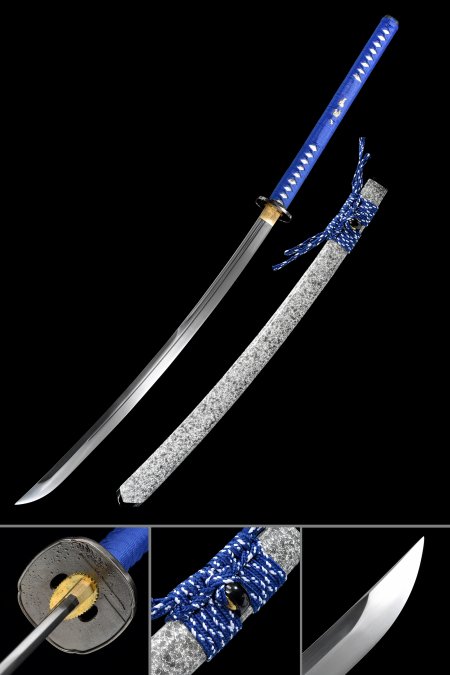
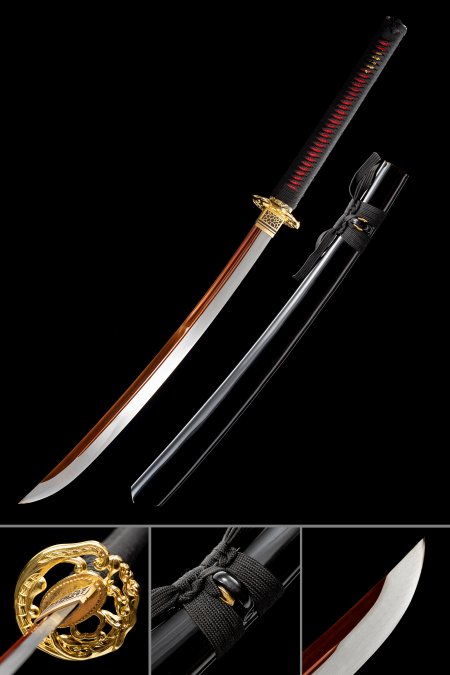
1095 carbon steel contains approximately 0.95% carbon, which sits in a sweet spot for differential heat treatment. When a blade smith applies clay to the spine before quenching, the edge cools faster and hardens to a higher degree, while the spine remains comparatively tough. The result is the hamon — that visible, misty transition line along the edge — which is both a functional record of the tempering process and one of the most prized aesthetic features among Japanese blade collectors. For a naginata specifically, this quality of steel also means the curved blade holds its geometry well over time, resisting micro-deformation that softer alloys might exhibit. Collectors value 1095 pieces for the authenticity of this process and for the warm, slightly matte surface character that distinguishes high-carbon steel from modern stainless options.
How is a naginata different from a katana or nodachi?
While a katana is a one-handed or two-handed short sword and a nodachi is an exceptionally long two-handed sword worn on the back, a naginata is fundamentally a polearm — a curved blade mounted on a long wooden or composite shaft that historically ranged from five to nine feet in total length. This configuration shifts the blade's function from thrusting and close cutting to sweeping arcs that take advantage of the shaft's leverage. For the display collector, the distinction is mostly aesthetic: the naginata's proportions are dramatically different from any sword type, making it a visually arresting centerpiece rather than a wall-mounted complement. The blade itself is typically shorter than a nodachi blade but features a more pronounced curve and a distinct machi — the notch separating blade from tang — designed to allow the blade to be removed and replaced on the shaft.
Is full-tang construction important for a display naginata?
Yes, and understanding why requires a quick look at the alternative. A rat-tail tang is a narrow, threaded rod welded onto the base of the blade and run through a hollow handle, secured by a nut. It is inexpensive to produce but creates a mechanical weak point at the weld junction. A full tang, by contrast, is a single uninterrupted piece of steel that extends from blade tip through the entire handle, with handle scales or wrapping applied over it. For a display collectible, full-tang construction means the piece can be handled, repositioned, and examined without any concern about the blade separating from the handle. It also means the steel you see in the blade is continuous with the steel you are holding — a quality that matters to collectors who view these pieces as examples of the smith's craft rather than purely decorative props.
How should I care for a 1095 carbon steel naginata in my home?
Carbon steel is reactive to moisture and will develop rust if left unprotected in humid conditions. The most effective care routine for a display piece is a light application of choji oil or pharmaceutical-grade mineral oil every two to three months — apply a few drops to a soft, lint-free cloth and wipe the entire blade surface in one direction from spine to edge. After oiling, store the naginata horizontally in its saya rather than standing upright, which helps prevent oil from pooling at the tip. Keep it away from exterior walls during humid seasons, as temperature differentials can cause condensation inside the saya. Avoid touching the blade surface with bare hands during display changes, since skin oils accelerate oxidation. With this minimal routine, a 1095 naginata will develop a controlled, even patina that many collectors consider an enhancement rather than a flaw.
Can a naginata work as a gift for a Japanese culture enthusiast?
A hand-forged naginata makes a genuinely distinctive gift for anyone serious about Japanese history, art, or traditional craftsmanship. Unlike a standard katana, which has become a relatively common collectible, a naginata is immediately recognizable as a more specialized piece — it signals that the giver did research and selected something with historical specificity. The naginata carries particular cultural resonance as a symbol associated with noble households and classical Japanese aesthetics. When gifting, consider the display space available to the recipient: naginata require a floor stand or a long wall mount due to their overall length. Pairing the naginata with a quality stand and a brief card explaining the blade's steel type and construction details adds a layer of educational context that serious collectors genuinely appreciate.