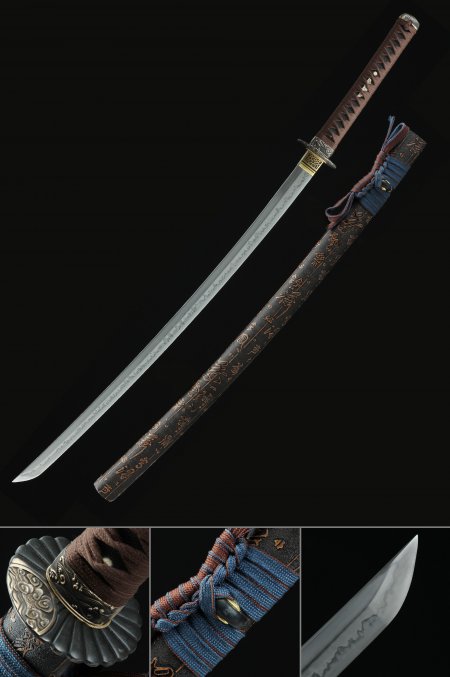
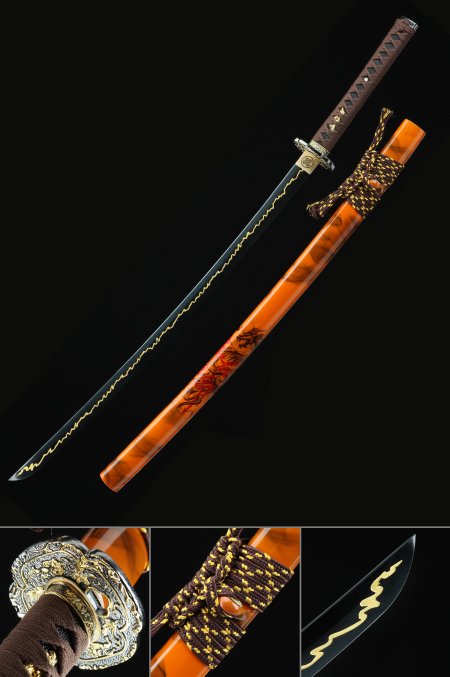
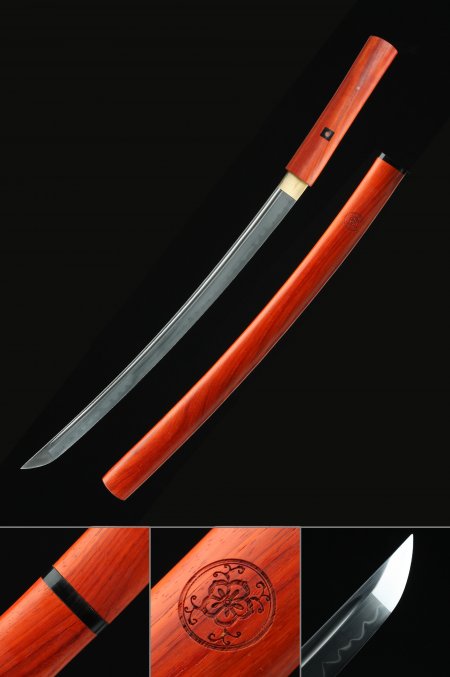
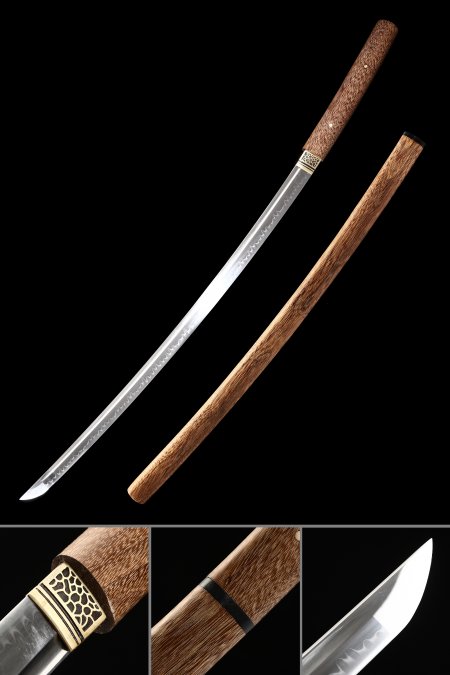
How can I tell if a hamon on a katana is real or artificially applied?
Updated Feb 2026
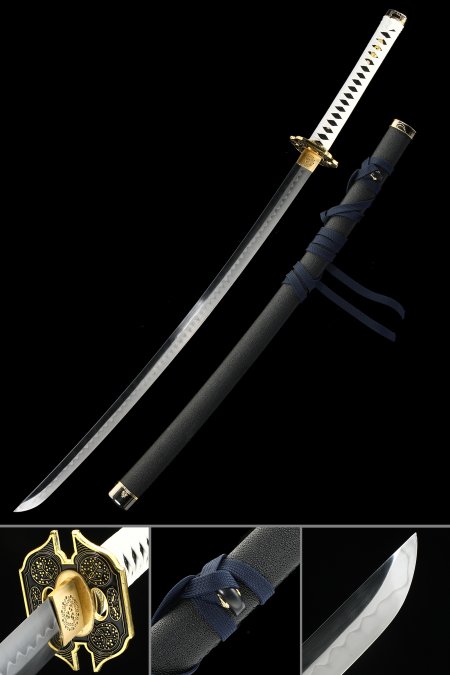
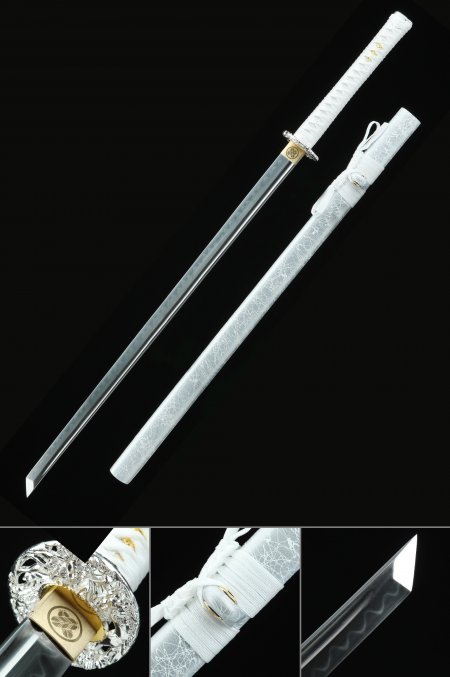
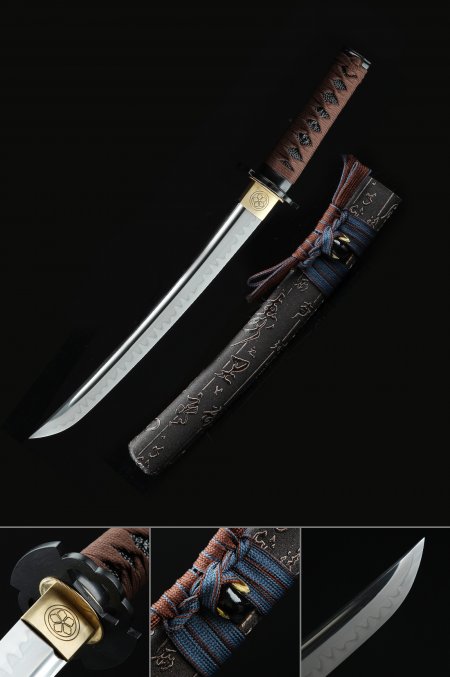
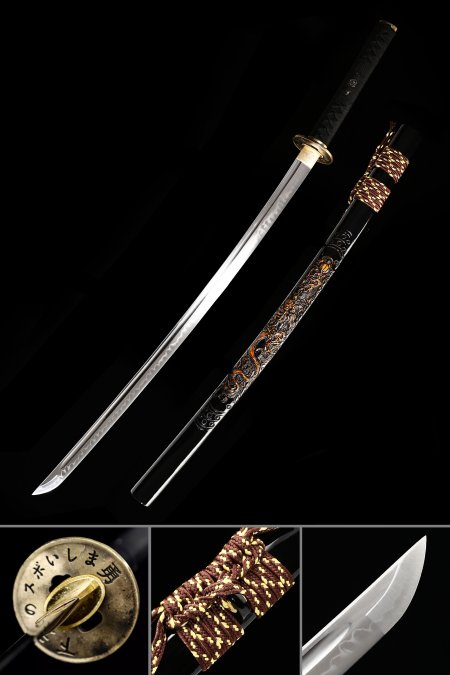
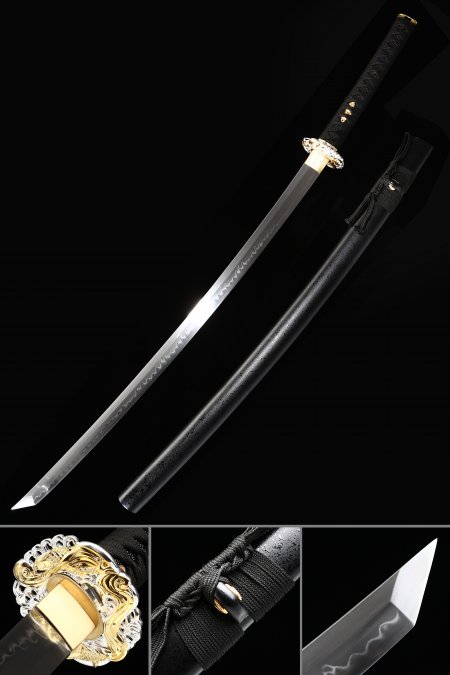
A genuine hamon — called a natural or "true" hamon — forms during the clay tempering process when the differential cooling rate between the edge and spine creates a physical boundary in the steel's crystalline structure. Under light, a real hamon appears as a misty, irregular transition zone with visible activity (nie or nioi) along its edge. It shifts slightly in appearance depending on the angle and intensity of the light source. An acid-etched or machine-simulated hamon, by contrast, looks flat, uniformly sharp, and does not change with lighting angle — it is essentially a surface stain rather than a structural feature. On T10 clay-tempered blades, the hamon is a direct result of the metallurgical process, and no two are identical. Collectors examining a potential purchase should view the blade under a single directional light source and look for that characteristic depth and variation.