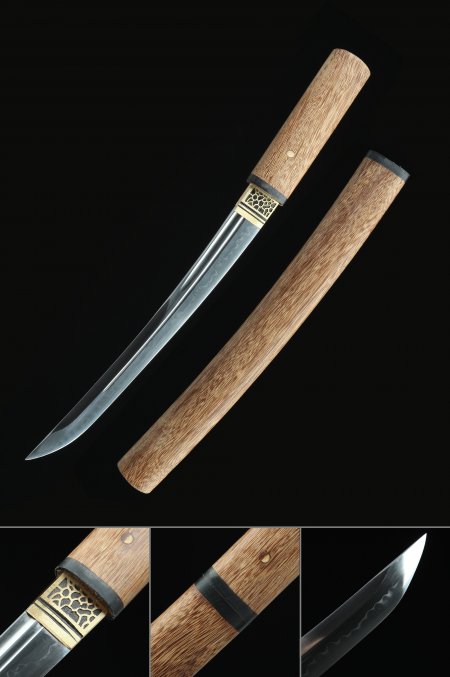
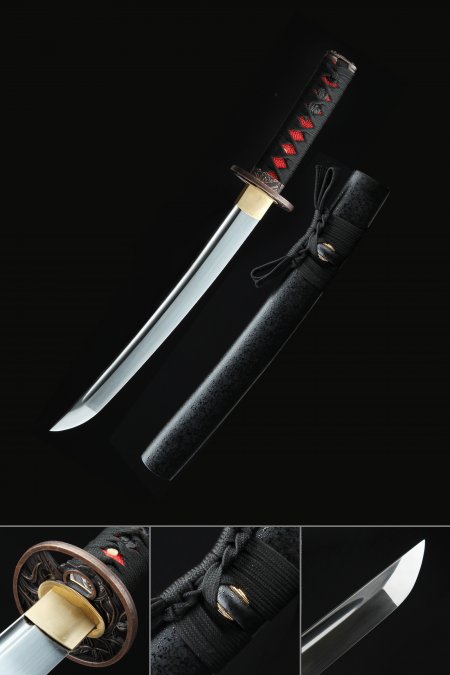
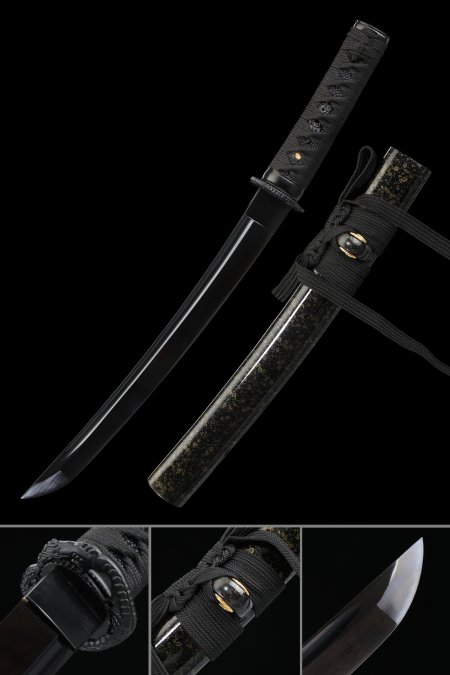
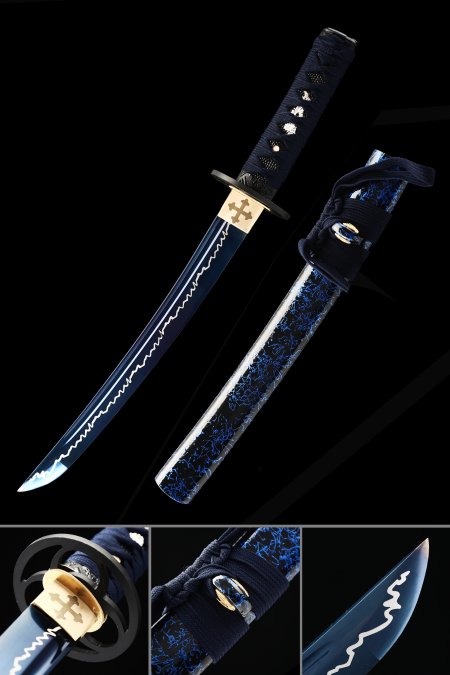
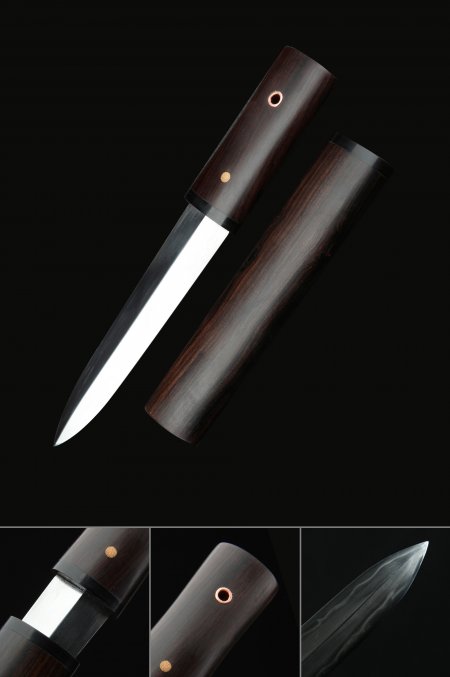
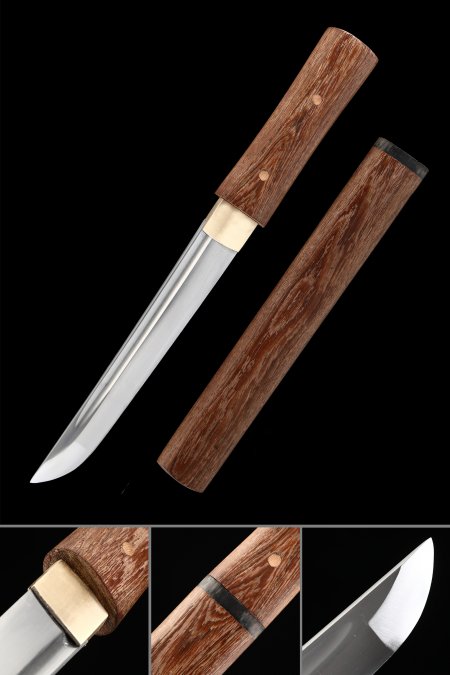
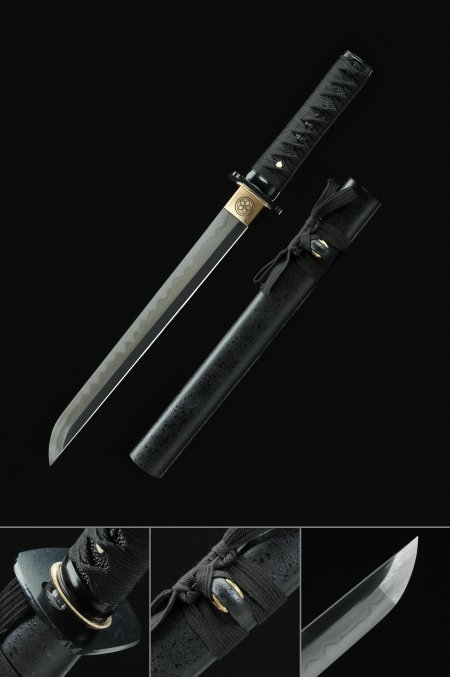
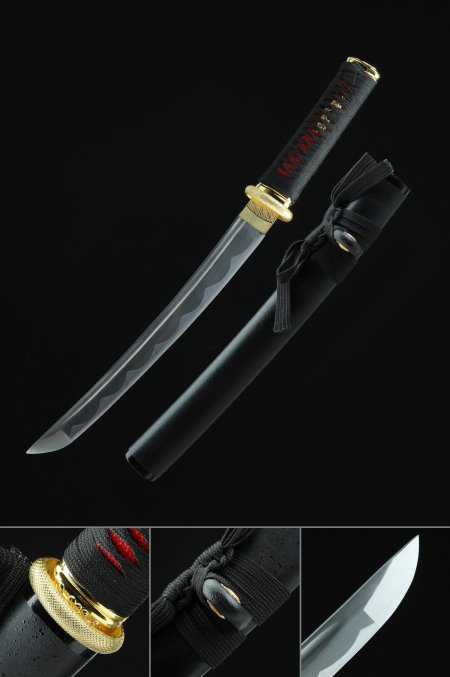
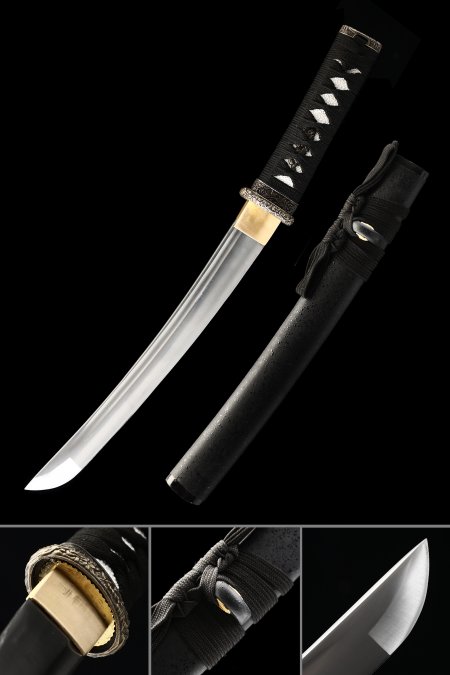
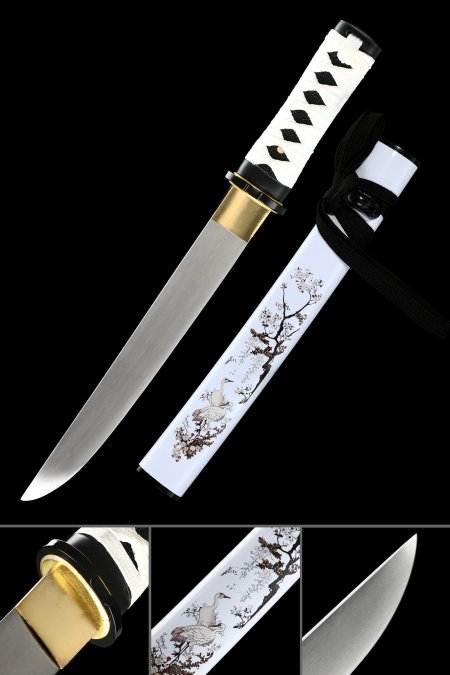
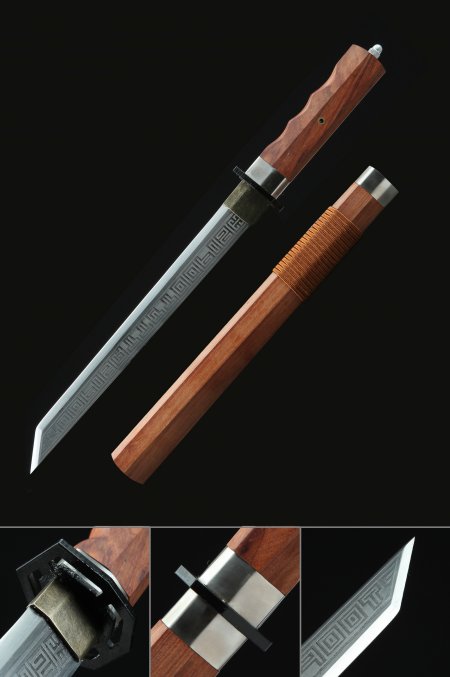
A straight tanto follows a linear edge geometry without the deliberate curvature (sori) that defines most classical Japanese blades from the Heian period onward. Historically, early Japanese blades were largely straight, influenced by continental Asian forging traditions before native smiths developed the curved profile associated with mounted use. In a straight tanto, the spine and edge run essentially parallel from base to tip, creating a bold, architectural silhouette. For collectors, this geometry is significant because it represents an earlier aesthetic chapter in Japanese blade craft — one defined by clean lines rather than flowing curves. The straight profile also tends to showcase surface polishing and hamon (temper line) patterns with particular clarity, making these pieces especially rewarding to display and study up close.