What are the different fold types visible in Damascus katana patterns?
Updated Feb 2026
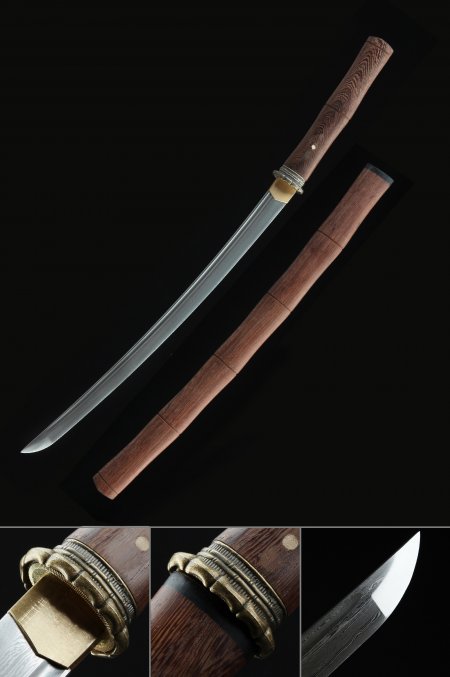
Folded Damascus katana patterns vary depending on the manipulation applied during the fold cycles. Standard linear folding - folding the billet end-over-end in the same direction each time - creates the organic flowing grain pattern most commonly associated with Damascus. Bi-directional folding - alternating fold direction 90 degrees between cycles - creates a more complex, random-looking pattern that resists the linear grain character of unidirectional folding. Twist manipulation between fold cycles creates spiral or tornado patterns by rotating the heated billet before flattening. Ladder grinding - cutting transverse grooves into the billet before a fold cycle - creates geometric interruptions in the flowing pattern. Collectors evaluating folded Damascus pattern should look for pattern consistency across the full blade and the specific character that reflects the fold approach used.