How can I verify that a hamon katana has a real versus simulated temper line?
Updated Feb 2026
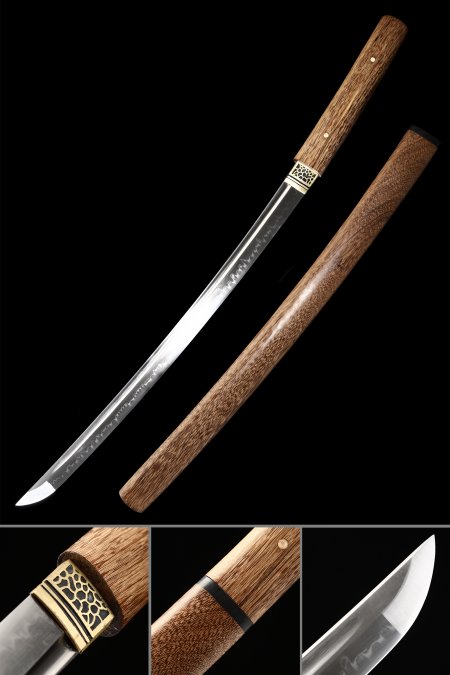
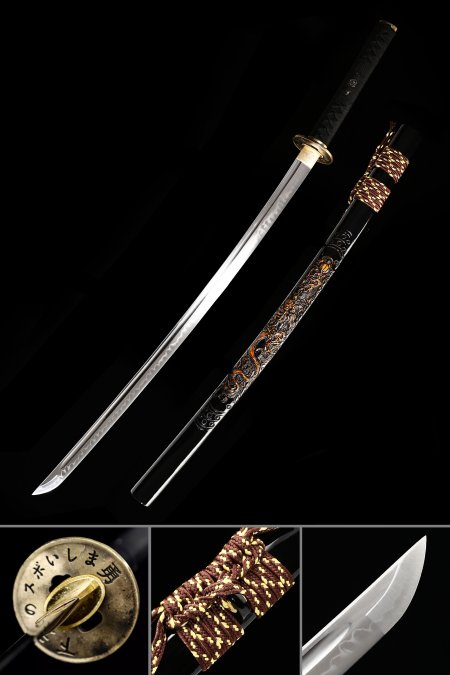
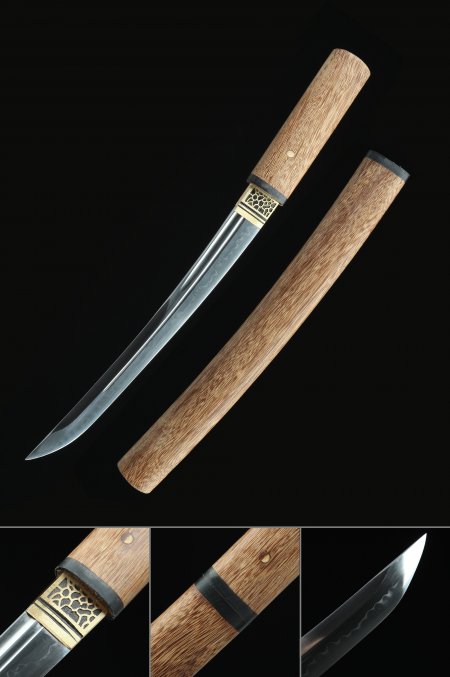
Verifying a genuine versus simulated hamon requires examining the blade under appropriate light conditions and looking for specific visual markers. Under raking light from a concentrated source at 45 degrees, a genuine hamon shows nie activity - fine crystalline particles visible in the boundary zone between the hardened edge and softer spine. These particles appear as a fine sparkle or mist in the boundary zone and cannot be reproduced by surface etching. A genuine hamon also has three-dimensional depth: when you shift the viewing angle, the boundary changes in appearance as the light interacts with the actual metallurgical structure beneath the surface. A simulated hamon is flat - it appears uniform under all light conditions and angles because it is a surface pattern rather than a physical metallurgical boundary. The material designation is also confirmatory: genuine hamon requires T10 or similar high-carbon steel with proper heat treatment.