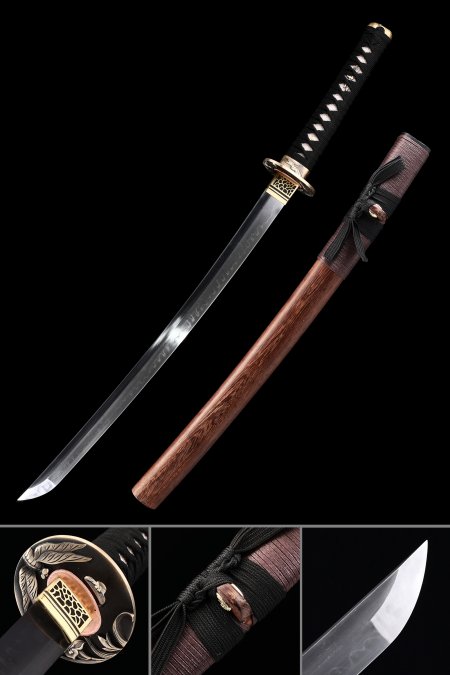
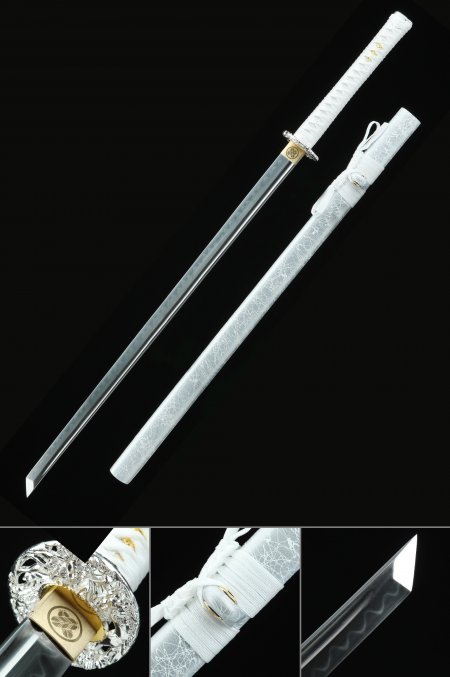
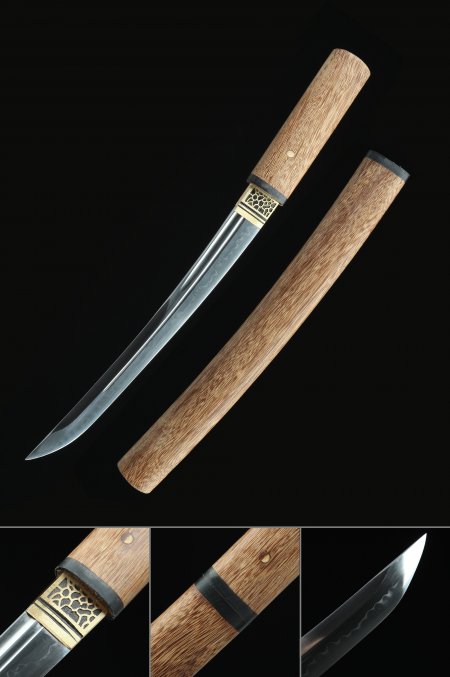
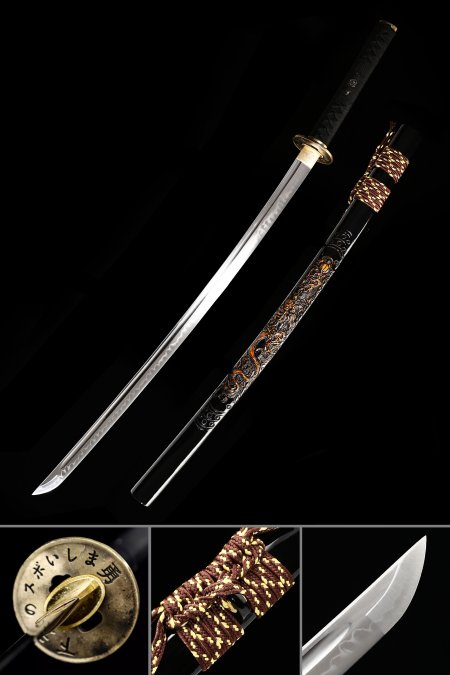
How do I identify genuine full-tang construction on a real black katana?
Updated Feb 2026
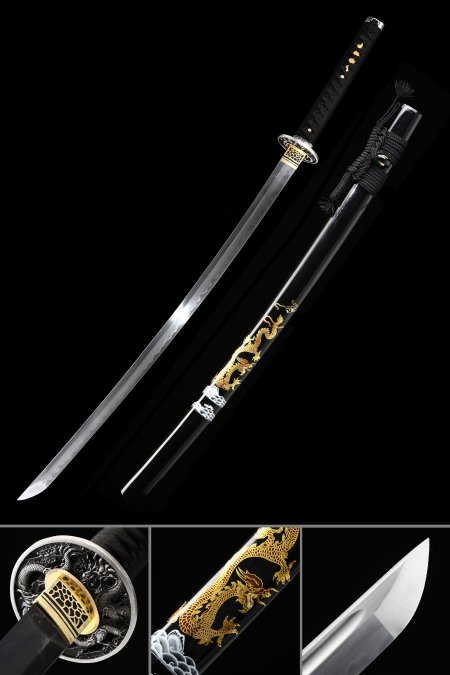
Identifying genuine full-tang construction on a real black katana can be done through several observable indicators. The handle end of the sword - the kashira pommel - should show the blade tang material at the butt end if the construction is full-tang. A mekugi retention pin should be visible through the handle at the first diamond-shaped opening in the ito wrapping - this pin passes through both the handle wood and the blade tang, securing the assembly. If the handle has excessive play or the blade can be felt to move relative to the handle with gentle lateral pressure, the construction may be partial-tang or threaded. For T10 black katana, the blade should show a visible hamon when drawn and examined under directed light - a feature that is impossible in stainless or alloy construction. High-carbon steel blades will require regular oil maintenance to prevent oxidation; if a black katana shows no tendency to oxidize even without oil, it is likely stainless rather than high-carbon. Full-tang construction with high-carbon steel and a mekugi pin is the combination that confirms a genuine collectible-grade real black katana.