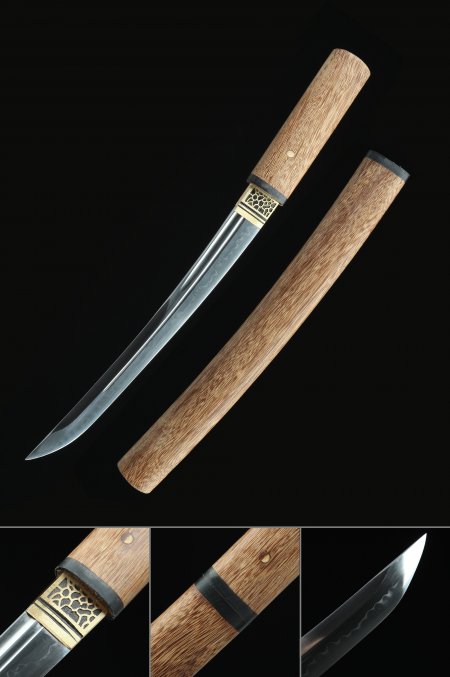
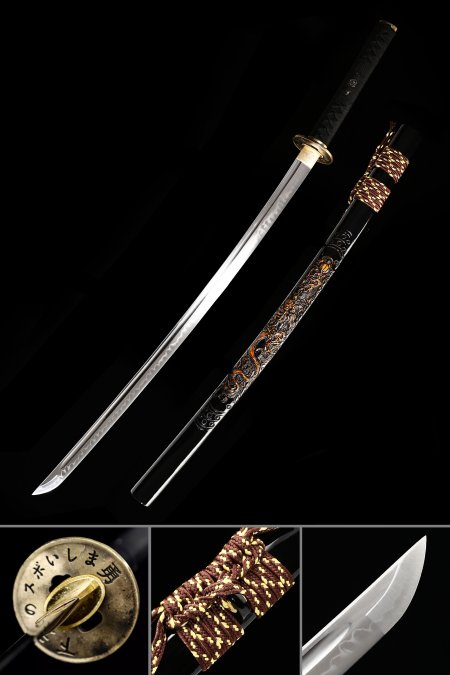
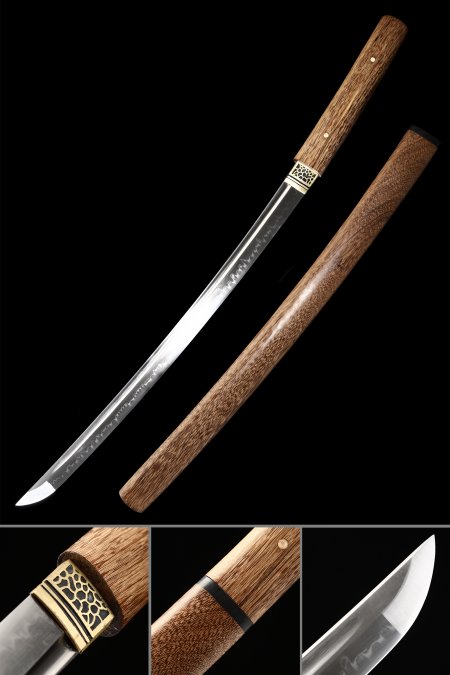
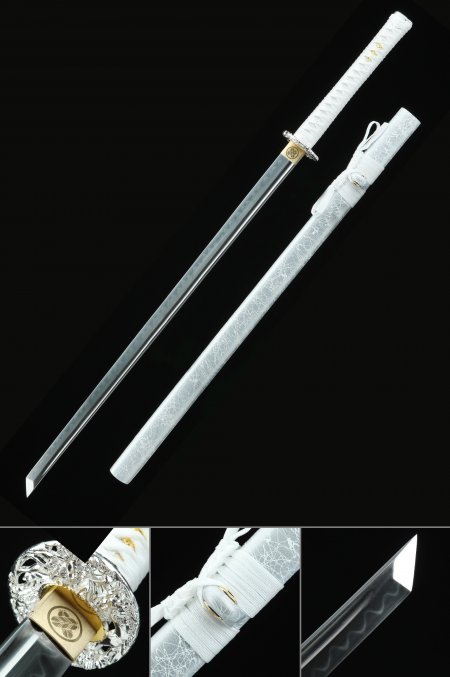
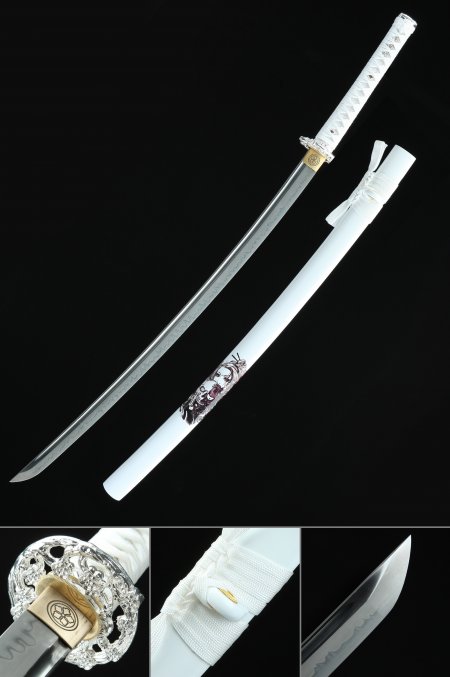
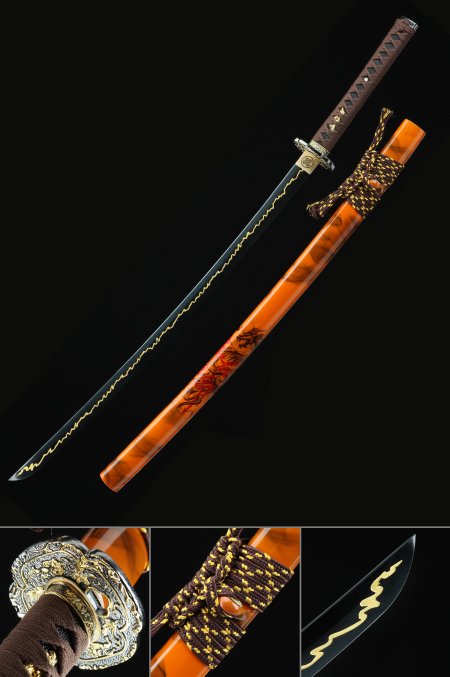
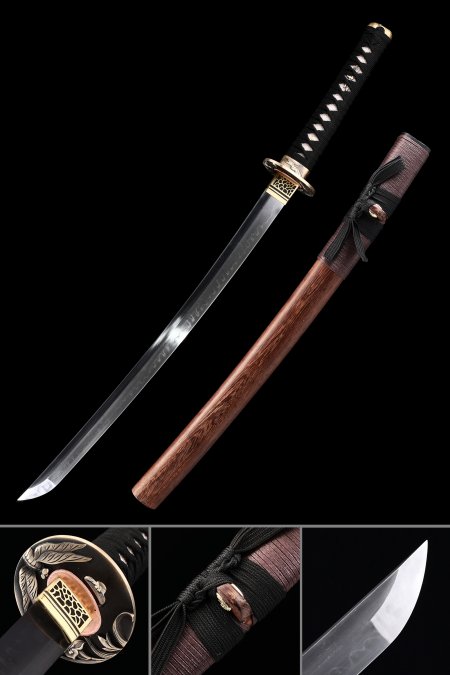
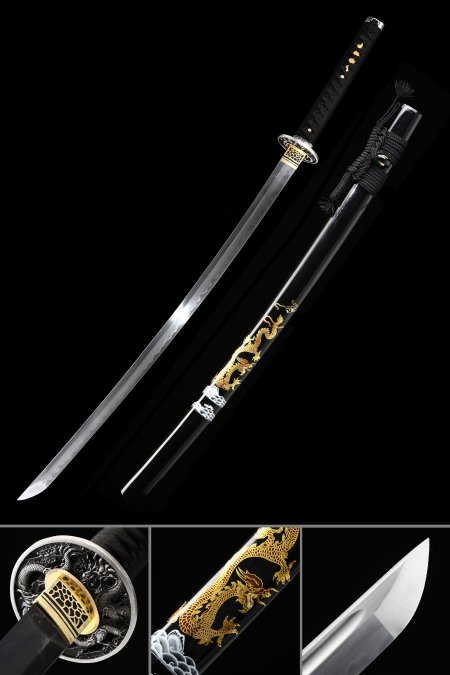
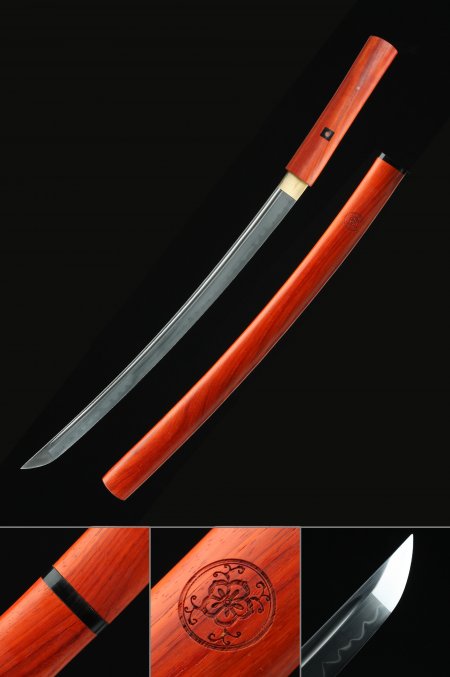
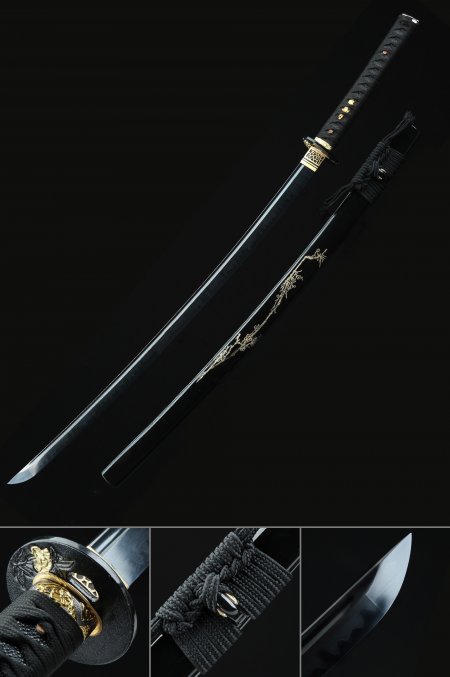
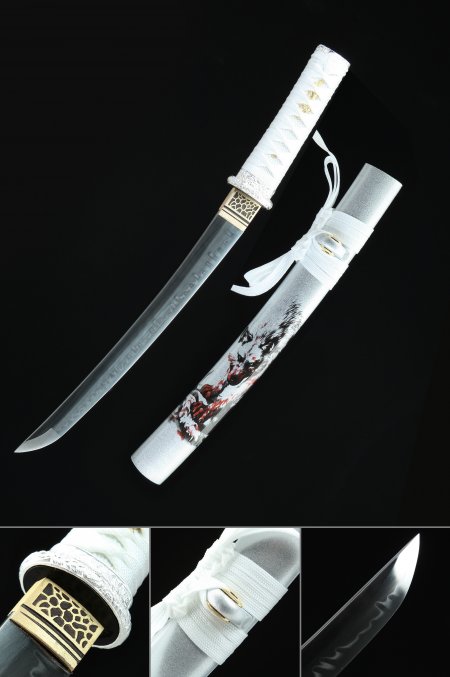
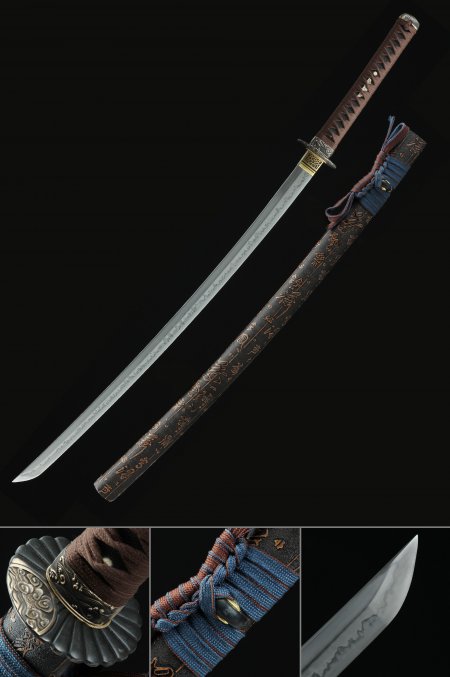
Seeing the hamon on a T10 katana clearly requires directed lighting that can differentiate the subtle surface contrast of the temper line from the overall blade surface. The hamon is not deeply colored or dramatically obvious - it appears as a misty, undulating line whose contrast with the surrounding blade surface is enhanced by angled lighting. The most effective approach is to draw the blade from the scabbard and hold it under a single directed light source - a desk lamp, spotlight, or strong flashlight positioned at an angle to the blade surface rather than directly above it. Rotate the blade slowly in the light, and as the angle changes, the hamon will appear and disappear in different areas as the light plays across the surface. The edge zone below the hamon may appear lighter in tone than the spine area above it - this is the visual result of the different steel structures created by differential heat treatment. For the best view, reduce ambient room light and use a single directed warm-white or cool-white light source at an angle of roughly 30-45 degrees to the blade's flat surface. Once you locate the hamon's line, you can examine its activity and complexity at close range.