What is a hamon and how does it appear on a T10 katana?
Updated Feb 2026
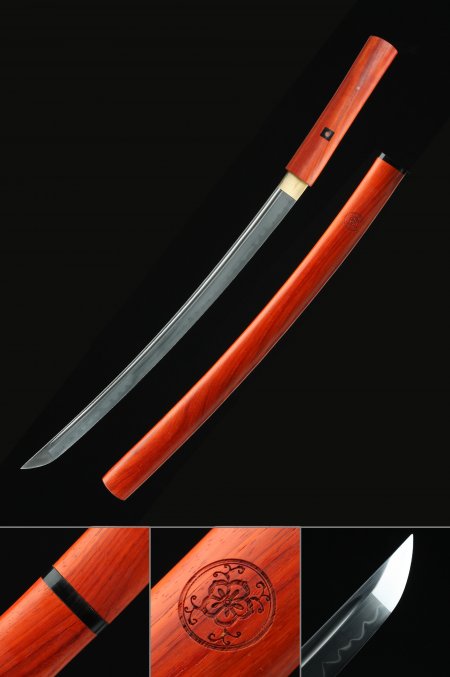
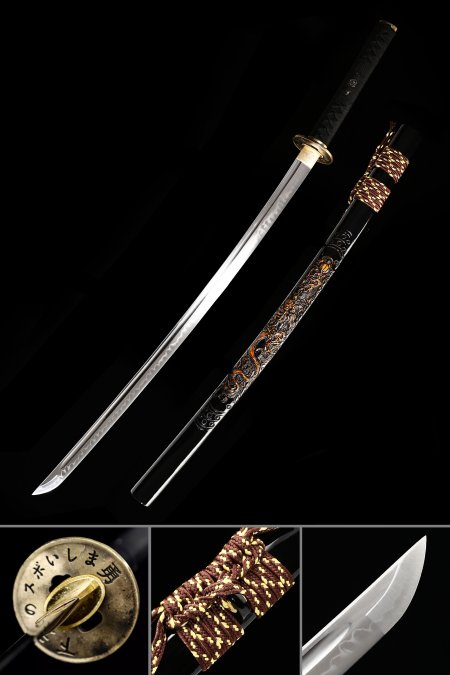
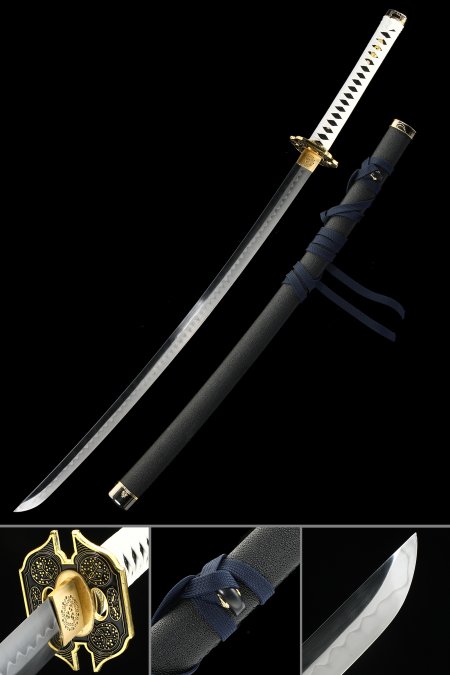
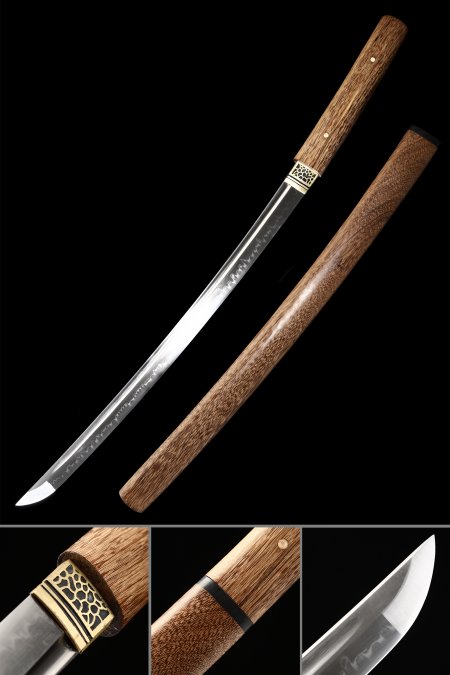
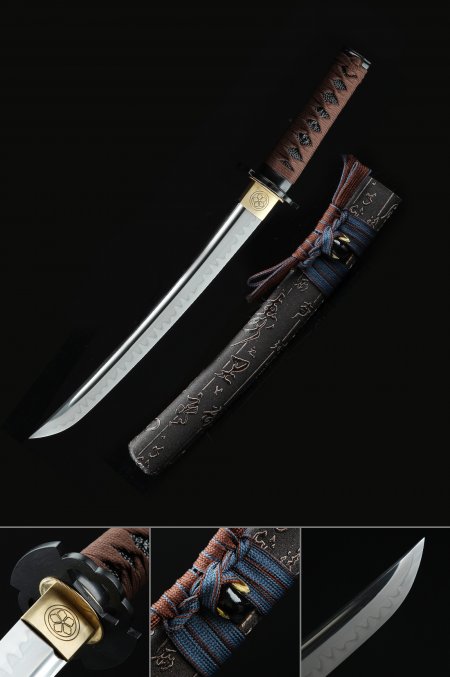
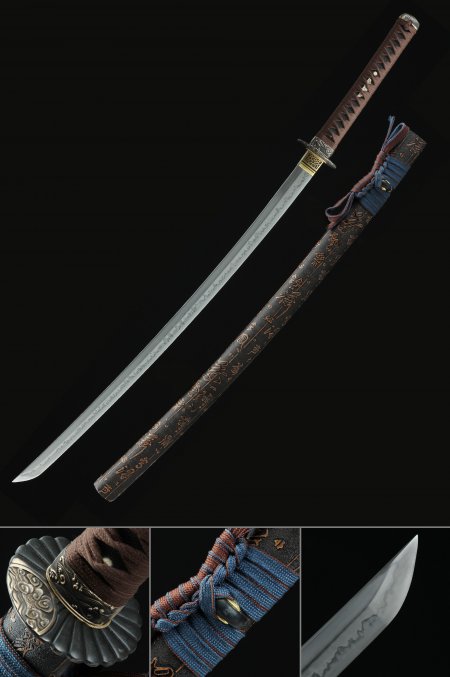
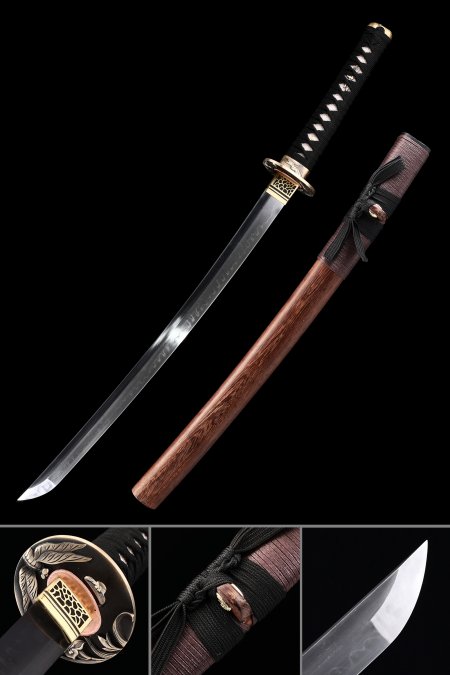
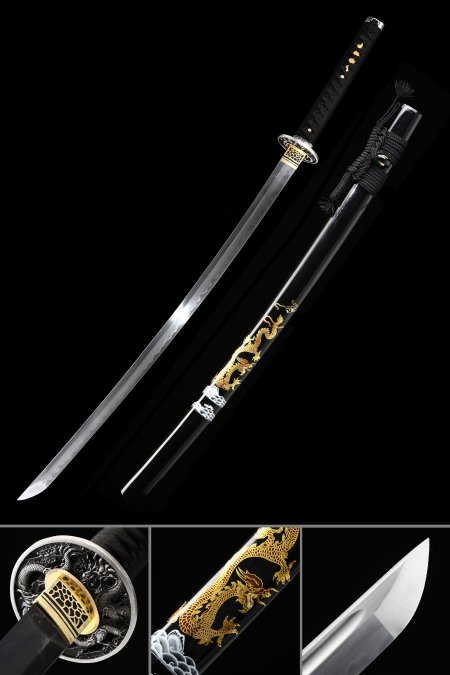
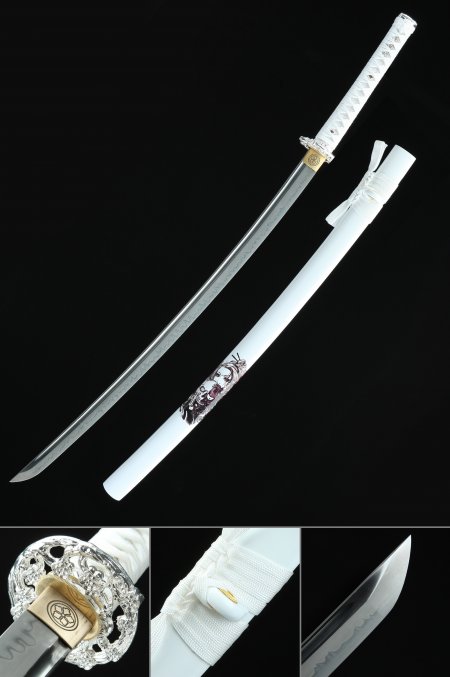
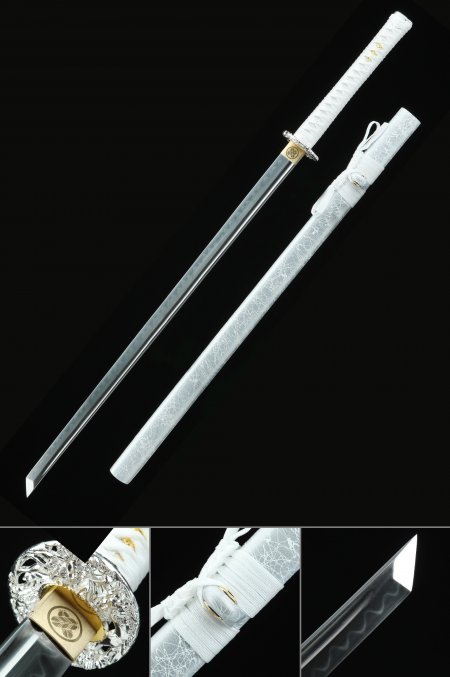
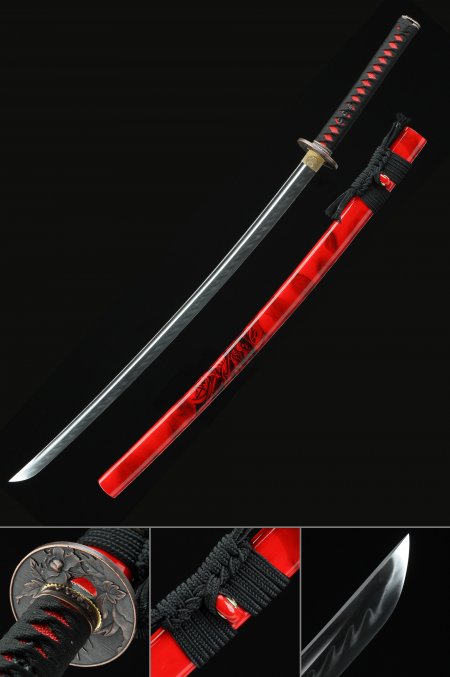
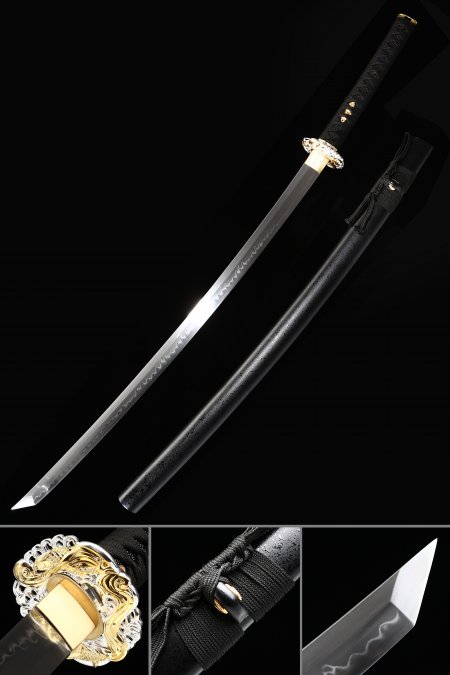
A hamon is the visual temper line produced on a Japanese sword blade by the clay-tempered differential heat treatment process. During heat treatment, a clay mixture is applied to the blade's spine and sides, leaving the edge area exposed or lightly coated. When the blade is heated and quenched, the clay-covered areas cool more slowly, resulting in a tougher, lower-hardness steel structure in the spine. The edge area, cooling rapidly without clay insulation, develops a much harder steel structure called martensite. The boundary between these two microstructures is the hamon - visible on the polished blade surface as an undulating, misty line whose character varies depending on the specific clay application pattern, steel grade, and the smith's technique. On a T10 katana, the hamon appears as a distinct wave-patterned line running along the edge from blade base to tip, with activity and complexity within the temper zone that rewards close inspection. The hamon may show nie (visible martensite particles), nioi (finer martensite in the boundary zone), and ashi (lines running from the hamon into the edge zone), all of which are criteria that collectors use to evaluate blade quality.