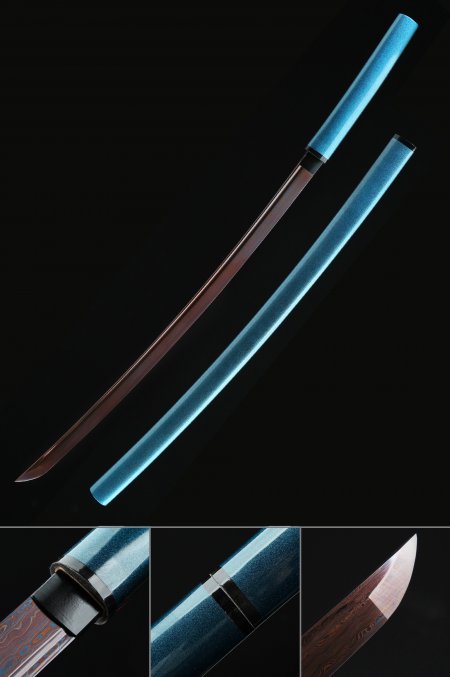
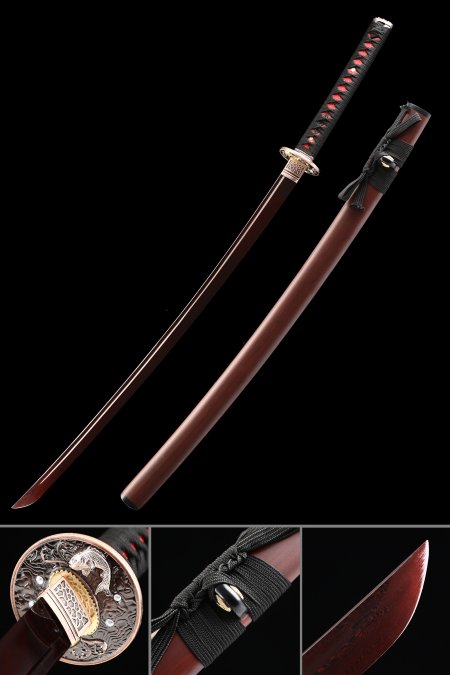
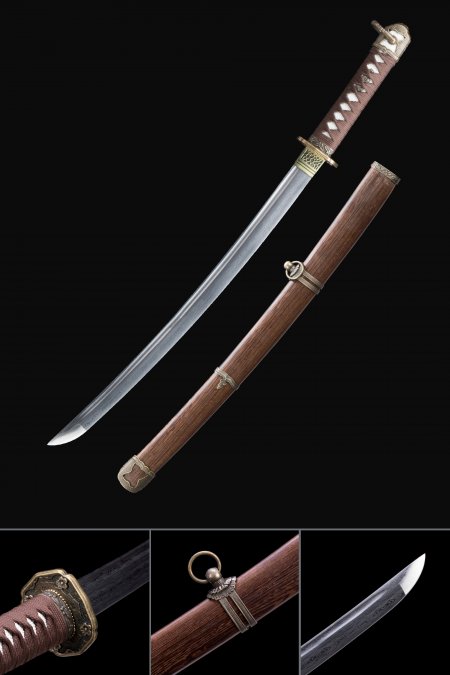
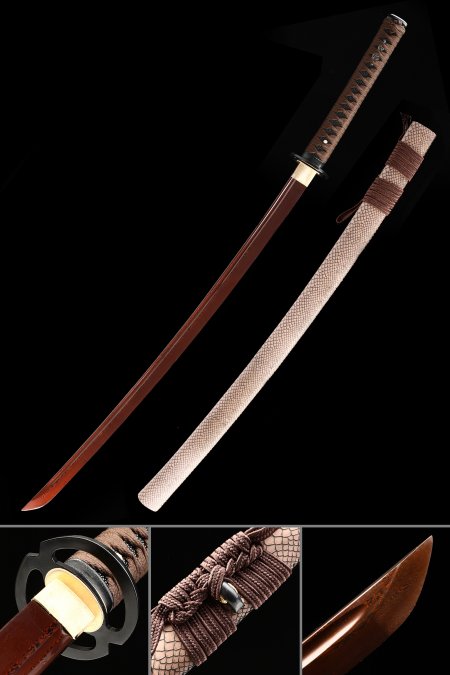
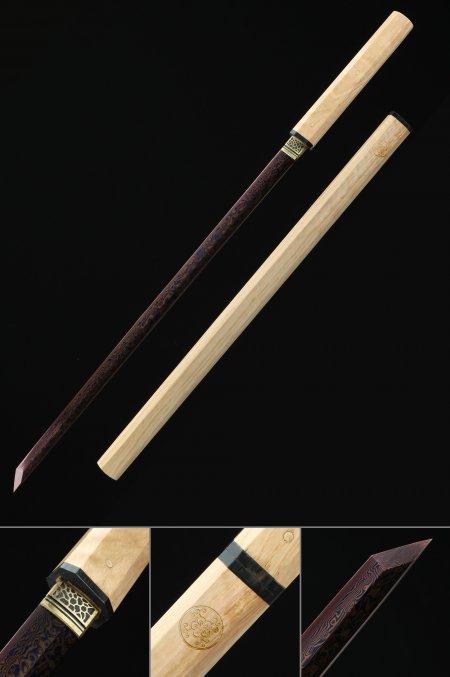
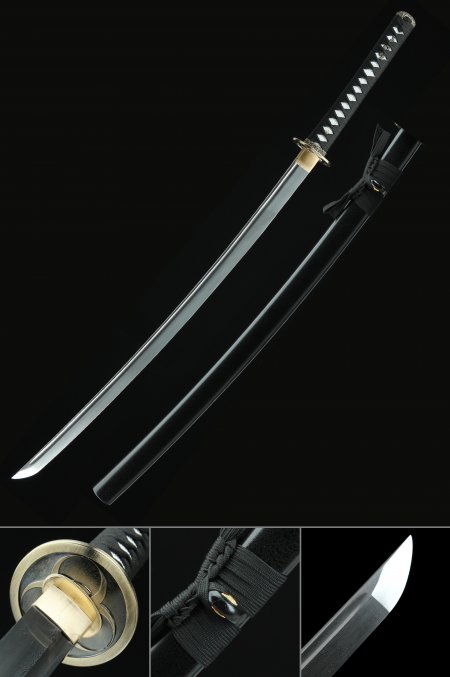
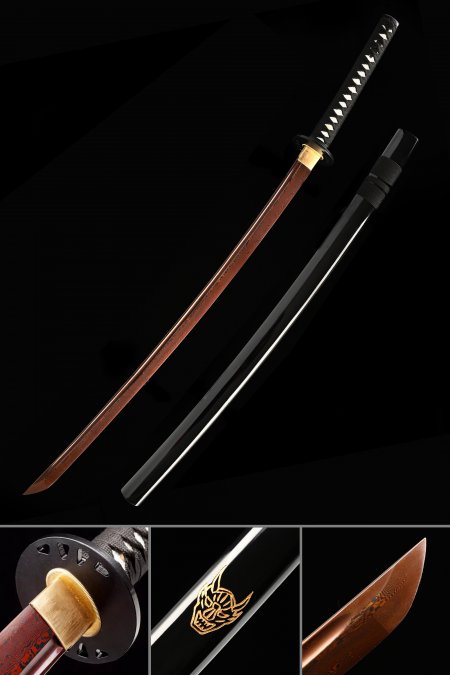
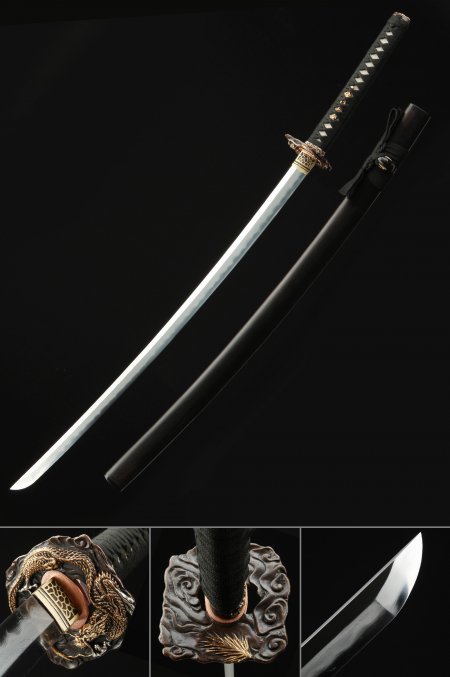
What makes Damascus steel visually different from regular carbon steel in a wakizashi?
Updated Feb 2026
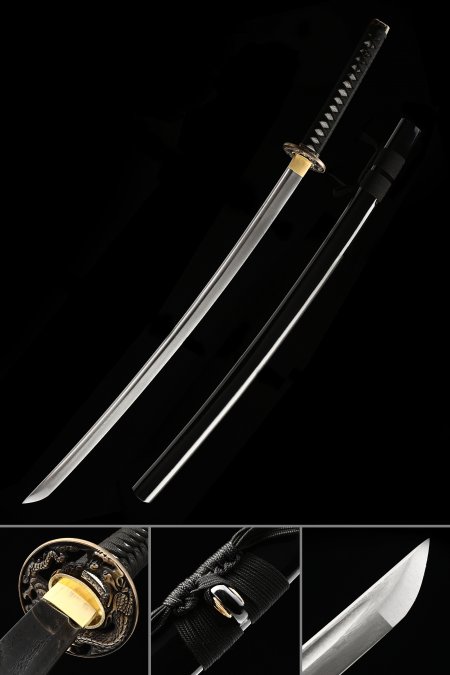
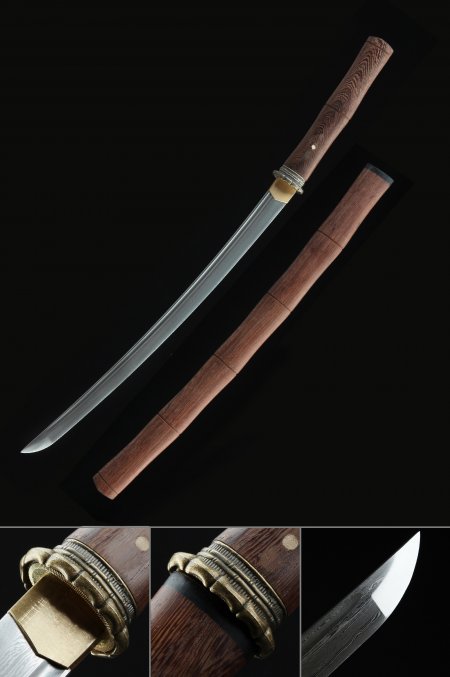
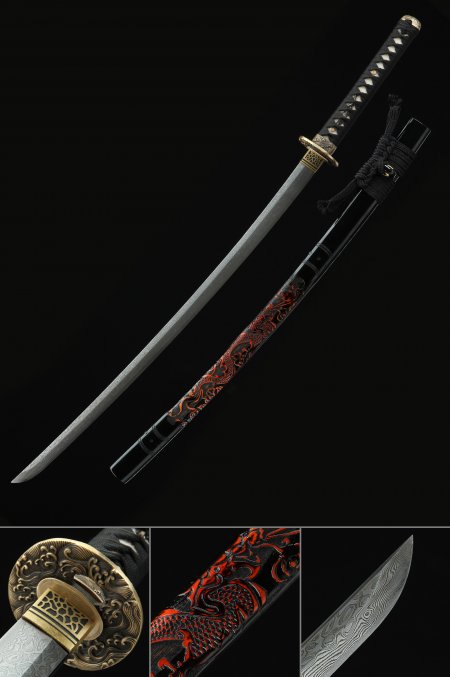
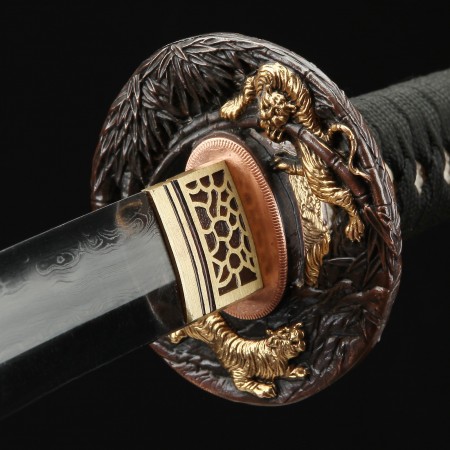
A Damascus steel wakizashi and a regular carbon steel wakizashi of the same blade length differ primarily in the visual character of the blade surface. A regular carbon steel blade - whether 1045, T10, or Manganese Steel - has a uniform blade surface whose appearance is determined entirely by the finish applied during polishing: a mirror finish shows the polished steel uniformly, while a satin or darkened finish covers the surface consistently. Damascus steel, by contrast, is produced by folding and forge-welding multiple steel types together, then acid-etching the finished blade to reveal the layer structure as flowing, water-like surface patterns. These patterns vary across the full width and length of the blade, creating visual complexity that increases as you look more closely - there is always more detail visible at near range than from across the room. For collectors who want a wakizashi that rewards attentive inspection as well as looking impressive from a distance, Damascus steel offers a visual depth that solid-finish carbon steel blades cannot replicate.