What does 'handmade' mean in the context of katana production?
Updated Feb 2026
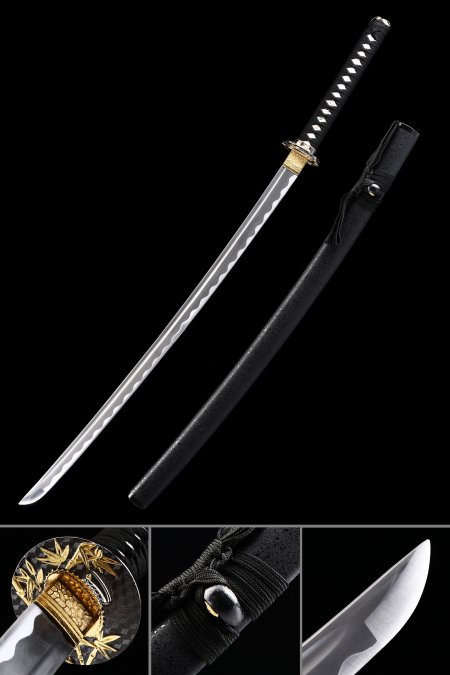
In katana production, handmade refers specifically to the process of forging, shaping, tempering, and fitting the sword through hand skill rather than automated or machine-assisted production. The key hand processes in a genuine handmade katana are the forging - the smith works the heated steel under hammer by hand, making judgments about temperature, working direction, and material behavior through feel and visual assessment rather than through programmed machinery. Clay tempering is applied by hand: the specific pattern and thickness of the clay coating is applied by the smith's hand with a spatula or similar tool, and the outcome of the quench depends on the accuracy of this hand application. The polish is done by hand through progressive abrasive stones, a process that requires significant skill to execute without introducing scratches, uneven surfaces, or disruption to the hamon's surface character. Fitting work - habaki, tsuba, fuchi, kashira, tsuka - involves individual fitting of each component to the specific blade's dimensions rather than assembly of standardized parts. A handmade katana shows the accumulated skill of these processes in ways that a machine-produced equivalent cannot.