What makes Damascus steel visually distinctive on a tanto blade?
Updated Mar 2026
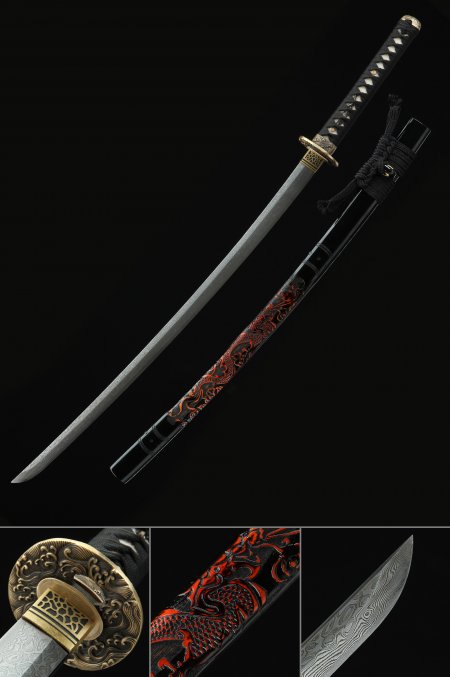
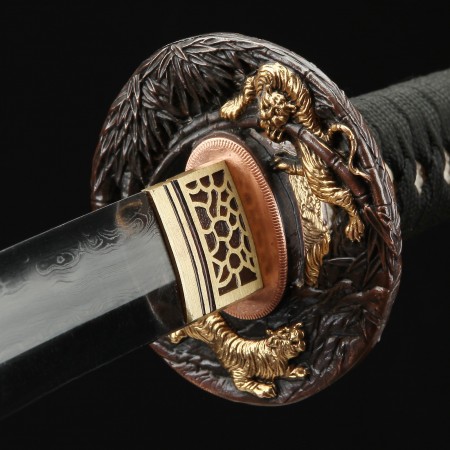
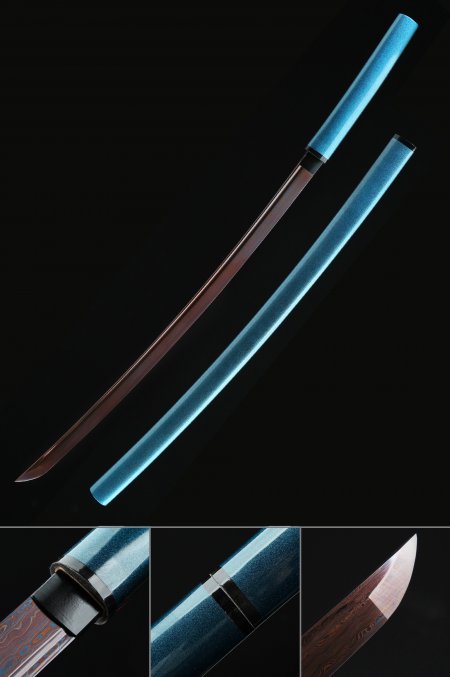
Damascus steel is formed by forge-welding multiple layers of high and low carbon steel, then repeatedly folding and drawing the billet. This process creates flowing, wave-like patterns across the blade surface that are unique to each piece — no two Damascus tanto will share identical patterning. When the blade is etched during finishing, the differential carbon content between layers reacts at different rates, causing the pattern to emerge with contrast and depth. On a tanto, where the blade geometry is compact and the surface area is fully visible, this patterning is especially prominent. Collectors often examine the hada — the surface grain texture — as closely as the hamon line when evaluating a Damascus collectible.