What is a real hamon, and why does it matter on a collectible blade?
Updated Mar 2026
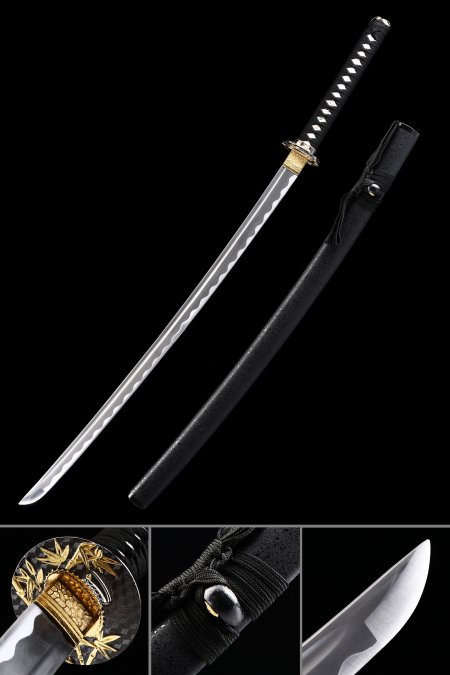
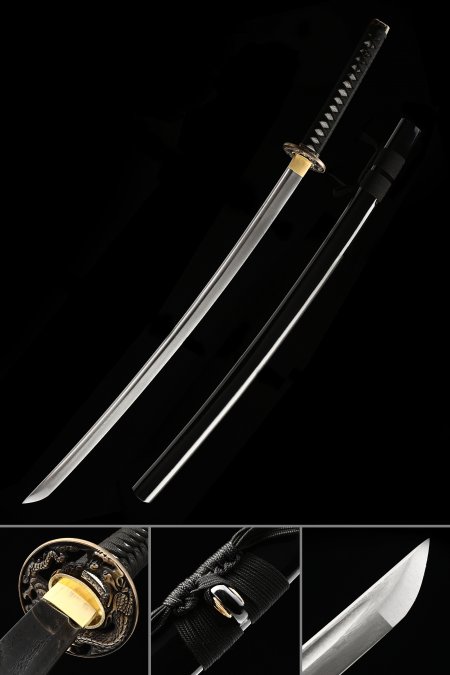
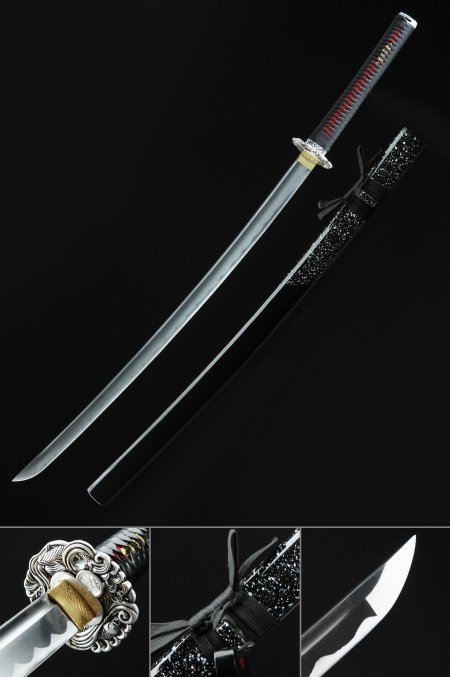
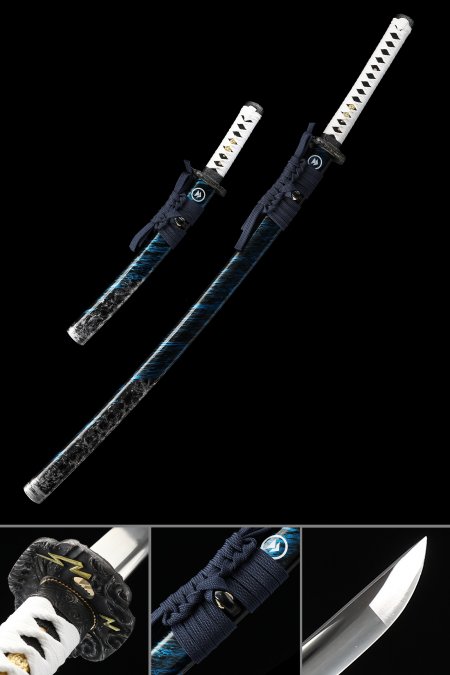
A hamon is the temper line that appears on a carbon steel blade after clay tempering — a process in which clay is applied to the spine before the final quench, causing the edge and spine to cool at different rates. The edge hardens into martensite, while the spine stays softer and tougher. Where these two zones meet, a visible boundary forms in the steel's grain structure. On a polished blade this boundary appears as a misty, undulating line ranging from subtle white clouds to bold, active patterns depending on the steel and the smith's technique. Critically, a real hamon cannot be faked with acid etching without close inspection revealing the difference — an authentic one shifts in appearance under different lighting angles. For collectors, a genuine hamon is evidence of real craft investment in the blade rather than purely cosmetic finishing.