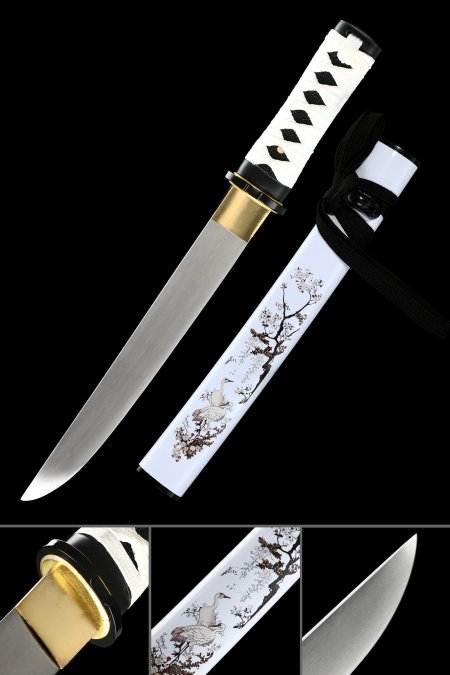
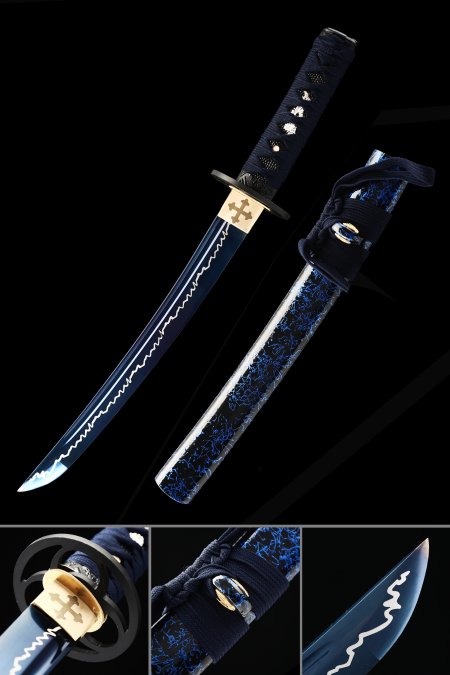
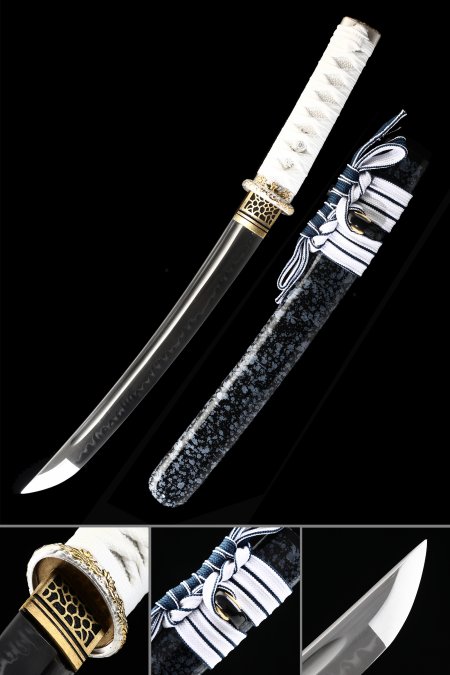
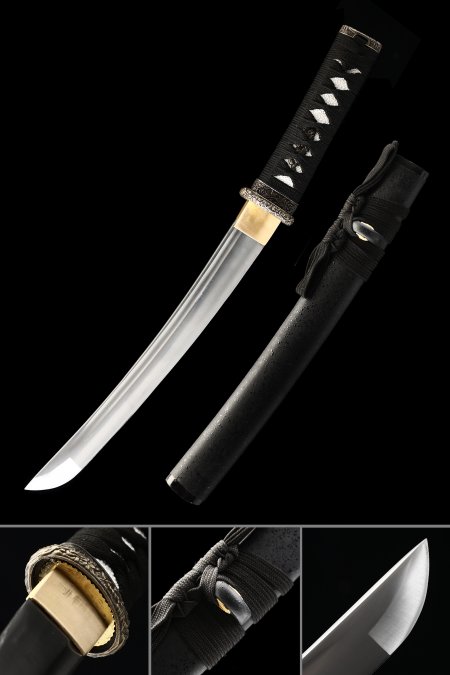
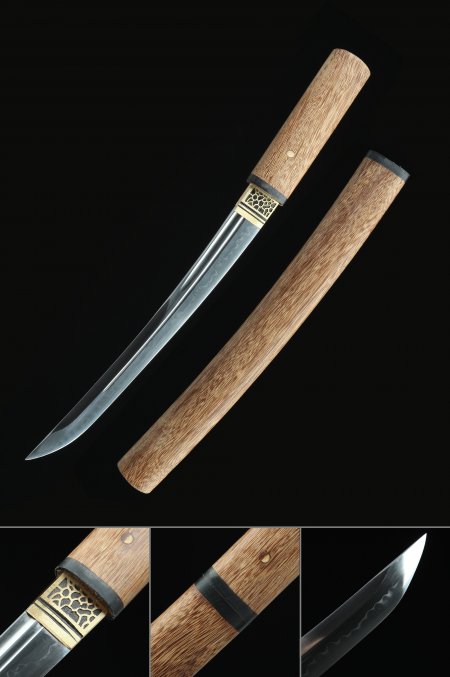
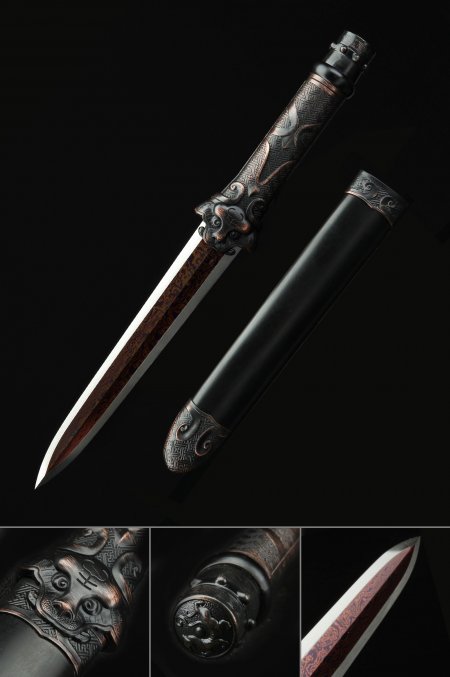
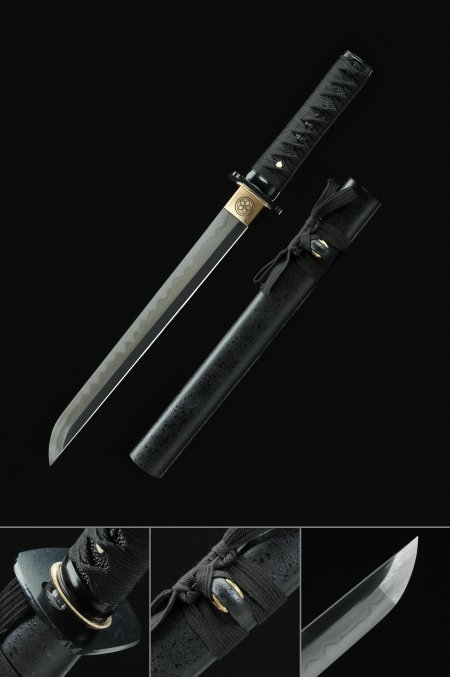
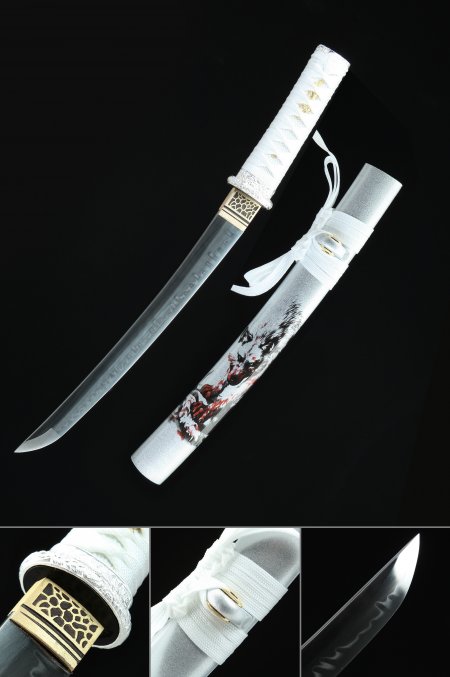
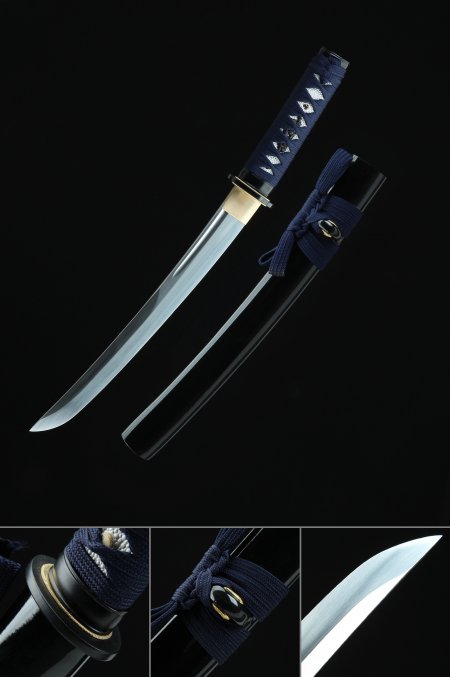
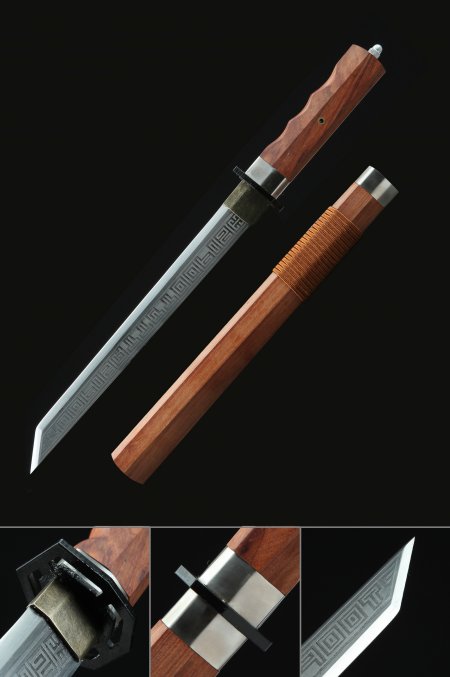
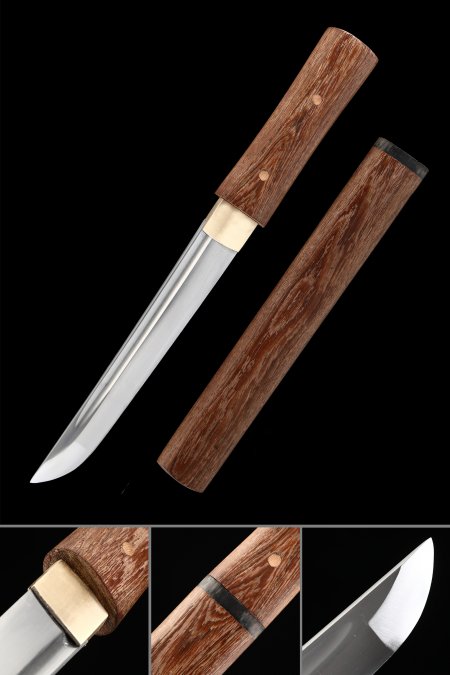
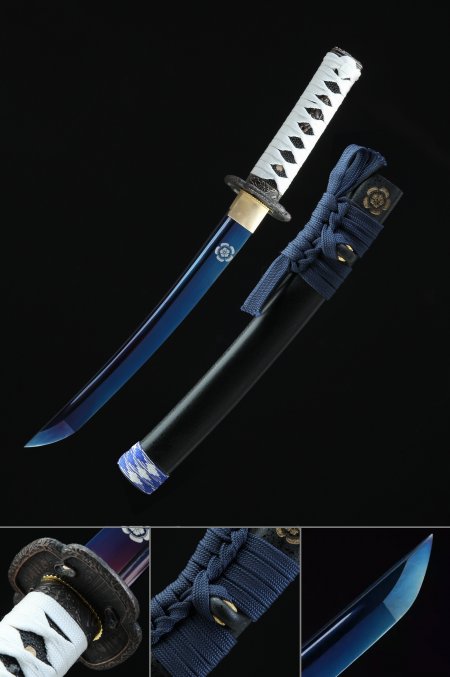
Both the aikuchi and the tanto share a similar short-blade format, but the defining distinction is the complete absence of a tsuba - the hand guard - on an aikuchi. A standard tanto typically includes a tsuba as part of its fittings, whereas the aikuchi presents an uninterrupted profile from pommel to saya tip. This guardless design originated as a style favored by Heian-period court nobility who prioritized a sleek, concealed carry aesthetic over protective fittings. For collectors, the aikuchi's flush-fitting handle and saya create a more sculptural, unified object that displays exceptionally well as a standalone piece.