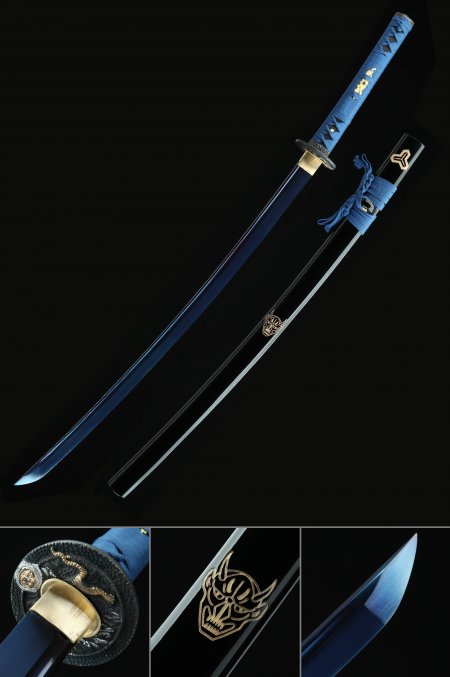
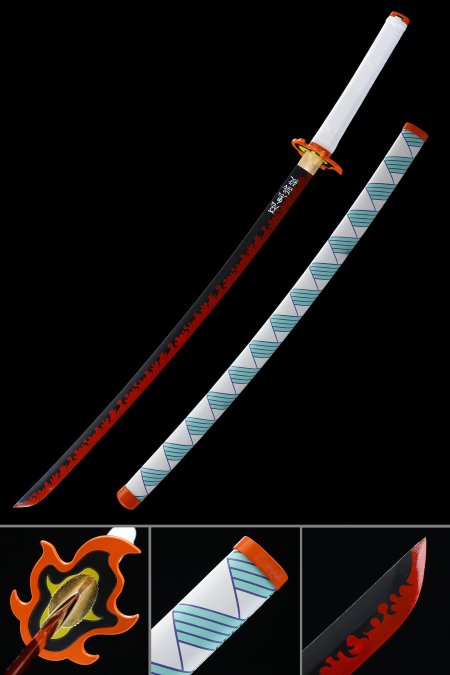
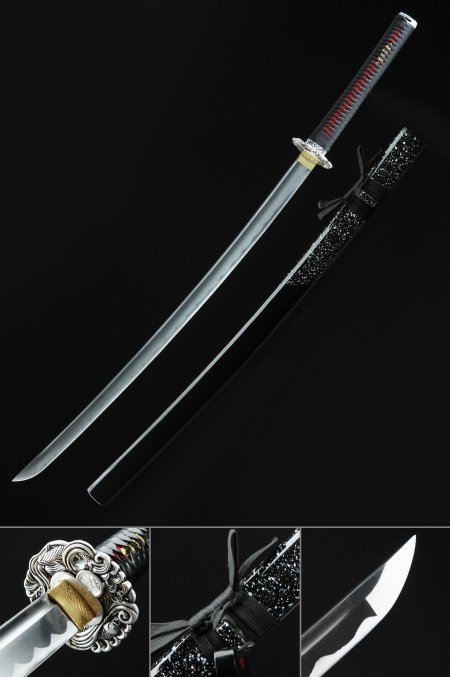
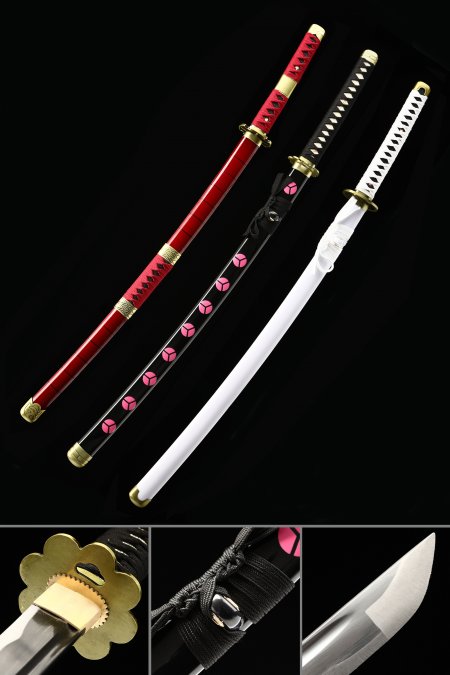
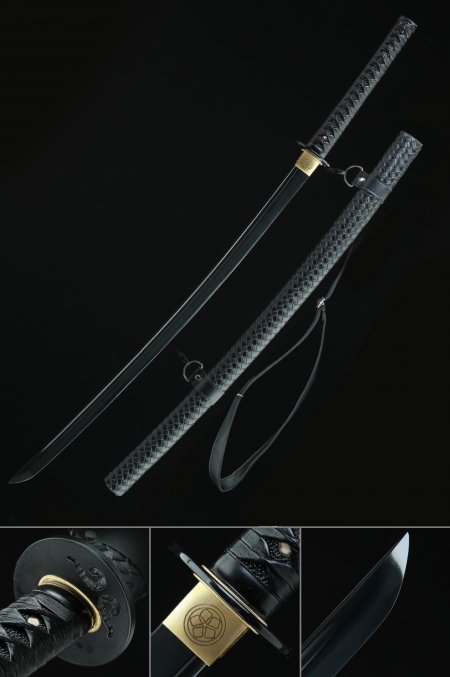
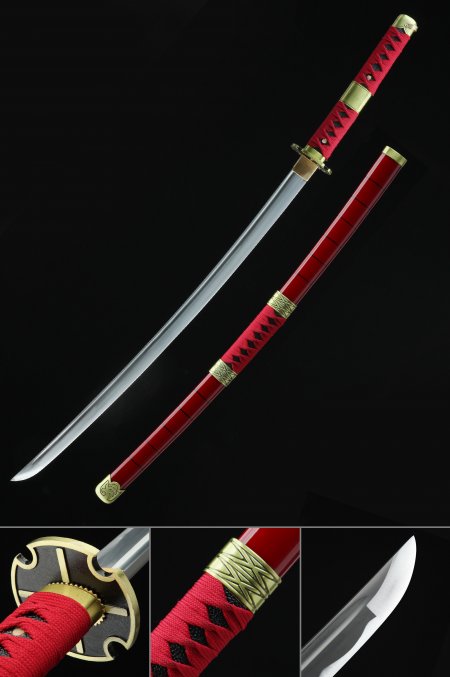
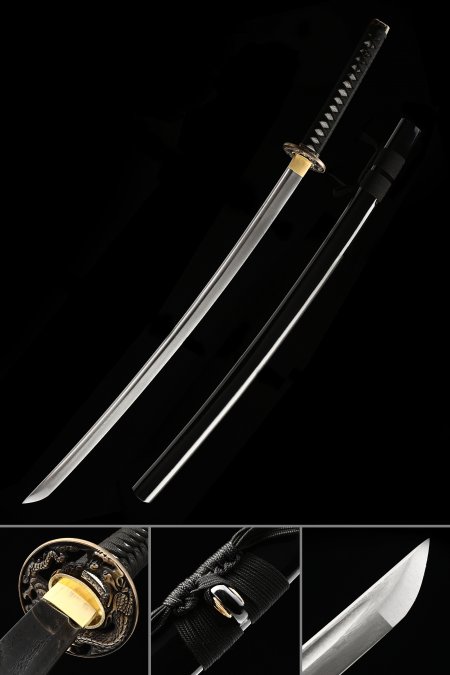
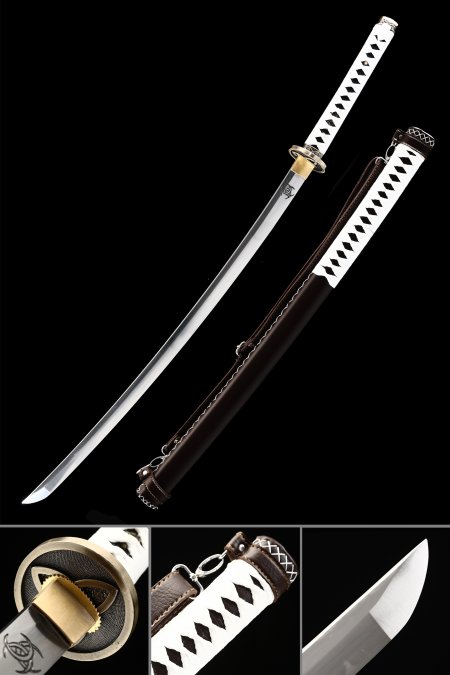
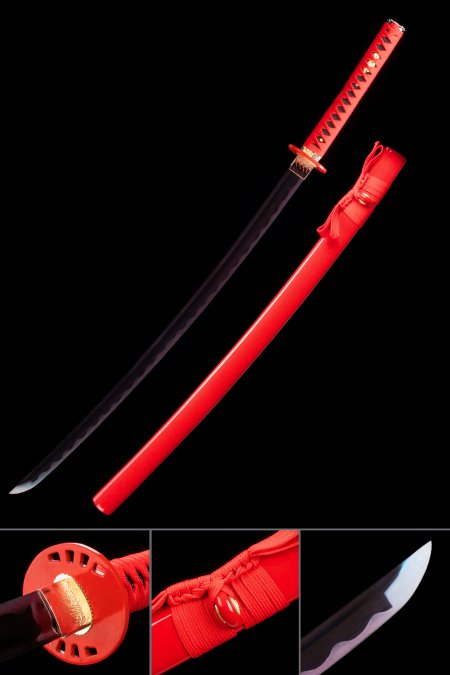
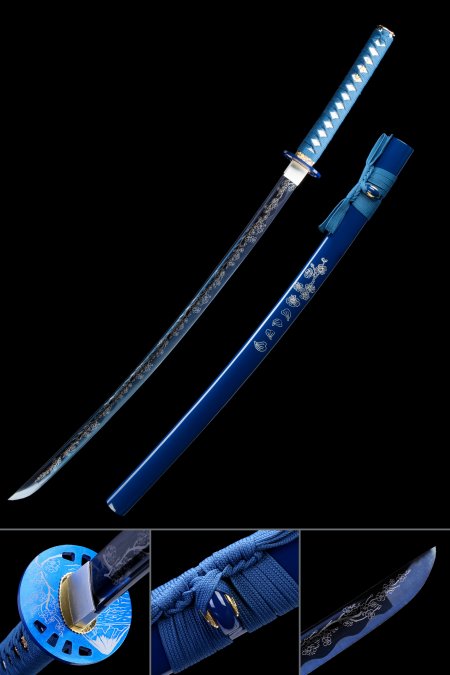
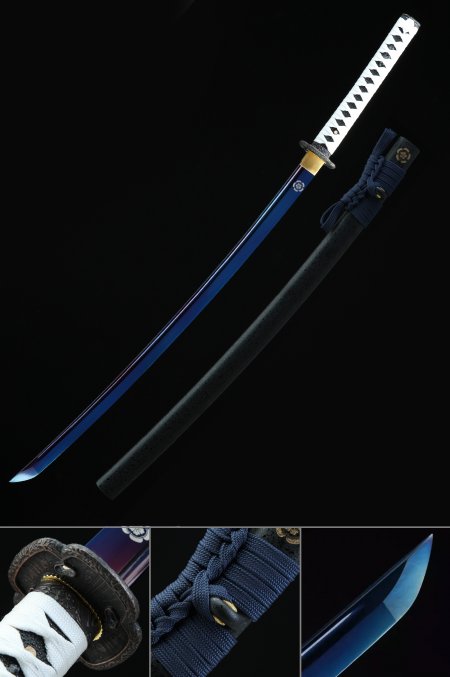
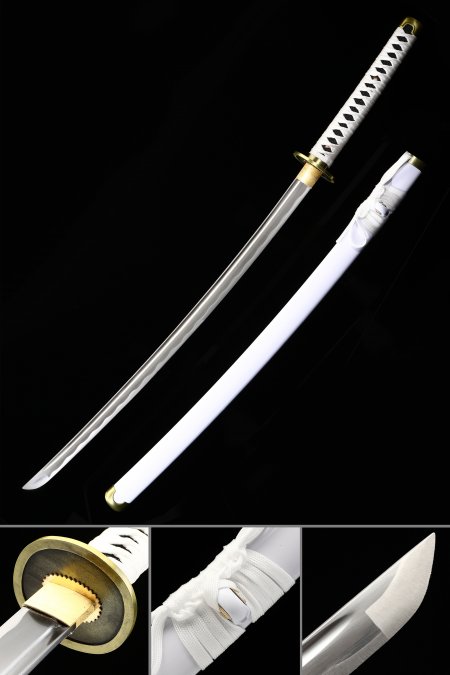
Every katana in this collection features a genuine, clay-tempered hamon produced through differential hardening - not an acid-etched simulation. During forging, a clay mixture is applied along the spine of the blade before quenching, insulating that area and creating a slower cooling rate. The edge, left with minimal clay, cools rapidly and achieves a higher hardness, while the spine remains relatively tough and ductile. The boundary between these two zones forms the visible hamon line. Under proper lighting, a real hamon will reveal microscopic crystalline activity - referred to as nie and nioi in traditional appraisal - that no chemical etching can replicate. This structural detail is one of the primary markers collectors use to assess a blade's authenticity and quality tier.