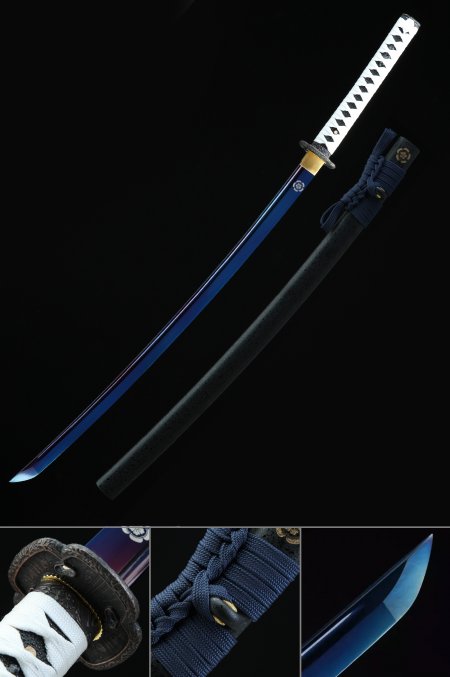
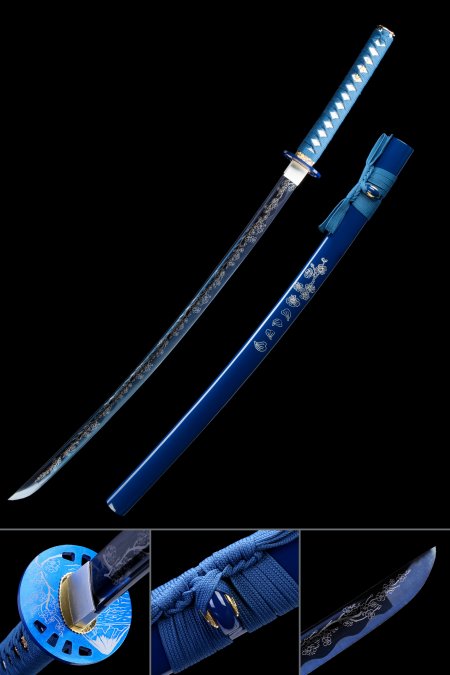
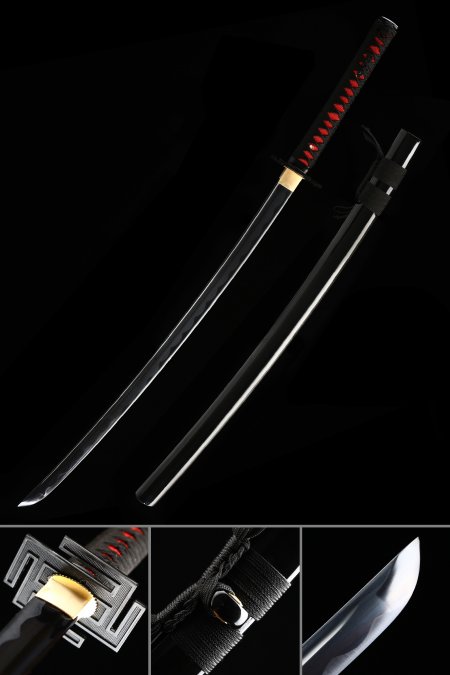
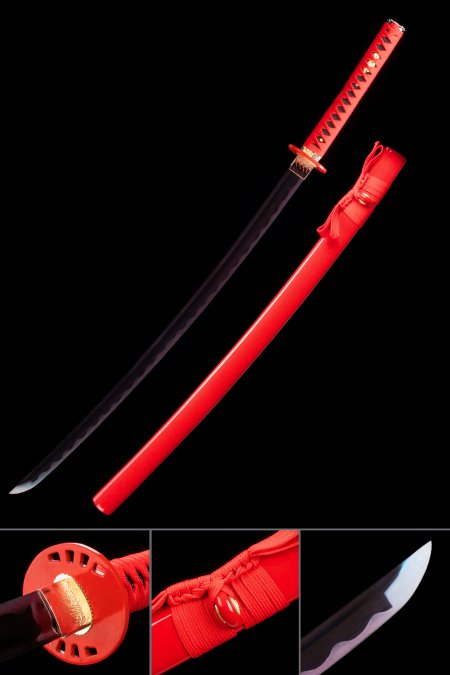
What is clay tempering, and why does it matter for display katana?
Updated Mar 2026
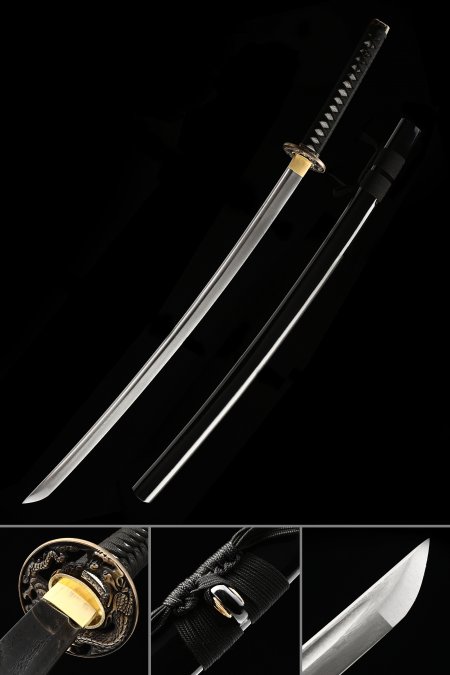
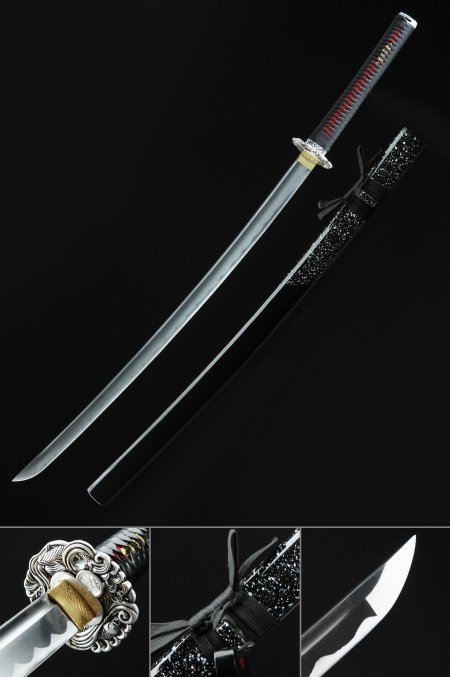
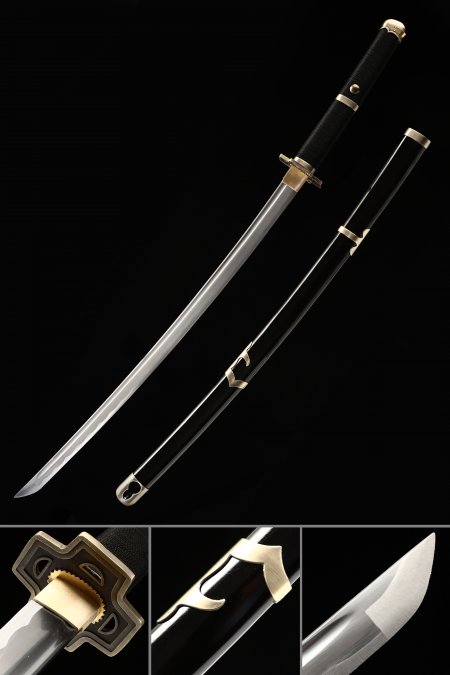
Clay tempering — known in Japanese as tsuchioki — is the process of applying a layer of clay to the blade's spine before the final quench in water or oil. The clay insulates the spine, causing it to cool more slowly than the edge, which results in a harder edge and a softer, more flexible spine. The boundary between these two zones becomes the hamon, the visible temper line that runs along the blade's length. For display collectibles, the hamon is one of the most prized visual features of a hand-forged blade: no two are exactly alike, and the natural undulation of a genuine hamon — as opposed to a machine-etched or acid-washed imitation — reflects actual metallurgical variation in the steel. Collectors who can identify a real hamon understand it as evidence of a blade that has undergone a legitimate heat-treatment process.