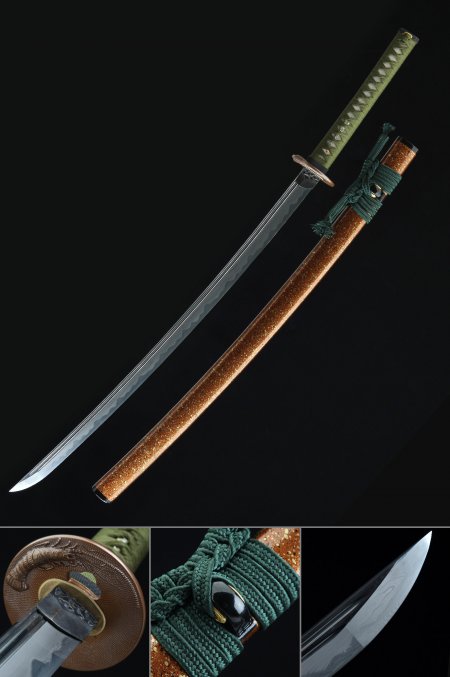
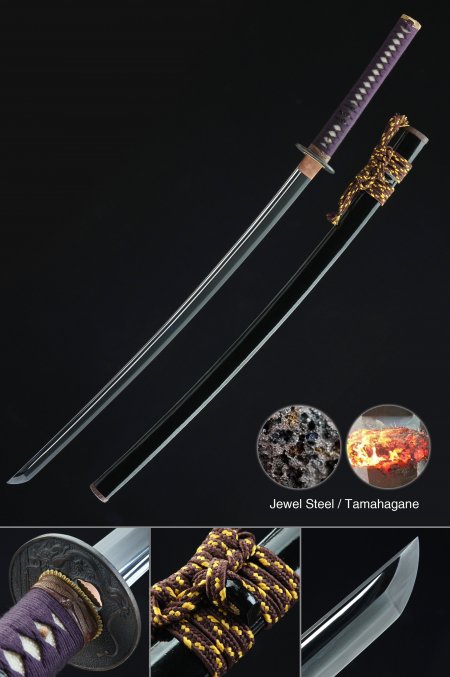
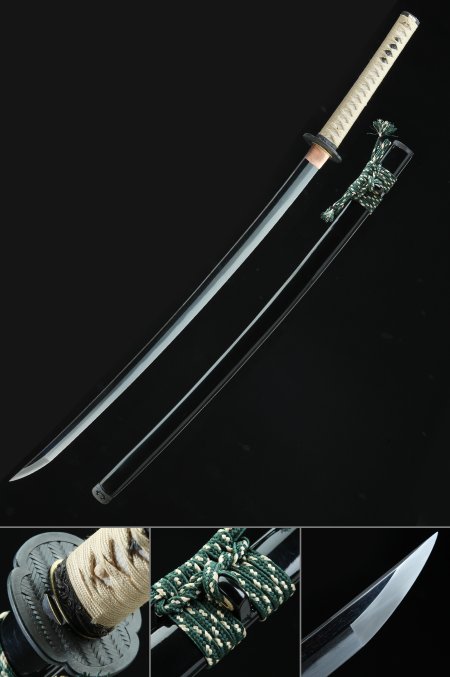
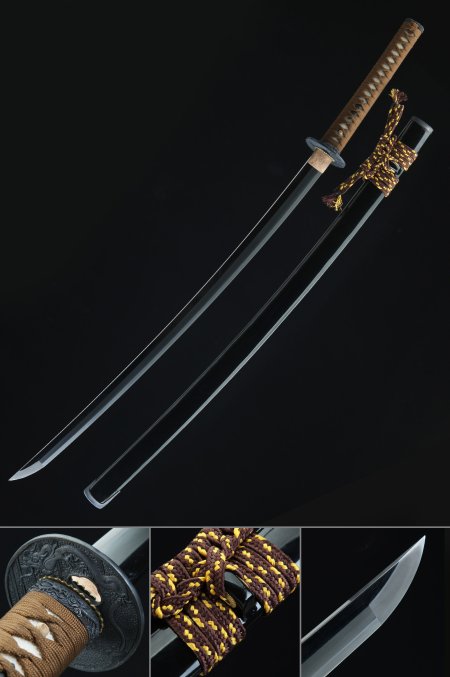
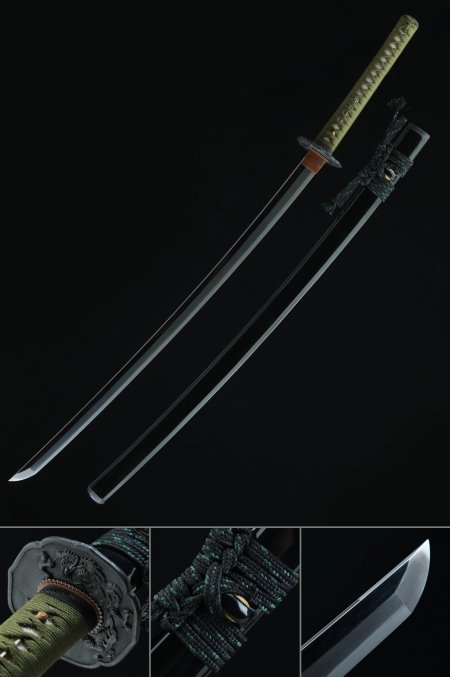
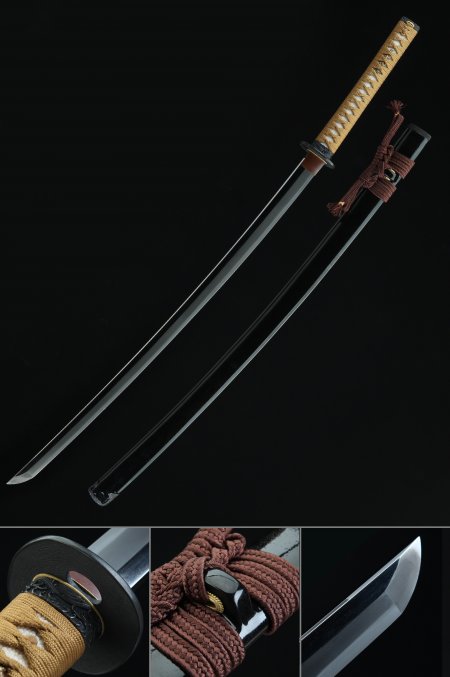
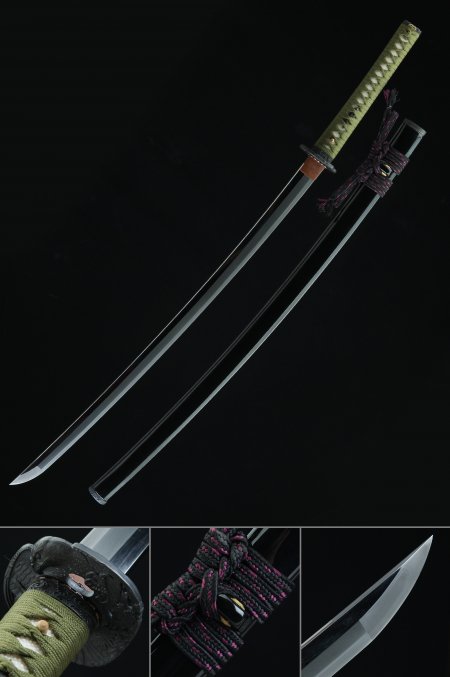
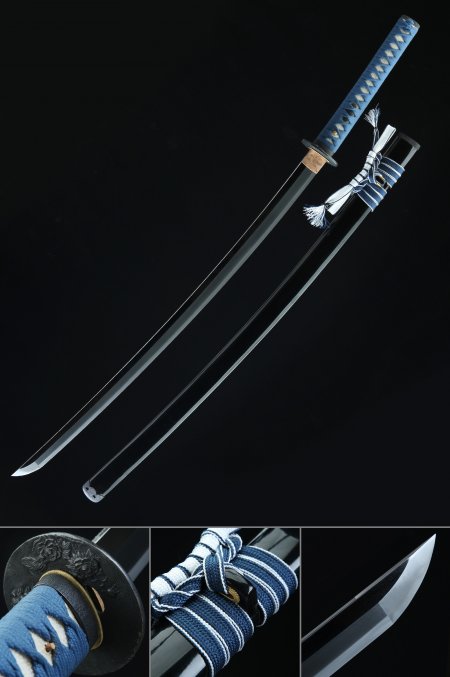
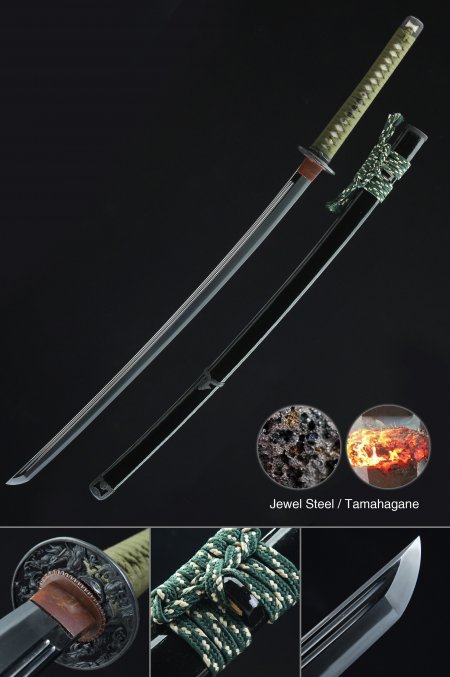
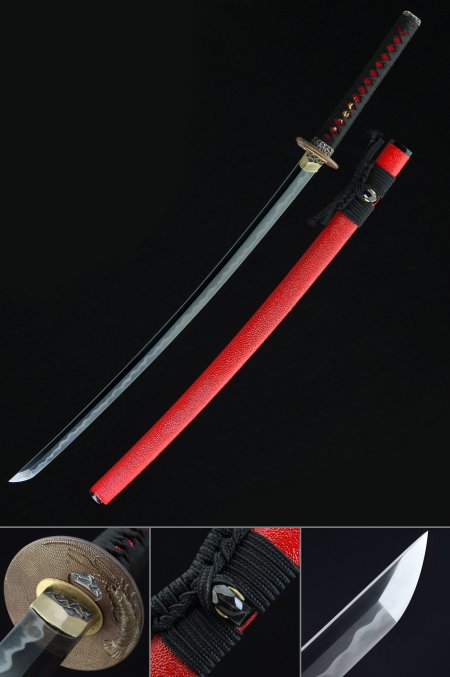
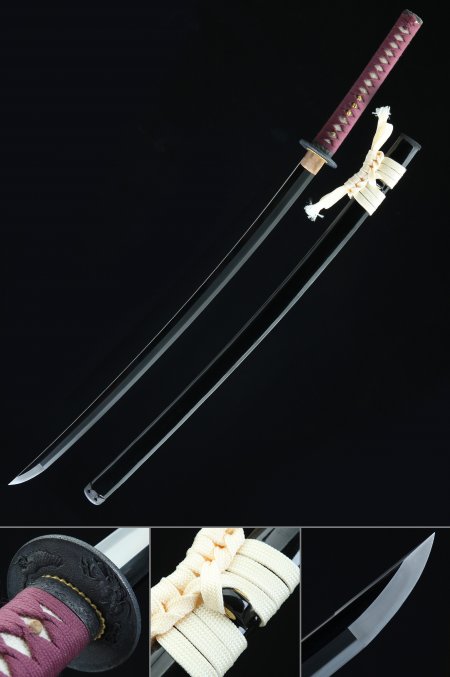
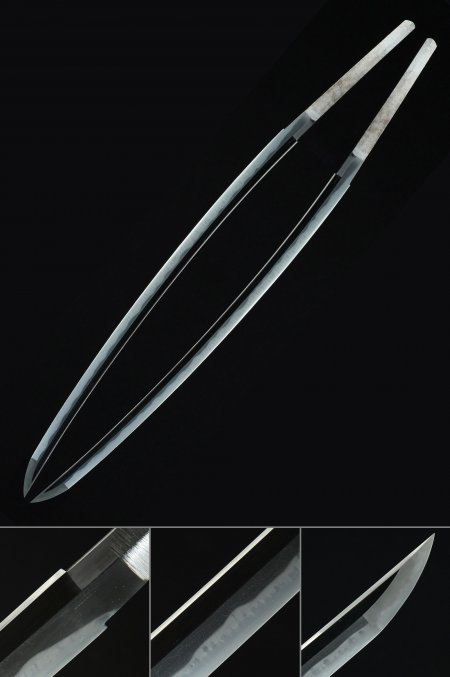
The hamon is created through a process called tsuchioki, where the swordsmith applies a clay mixture unevenly along the blade before the hardening quench. The edge, coated in thinner clay, cools rapidly in the water quench and forms a hard crystalline structure called martensite, while the spine, insulated by thicker clay, cools more slowly and remains comparatively softer and more flexible. The boundary between these two zones is the hamon. On tamahagane steel, the natural carbon variation within the steel interacts with this differential cooling to produce especially lively activity — small formations called nie (individual martensite crystals visible to the naked eye) and nioi (a misty, diffuse line) appear along the temper boundary. Each hamon is unrepeatable, which is a primary reason collectors prize authentic tamahagane blades over chemically etched or acid-treated imitations.