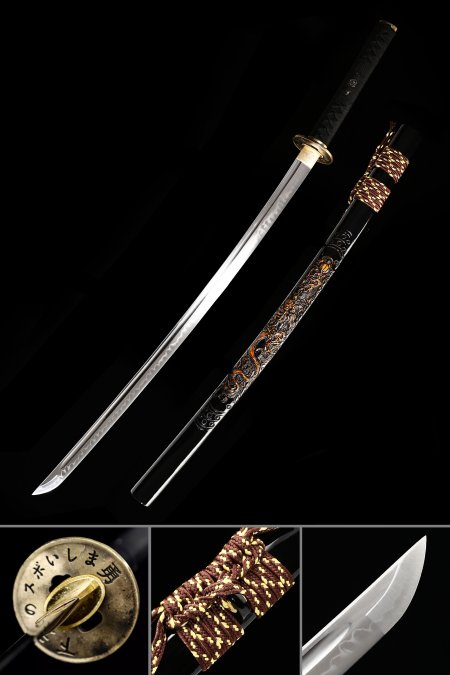
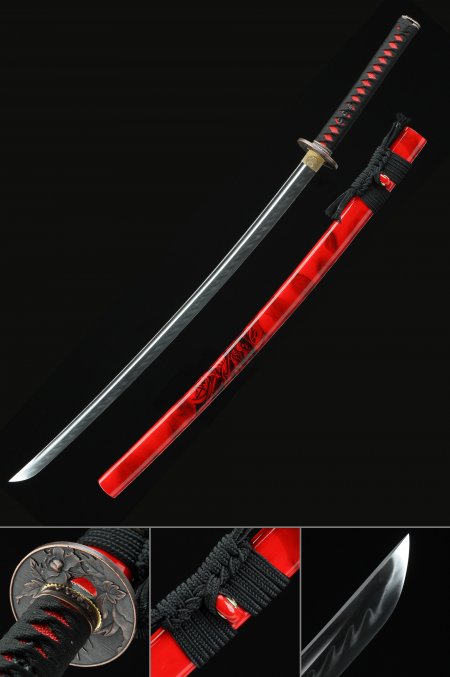
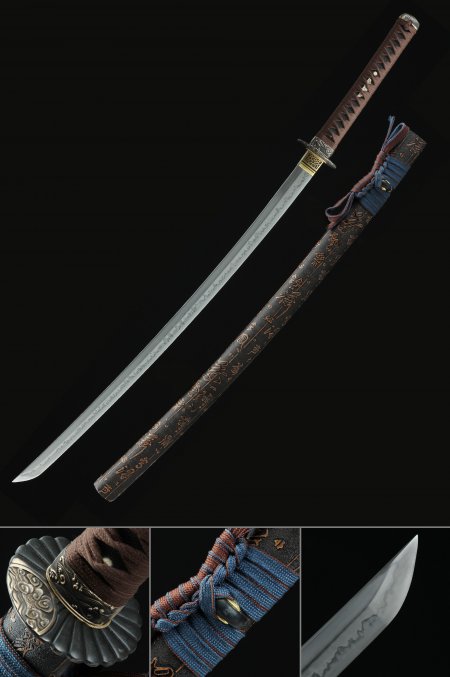
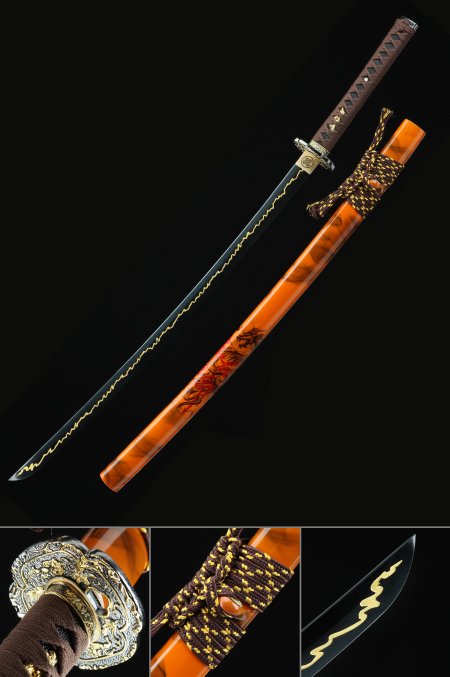
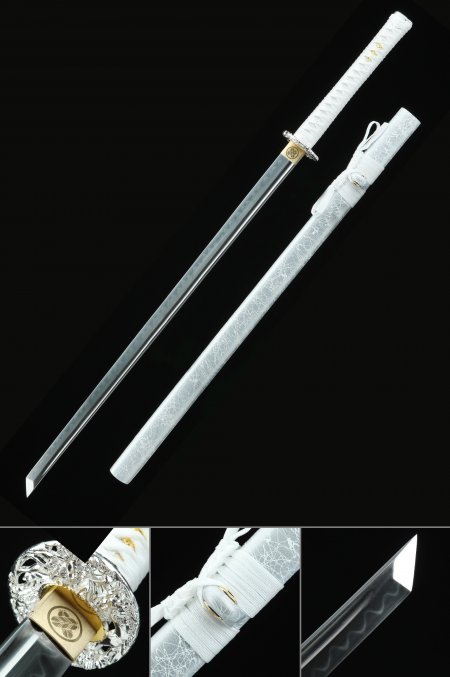
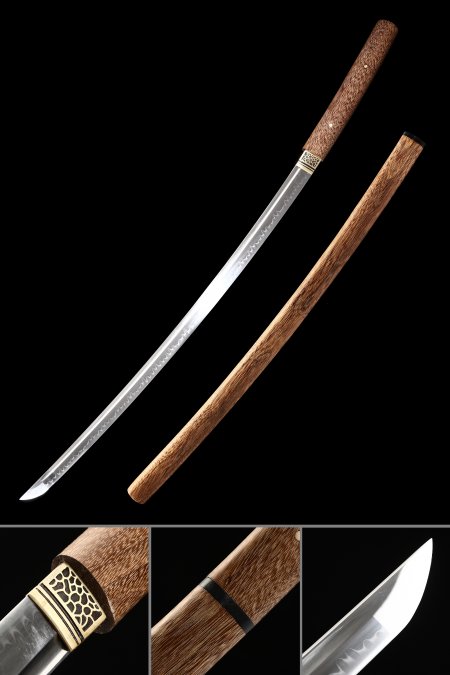
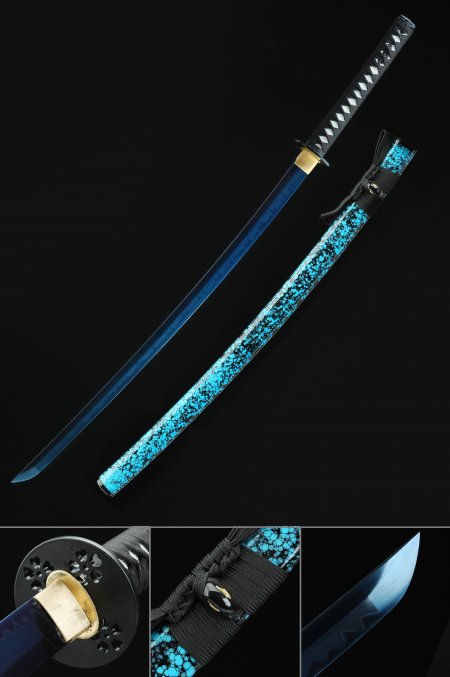
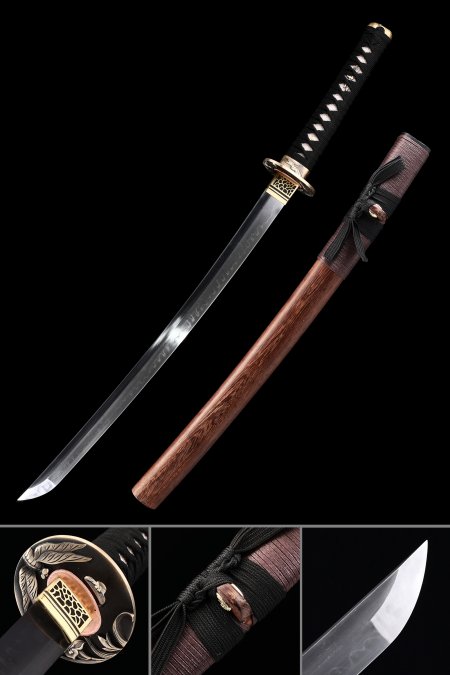
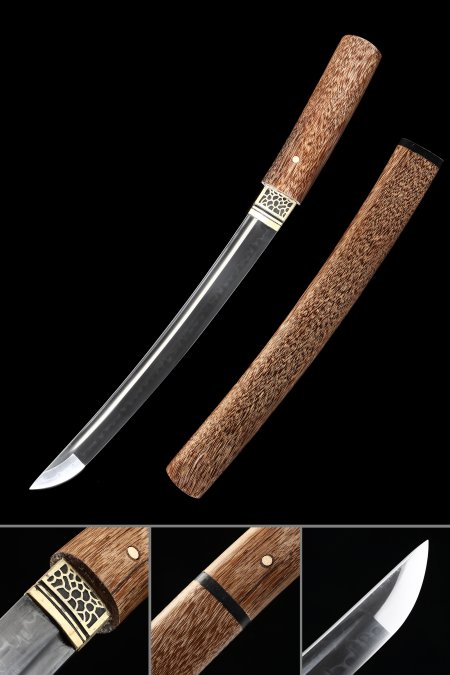
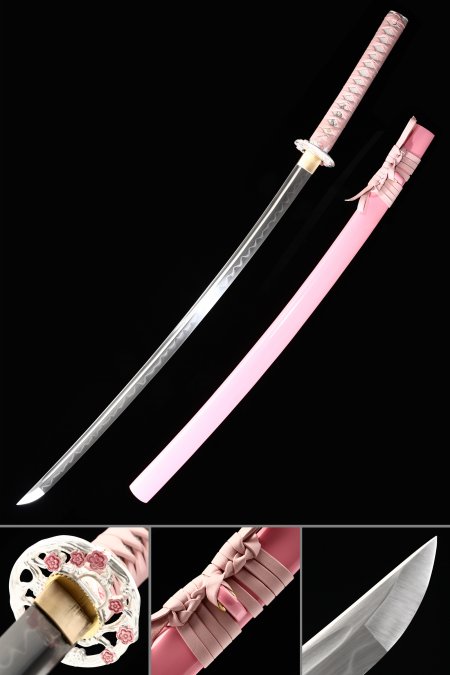
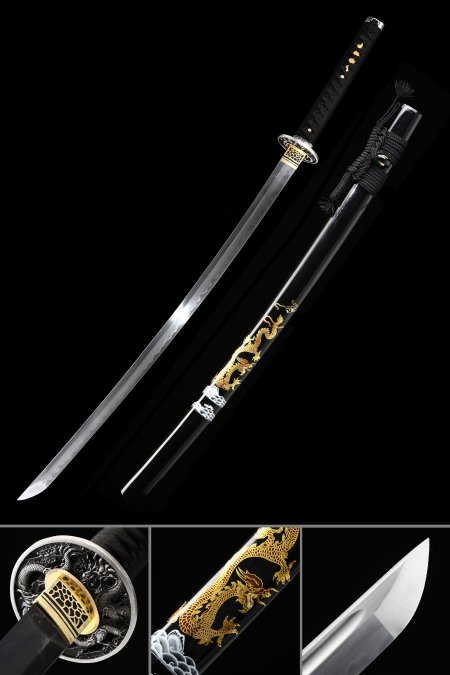
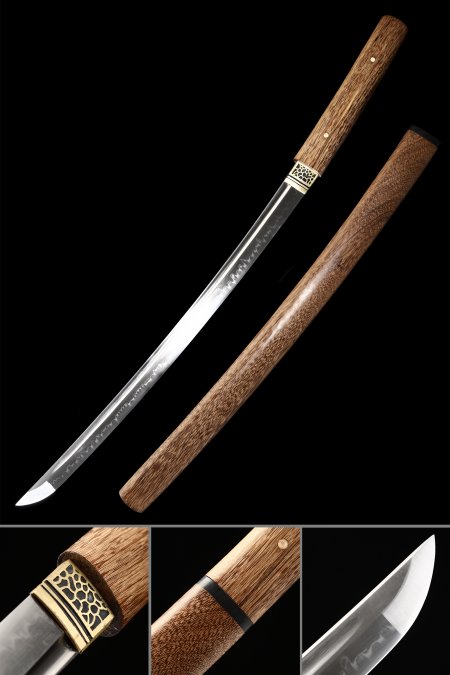
Is the hamon on these ninjato real or acid-etched?
Updated Mar 2026
Every ninjato in this T10 collection features a real, differentially produced hamon — not an acid-etched or wire-brushed imitation. The authentic hamon is created during the clay-tempering quench: clay is applied to the spine before the blade enters the water or oil quench, causing the unprotected edge to cool rapidly and harden, while the clay-coated spine cools more slowly and stays softer. The boundary between these two metallurgical zones becomes the visible hamon. An authentic hamon has depth and subtle variation when examined under a light source — you can often see a misty transitional zone called the nie and nioi layer. An acid-etched line, by comparison, sits only on the surface and lacks this internal dimensionality.