How do I read the hamon on a clay-tempered T10 blade?

 Updated Mar 2026

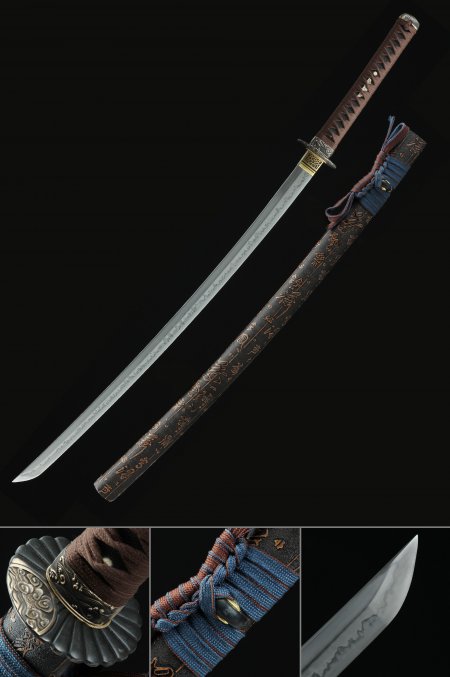
The hamon is the visible transition line between the hardened edge zone and the softer spine, produced by coating the blade's spine with clay before quenching so the edge cools faster. To appreciate it properly, hold the blade at roughly a 45-degree angle under a single directional light source — a desk lamp works better than overhead lighting. Move the blade slowly and watch for the misty boundary line and the activities within it: nie (bright sparkle-like particles), nioi (a softer, cloud-like glow), and ashi (lines extending from the hamon toward the edge). On a genuine polished hamon, these features shift and appear differently as your angle changes. An acid-etched hamon, by contrast, looks flat and uniform from every angle. This is the primary visual test collectors use to distinguish authentic clay tempering from cosmetic surface treatment.
Popular Products

15% OFFred katana
199.00 USD
229.00 USD
20% OFFshirasaya wakizashi
219.00 USD
269.00 USD
20% OFFjapanese katana
209.00 USD
259.00 USD
20% OFFjapanese katana
169.00 USD
209.00 USD
15% OFFblack katana
199.00 USD
229.00 USD
15% OFFshirasaya tanto
149.00 USD
179.00 USD
15% OFFtanto sword
149.00 USD
179.00 USD
20% OFFwakizashi sword
219.00 USD
279.00 USD
20% OFF
259.00 USD
329.00 USD
15% OFFshirasaya tanto
149.00 USD
179.00 USD
20% OFFfull tang katana
319.00 USD
399.00 USD
20% OFFblue katana
209.00 USD
259.00 USD
15% OFFred katana
199.00 USD
229.00 USD
20% OFFshirasaya wakizashi
219.00 USD
269.00 USD
20% OFFjapanese katana
209.00 USD
259.00 USD
20% OFFjapanese katana
169.00 USD
209.00 USD
15% OFFblack katana
199.00 USD
229.00 USD
15% OFFshirasaya tanto
149.00 USD
179.00 USD
15% OFFtanto sword
149.00 USD
179.00 USD
20% OFFwakizashi sword
219.00 USD
279.00 USD
20% OFF
259.00 USD
329.00 USD
15% OFFshirasaya tanto
149.00 USD
179.00 USD
20% OFFfull tang katana
319.00 USD
399.00 USD
20% OFFblue katana
209.00 USD
259.00 USD

Explore Our Collections