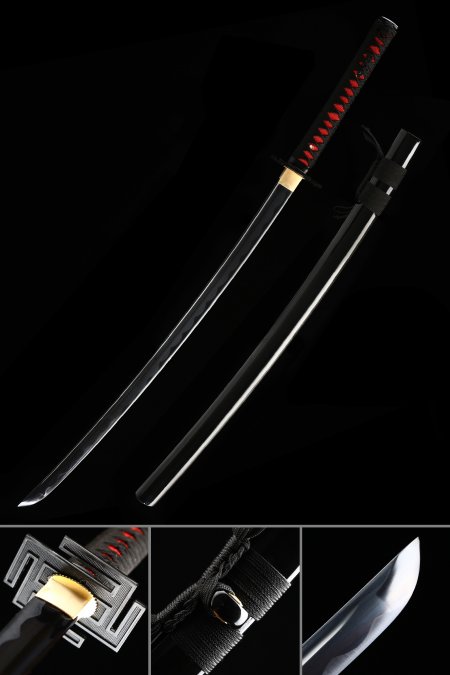
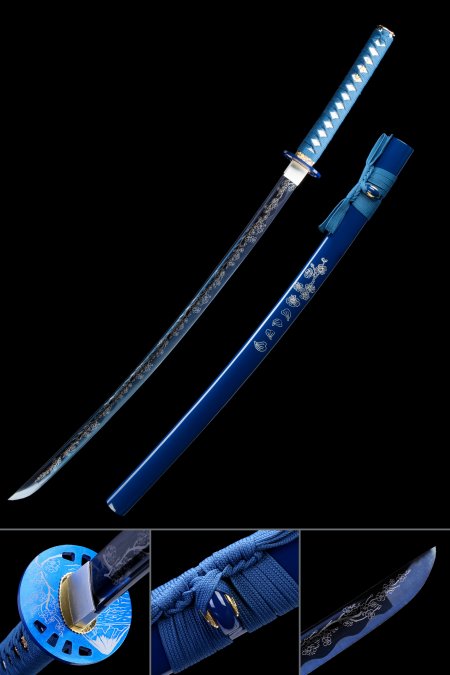
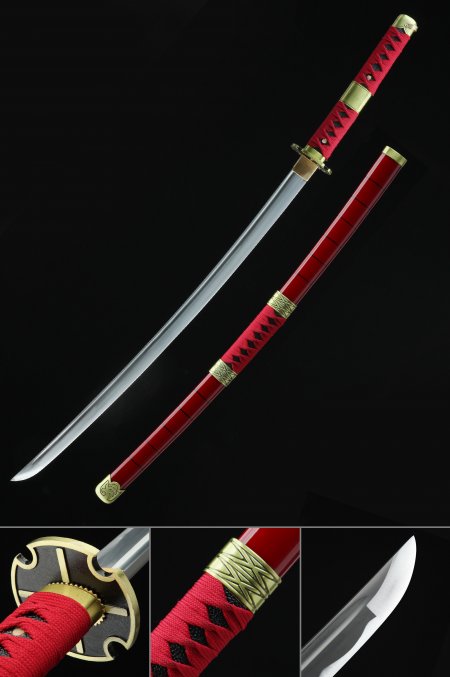
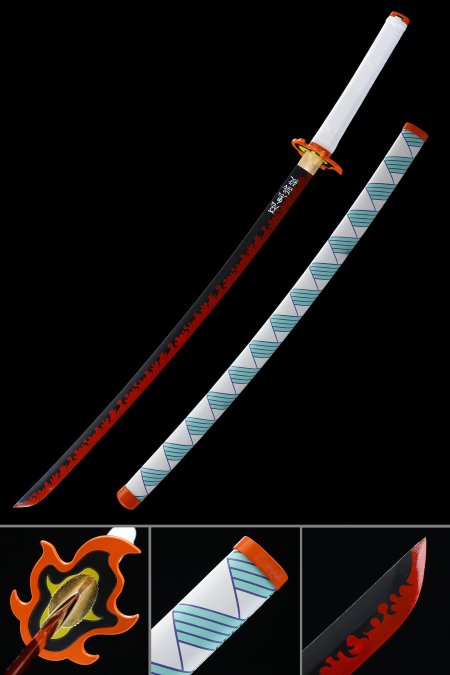
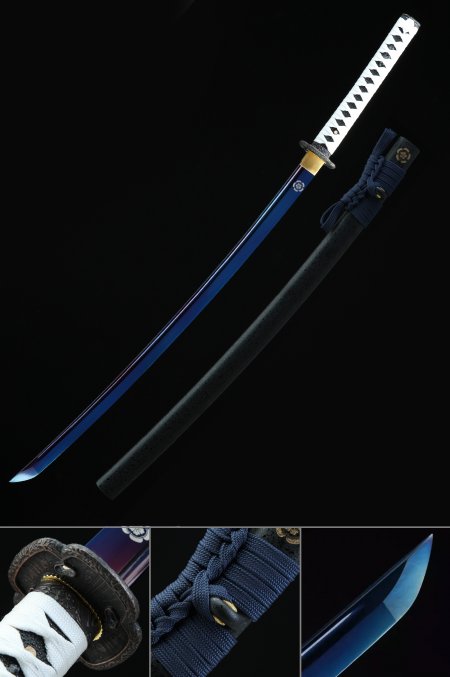
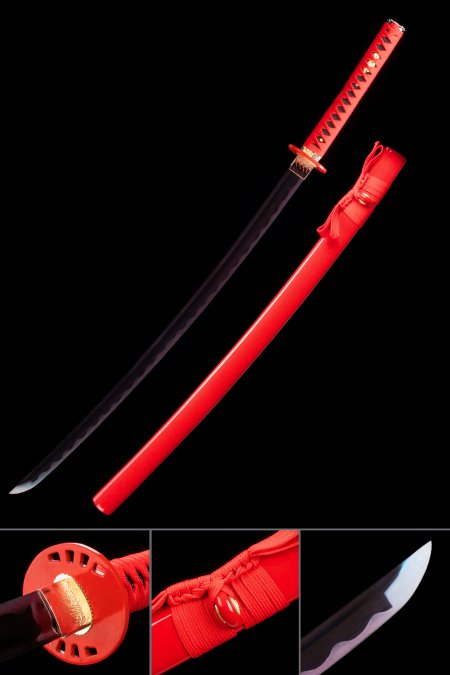
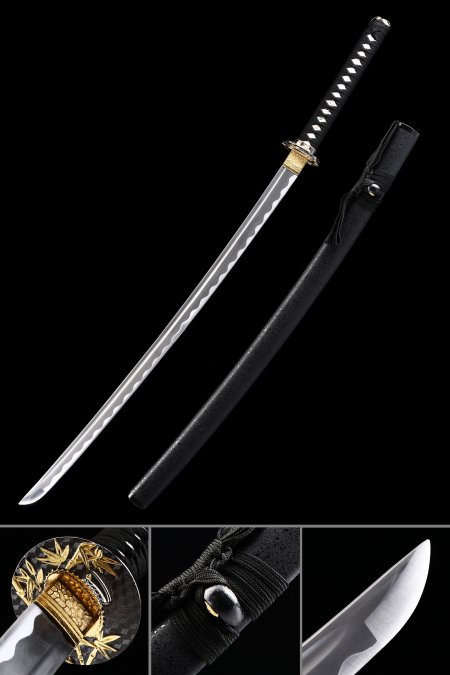
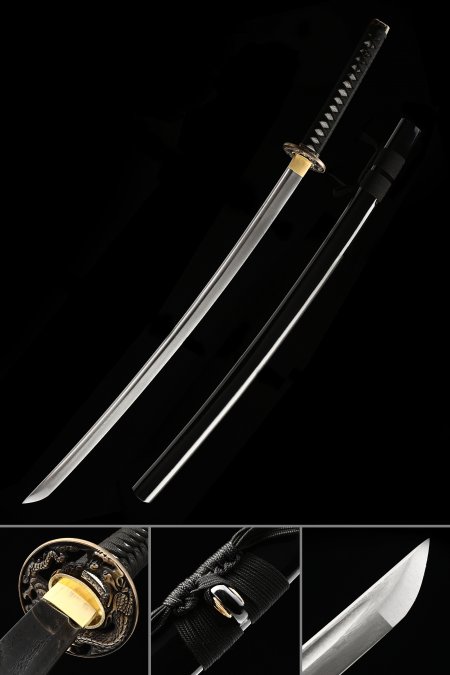
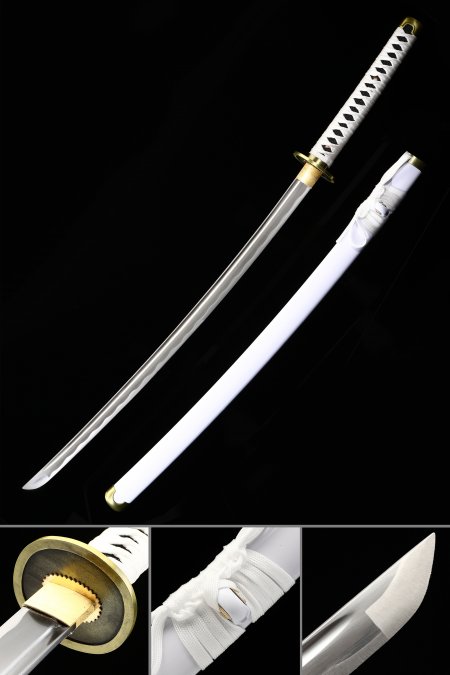
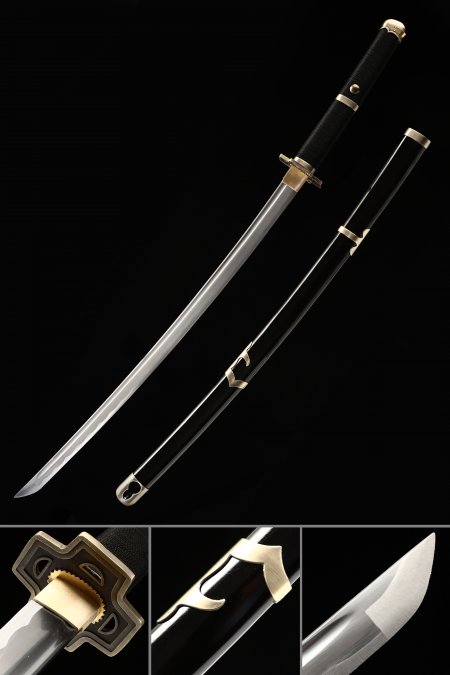
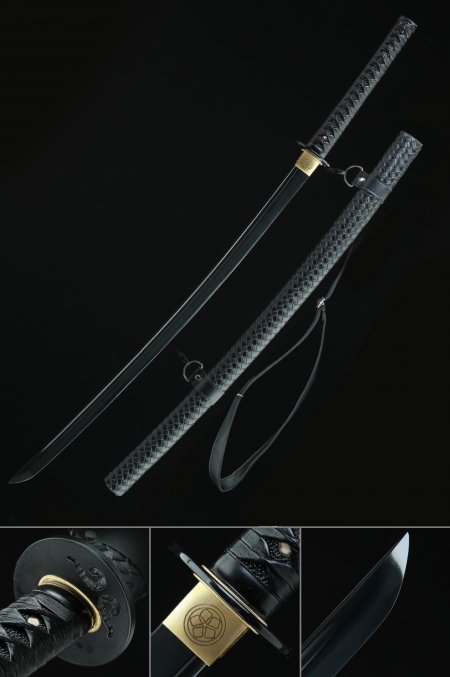
Is the hamon on these green katanas real or just a polished finish?
Updated Mar 2026
Every hamon on the katana in this collection is produced through authentic differential clay tempering, not acid etching or abrasive simulation. During the heat-treatment process, clay is packed along the spine to slow the quench rate in that area, while the exposed edge cools rapidly and hardens. The transition zone that forms between hard edge and softer spine is the hamon — it exists within the steel's crystalline structure and is revealed, not created, by polishing. A genuine hamon will show activity (irregular clouding, nie particles, and curved undulation) that shifts appearance under different lighting angles. Etched or false hamon tend to look flat and uniform. Under a loupe or raking light, the real thing is unmistakable.